A head-to-head technical comparison for robotics engineers and developers
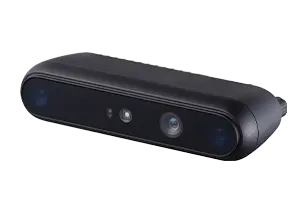
Two cameras dominate the conversation when robotics engineers go shopping for a serious stereo depth sensor: the Orbbec Gemini 335L and the Stereolabs ZED 2i. Both are genuine professional-grade devices with ROS support, IMUs, IP-rated enclosures, and 20-meter-class depth range. Both have real deployments in the field. And both have meaningful trade-offs that make one clearly better than the other depending on what you’re building.
This comparison cuts through the marketing and gets into the specs, architecture, and practical implications that matter when you’re designing a system—not shopping for a consumer gadget. We’ll cover depth performance, SDK maturity, compute requirements, and the use cases where each camera is the right tool. The goal is a decision you can defend in a design review, not just a spec sheet you found on a product page.
It’s worth noting upfront that both cameras are actively developed and vendor-supported—this isn’t a comparison between a mature product and a newcomer. Orbbec has been shipping depth cameras since 2013, and the Gemini 335L specifically targets the professional robotics market. Stereolabs has been synonymous with high-performance stereo vision in robotics since the original ZED launched in 2015. Both companies have real skin in the game.
Specification Comparison
The table below compares the key specs side by side. For a broader look at how these cameras fit into the wider market, the Orbbec vs Stereolabs ZED comparison page at orbbec.com is a useful reference alongside this breakdown.
| Spec | Orbbec Gemini 335L | Stereolabs ZED 2i |
| Depth range | 0.17 m – 20 m+ | 0.2 m – 20 m |
| Stereo baseline | 95 mm | 120 mm |
| Depth technology | Active IR stereo + in-camera processing | Passive stereo (host GPU required) |
| RGB resolution | Up to 1920×1080 | Up to 2208×1242 |
| Frame rate | Up to 30 fps depth | Up to 100 fps (resolution dependent) |
| IMU | Yes (6-DOF) | Yes (6-DOF) |
| IP rating | IP65 | IP66 (ZED 2i) |
| GPU / CUDA required | No | Yes (NVIDIA CUDA) |
| Interface | USB 3.2 | USB 3.0 |
| ROS / ROS 2 support | Yes | Yes |
| Platform compatibility | x86, ARM, Jetson, RPi | x86 + NVIDIA Jetson only |
The headline numbers tell part of the story. Both cameras achieve a 20-meter depth range, both have IMUs, and both offer ROS/ROS 2 integration. The meaningful differences start with the depth architecture and the compute it requires.
Depth Performance
Minimum Range and Close-Quarters Operation
The Gemini 335L starts resolving depth at 0.17 meters. The ZED 2i’s practical minimum is closer to 0.2 meters—and in practice, passive stereo cameras become less reliable at very close range because disparity estimation degrades as objects get close to the image plane. For indoor mobile robots, manipulation arms, or any system that needs to track objects within arm’s reach, this difference is operationally meaningful.
Long-Range Accuracy
At the other end of the range envelope, the ZED 2i’s 120mm baseline (vs 95mm on the Gemini 335L) gives it a geometric advantage for far-range depth estimation. Wider baseline means more disparity for a given distance, which translates to better depth resolution at range. For large-space 3D mapping or outdoor environments where you’re tracking objects at 10m+, this matters in practice.
The Gemini 335L compensates with active IR structured light, which improves depth confidence in low-texture scenes where passive stereo struggles to find correspondences. Featureless walls, uniform floors, and dark environments all challenge passive stereo—and the Gemini 335L handles these better.
Outdoor Operation
This is ZED 2i’s clearest advantage. Passive stereo is immune to IR interference and performs well in bright sunlight. Active IR cameras—including the Gemini 335L—can wash out in direct outdoor sun because the ambient IR overwhelms the structured pattern the camera projects. If your deployment is primarily outdoors and unshaded, ZED 2i is the more reliable choice. The Gemini 335L is better suited to indoor environments or outdoor scenarios with consistent shade or overcast conditions.
Compute Requirements: The Critical Architectural Difference
This is where the two cameras diverge most fundamentally—and where engineers often underestimate the implications.
The Gemini 335L performs depth computation in-camera on dedicated hardware. The host receives a finished depth frame. You can run it off a USB port on a Raspberry Pi 4, a Jetson Nano, or a modest x86 industrial PC and get full-resolution depth output without saturating the host processor.
The ZED 2i sends raw stereo image pairs to the host and requires the ZED SDK—which requires NVIDIA CUDA—to compute depth. This is not a soft requirement. There is no CPU fallback. No ARM deployment without an NVIDIA GPU. In practice, this means the ZED 2i is viable on: x86 systems with a discrete NVIDIA GPU, NVIDIA Jetson AGX Xavier or Orin, and NVIDIA Jetson Xavier NX. It is not viable on Raspberry Pi, Jetson Nano, BeagleBone, most industrial PLCs, or any CPU-only embedded target.
For teams building on the NVIDIA Jetson AGX or Orin—already CUDA-capable platforms common in high-performance robotics—this constraint may not matter. For teams trying to minimize BOM cost, reduce power draw, or deploy on diverse hardware, the Gemini 335L’s platform independence is a substantive engineering advantage.
SDK Comparison
Orbbec SDK
OrbbecSDK is a C/C++ API with Python bindings and ROS/ROS 2 wrappers. The API is straightforward and will feel familiar to anyone who has used librealsense—unsurprising given the lineage. It handles device management, stream configuration, depth frame access, and IMU data. OpenCV integration is clean and the community has been active in building out the ROS ecosystem around it.
What the Orbbec SDK does not include out of the box: high-level SLAM, semantic object detection, or body tracking. You’re getting a solid, efficient depth stream that plugs cleanly into your existing ROS pipeline. Higher-level analytics are your responsibility to build or integrate.
ZED SDK
The ZED SDK is more expansive—and that’s genuinely its strength, not just a feature list. It ships with production-quality implementations of positional tracking (visual-inertial odometry), 3D mapping (mesh and point cloud), object detection (using onboard neural nets), and body/skeleton tracking. For teams that want these capabilities and are already on NVIDIA hardware, the ZED SDK delivers them with minimal integration work.
The trade-off is lock-in. The ZED SDK’s depth pipeline is closed-source and proprietary. You’re dependent on Stereolabs releasing updates, maintaining CUDA compatibility, and staying in business. For long-horizon research or production systems, this is a legitimate risk to factor in.
ROS Integration
Both cameras have ROS 1 and ROS 2 packages. The ZED ROS wrapper is Stereolabs-maintained and generally well-regarded, publishing standard sensor_msgs/Image, sensor_msgs/PointCloud2, and nav_msgs/Odometry topics out of the box. The Orbbec ROS wrapper is community-active and has been improving quickly, with similar topic coverage and configurable depth-to-color alignment built in. Neither is a first-class blocker for integration in standard robotics stacks.
One practical note for ROS 2 migrations: both wrappers support Humble and Iron, but always verify your specific distro against the package README before committing to a hardware order. Driver compatibility is rarely the bottleneck, but it’s worth a five-minute check early in the evaluation process.
Use Case Recommendations
The table below summarizes which camera to choose for common robotics deployment scenarios, with brief reasoning for each:
| Scenario | Pick | Why |
| Indoor mobile robot / AMR | Gemini 335L | No GPU needed, 0.17m min range, IP65 |
| Outdoor drone / UGV | ZED 2i | Passive stereo handles sunlight; wider baseline at range |
| Jetson AGX edge compute | Either | Both supported; Gemini offloads GPU, ZED uses it deeply |
| Raspberry Pi / CPU-only board | Gemini 335L | ZED requires CUDA — not viable here |
| Research with body/object tracking | ZED 2i | ZED SDK analytics are best-in-class out of the box |
| Industrial / dusty environment | Gemini 335L | IP65 rated; active IR reliable in controlled light |
| Large-space 3D mapping | ZED 2i | Wider baseline gives better far-range depth accuracy |
| Budget-sensitive deployment | Gemini 335L | Lower camera price + no discrete GPU = significant BOM saving |
Pros and Cons Summary
| Orbbec Gemini 335L | Stereolabs ZED 2i | |
| Pros | • No GPU required — runs on ARM, RPi, Jetson Nano • IP65 rated for dusty / light-wet environments • In-camera depth frees host CPU/GPU headroom • 0.17m minimum range suits close-quarters robotics • Lower system cost (no discrete GPU needed) | • Best-in-class outdoor / sunlight performance • Wider baseline (120mm) improves far-range accuracy • Rich SDK: SLAM, body tracking, object detection built in • Higher RGB resolution for color-rich pipelines • IP66 rating (slightly higher ingress protection) |
| Cons | • Active IR can struggle in bright direct sunlight • Narrower baseline than ZED 2i at long range • SDK analytics features less mature than ZED SDK | • Requires NVIDIA CUDA GPU — no ARM-only deployment • Higher total system cost when GPU is included • Depth computed on host — higher CPU/GPU load |
Conclusion: Architecture Drives the Decision
The Gemini 335L and ZED 2i are both capable, professionally deployed stereo cameras. The choice between them is less about which camera is objectively better and more about which fits your compute architecture and operational environment.
Choose the Orbbec Gemini 335L if: you’re deploying on non-NVIDIA hardware, want to minimize host compute load, need reliable close-range depth under 0.2m, are working in industrial or indoor environments where IP65 matters, or are cost-sensitive about total system BOM.
Choose the Stereolabs ZED 2i if: you’re already running on NVIDIA Jetson AGX or a CUDA-capable PC, need outdoor performance in direct sunlight, want built-in SLAM and object tracking without building your own, or need maximum far-range depth accuracy from a wider baseline.
For engineers doing a structured evaluation, the Orbbec vs Stereolabs ZED comparison at orbbec.com includes detailed spec tables and additional model variants worth reviewing before finalizing a hardware decision.
In most indoor robotics scenarios—AMRs, service robots, manipulation, structured industrial environments—the Gemini 335L’s platform independence and in-camera depth processing make it the more flexible foundation. For outdoor, unstructured, or NVIDIA-anchored deployments, ZED 2i earns its premium. Whichever direction you go, bench-test on your actual target hardware with your actual scene conditions before finalizing the design. Spec sheets describe cameras in ideal conditions; your deployment environment rarely is.
Have experience deploying either camera in production? Share your setup and observations in the comments—real-world data points help the community make better hardware decisions.
Also Read
- 4 Practical Ways To Stretch Any Tech Budget
- Why Commercial Cleaning Services Are Essential for Modern Businesses
- Exploring Life Fitness: The Ultimate Guide to Health and Wellness Equipment