
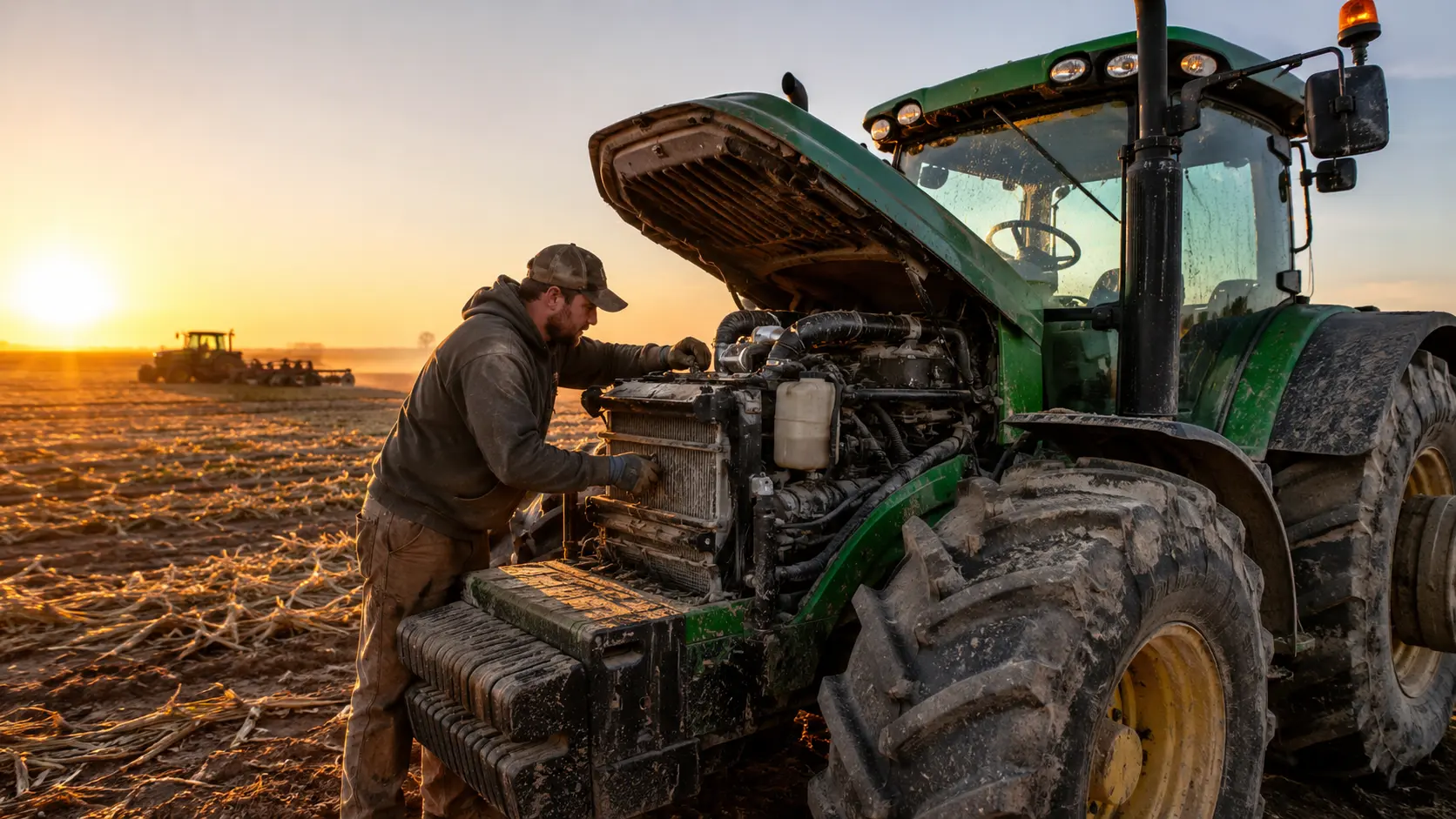
Sustainable farming is not only about reducing environmental impact. It is also about using fuel, labor, soil, machinery, and time more carefully so that a farm can remain productive for many years. Tractors play an important part in this process because they influence how quickly work is completed, how much fuel is consumed, and how often heavy equipment moves across the land.
Selecting equipment from a dependable tractor manufacturer can help farmers match tractor power and configuration to their actual working conditions. A suitable machine should provide enough strength for demanding tasks without being unnecessarily large for routine jobs. This balance can improve field performance while controlling fuel use, maintenance expenses, and pressure on the soil.
Sustainable Farming Starts With Practical Decisions
Sustainability can sound like a complicated idea, but many improvements begin with simple decisions. Using the correct tractor for each task, maintaining it on time, reducing unnecessary field passes, and choosing compatible implements can all make farming more efficient.
A tractor that is too small may need several attempts to complete demanding work. It may operate at high engine load for long periods, increasing fuel consumption and mechanical wear. A machine that is much larger than required may use extra fuel and place unnecessary weight on the field.
The most sustainable choice is usually a tractor that matches the farm’s regular workload. It should be able to complete important jobs comfortably while remaining economical during lighter operations.
Matching Power to the Work Reduces Waste
Horsepower affects how well a tractor can pull, lift, and operate equipment. However, a higher horsepower figure does not automatically mean that a tractor will be more productive or economical.
Power requirements depend on the type of soil, field slope, implement size, working depth, tractor speed, and daily workload. Deep plowing in heavy clay requires more power than light mowing or pulling a small trailer on level ground.
Farmers should identify the most demanding task performed regularly and choose a power range that can handle it with a reasonable reserve. This provides flexibility without creating unnecessary operating costs.
A properly matched tractor can work at a stable speed, maintain implement performance, and avoid excessive engine strain. These improvements help reduce wasted time and fuel.
Fewer Field Passes Can Protect the Soil
Every time heavy machinery travels across a field, it places pressure on the ground. Repeated traffic can compact the soil, particularly when conditions are wet.
Compacted soil may restrict root development, reduce water movement, and make future cultivation more difficult. Farmers may then need additional tillage to repair the problem, creating further fuel and labor costs.
Planning field operations carefully can reduce unnecessary travel. Several activities may sometimes be combined, depending on the crop and available equipment. For example, suitable machinery may allow farmers to prepare seedbeds and apply inputs with fewer separate passes.
Operators should also avoid entering fields when the soil is too wet. Delaying work for a short period can prevent long-term compaction that may take considerable effort to correct.
Tire Choice Has a Direct Effect on Efficiency
Tractor tires influence traction, fuel use, stability, ride comfort, and soil pressure. The wrong tire or incorrect pressure can lead to wheel slip, uneven wear, and reduced field performance.
Excessive wheel slip wastes power because the tractor uses fuel without moving forward efficiently. On the other hand, tires that do not slip at all may indicate that the tractor is carrying more ballast than necessary.
Tire pressure should be adjusted according to the load, tire design, and operating conditions. Lower field pressure may help distribute weight across a wider area, while road transport may require a different setting.
Farmers should follow tire and tractor guidance rather than relying on one pressure setting for every job. Regular inspection can also reveal cuts, damage, or uneven wear before a tire fails during an important operation.
Correct Ballast Improves Traction
Ballast is added to help a tractor transfer power to the ground and remain balanced with heavy implements. Proper ballast can improve traction, steering, braking, and stability.
However, adding more weight than necessary is not an efficient solution. Excess weight can increase soil compaction, tire wear, and fuel consumption. It can also place additional stress on axles and other components.
Ballast should be selected according to the implement and task. A front-mounted weight may be needed when a heavy rear attachment makes steering difficult. Rear ballast may be required during front-loader work.
The goal is balanced performance rather than maximum weight. Farmers should review ballast whenever they change to an implement with significantly different size or weight.
Compatible Implements Make Better Use of Power
A tractor performs best when it is paired with implements of the correct size and specification. An implement that is too wide, heavy, or demanding can force the machine to operate under constant load. Equipment that is too small may fail to use the tractor’s available capacity efficiently.
Important compatibility points include PTO speed, hydraulic flow, lifting capacity, hitch category, tractor weight, and engine power.
When comparing these requirements, an experienced tractor manufacturer can help agricultural buyers understand which tractor configurations are suitable for particular implements and farming applications. This is especially useful for distributors or commercial farms ordering machines for different crops, land sizes, and regional conditions.
Correct matching improves work quality and helps protect both the tractor and the implement from avoidable damage.
Fuel Efficiency Depends on Operation
Engine design affects fuel consumption, but operator behavior also plays a major role. Incorrect gear selection, excessive engine speed, poor implement adjustment, and unnecessary idling can all waste fuel.
Operators should choose a gear that allows the tractor to maintain the required working speed without placing the engine under excessive strain. Running at full engine speed is not necessary for every job.
Implements should be adjusted to the correct depth and angle. A plow working deeper than required may increase draft force without improving results. A poorly maintained mower or tiller may also require additional power.
Long periods of idling should be avoided where safe and practical. Although restarting may not always be suitable during short stops, leaving a tractor running without purpose adds fuel cost and engine hours.
Preventive Maintenance Supports Sustainability
Regular maintenance helps a tractor operate efficiently and reduces the likelihood of breakdowns. A poorly maintained engine may consume more fuel, lose power, or produce excessive smoke.
Daily checks should include engine oil, coolant, tires, hydraulic hoses, fuel levels, lights, and visible leaks. Air filters require particular attention in dusty farming environments because restricted airflow can reduce engine performance.
Lubricants, filters, and other service items should be replaced according to the recommended schedule. Greasing moving parts helps reduce friction and wear, while clean cooling systems protect the engine during long working days.
Preventive maintenance also extends equipment life. Keeping a tractor productive for a longer period reduces the need for early replacement and allows the farm to gain more value from its original investment.
Good Operators Can Improve Machine Life
Operator training is often discussed as a safety issue, but it also affects sustainability and equipment costs. A trained operator can select suitable gears, avoid sudden movements, recognize unusual sounds, and adjust implements correctly.
Rough operation may damage clutches, transmissions, hydraulic systems, hitches, and tires. It can also increase fuel use and reduce the quality of fieldwork.
Operators should understand the tractor’s controls, warning indicators, maintenance points, and safe operating limits. They should know how to attach implements, use the PTO, tow trailers, and work on slopes.
When several workers operate the same machine, farms should establish clear procedures. Consistent operation makes fuel use and maintenance needs easier to monitor.
One Versatile Tractor Can Perform Many Roles
Purchasing a separate machine for every farm activity is not practical for many agricultural businesses. A versatile tractor can support different jobs when equipped with compatible attachments.
It may be used for cultivation during one season, planting and crop care during another, and transport or material handling throughout the year. On mixed farms, it can also assist with feed movement, mowing, manure handling, and property maintenance.
Using one machine across several operations can improve annual utilization and help justify the ownership cost. However, buyers should not expect one tractor to perform every possible task equally well.
The chosen machine should be versatile within the farm’s realistic needs. Farms with both very light and extremely heavy work may still benefit from using more than one tractor size.
Long-Term Planning Prevents Unnecessary Purchases
Equipment decisions should consider how the farm may change over the next several years. A farmer may increase acreage, introduce new crops, purchase wider implements, or begin offering contracting services.
Buying only for the current season may create limitations later. At the same time, purchasing a much larger tractor based on uncertain plans can tie up money and raise operating expenses.
A practical approach is to identify likely growth and select a tractor with enough flexibility to support it. Hydraulic capacity, PTO options, hitch compatibility, tire choices, and available attachments should all be considered.
Dealers and larger agricultural businesses may also need customizable configurations for different customers or markets. Clear planning helps ensure that each feature has a genuine working purpose.
Record Keeping Reveals the True Cost
Farmers cannot improve efficiency if they do not know where their money is being spent. Basic tractor records can provide valuable information about fuel consumption, service costs, working hours, and repair frequency.
A simple log may include:
- Operating hours for each task
- Fuel used during field and transport work
- Routine service dates
- Replacement parts and repair expenses
- Tire pressure and ballast changes
- Downtime during important seasons
These records can reveal whether a tractor is being used efficiently. They may also show that a particular implement is too demanding, an operator needs additional training, or maintenance is being delayed.
Accurate records make future purchasing decisions more informed and less dependent on guesswork.
Final Thoughts
Sustainable tractor use is based on balance. The machine should have enough power for demanding work but should not be unnecessarily large. Tires, ballast, implements, operating speed, and maintenance should all be managed according to actual conditions.
Reducing extra field passes, controlling wheel slip, preventing long periods of idling, and training operators can lower fuel use and protect the soil. Regular maintenance can improve reliability and extend the tractor’s working life.
When tractors are selected and operated thoughtfully, they support both environmental responsibility and farm profitability. Agricultural buyers seeking adaptable tractor options for long-term field use can explore further information at gengjiaagri.com.
Also Read
- 4 Practical Ways To Stretch Any Tech Budget
- The Shift to Digital Forms: Transforming Business Operations


