
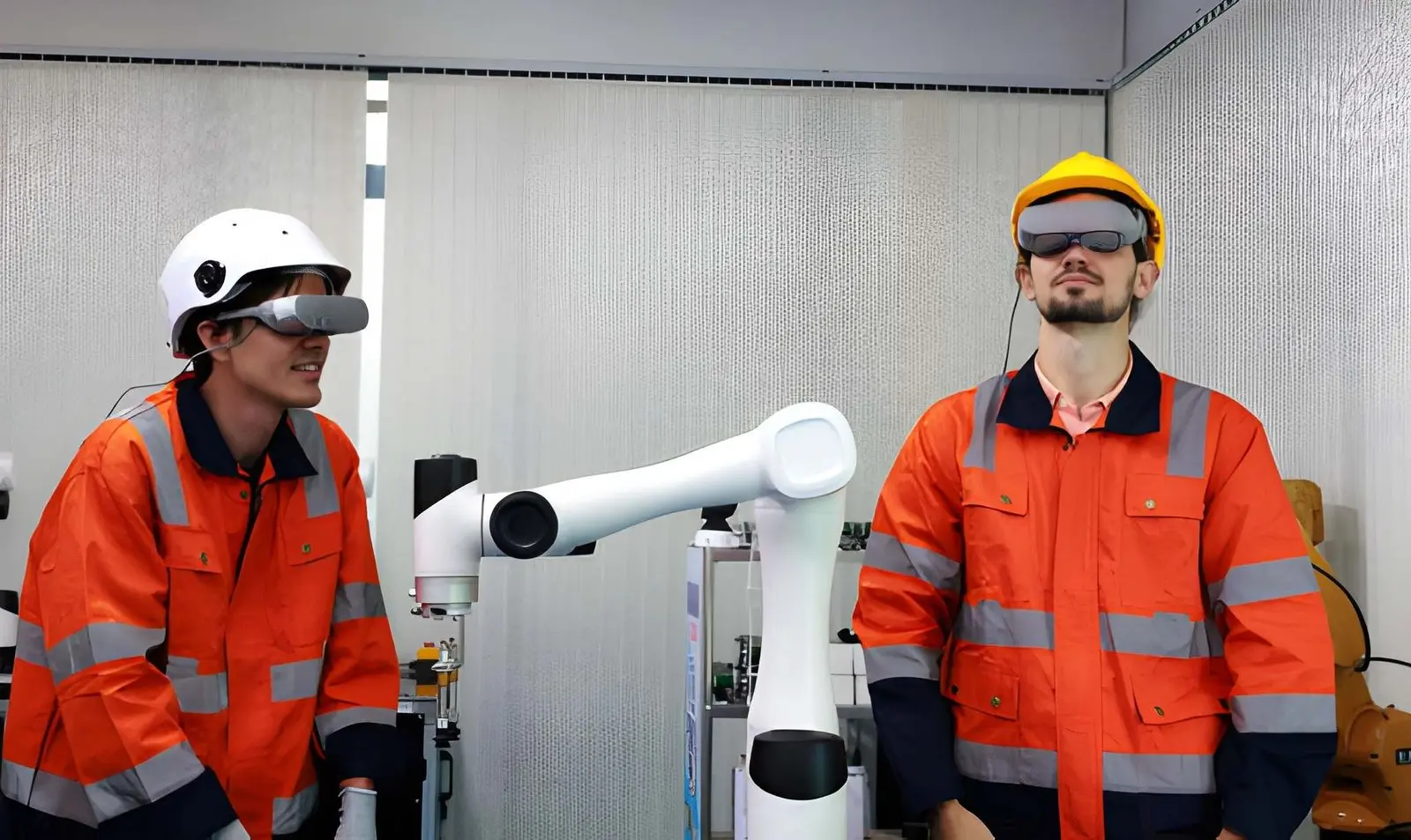
The robot that replaces the worker is a cultural fixture — a recurring anxiety in every generation of industrial automation. The collaborative robot, or cobot, is something quite different. Designed not to replace human capability but to extend and enhance it, cobots represent one of the most significant and genuinely optimistic developments in modern manufacturing — a technology that is making industrial work safer, more productive, and more rewarding for the humans who perform it.
What Makes a Cobot Different
Traditional industrial robots operate in isolation, behind safety barriers, performing fixed repetitive tasks at high speed and without human interaction. Cobots are built for a different purpose: to work directly alongside people in shared spaces. They move more slowly, integrate sophisticated sensors that detect and respond to human presence, and are designed to be repositioned and reprogrammed for different tasks without specialist robotics expertise. Their footprint is small. Their deployment is fast. Their flexibility is the point.
Unlike conventional automation, cobots can be introduced incrementally — one workstation at a time — without requiring factory-wide redesigns or significant infrastructure investment. This makes them practical not just as capital expenditure decisions, but as operational ones.
The Productivity Case
The productivity gains from human-cobot collaboration are well documented. MIT researchers found that humans and robots working together are 85 per cent more productive than either working alone — a figure that captures the fundamental insight behind collaborative automation. Cobots handle the elements of a task that play to machine strengths: precision, consistency, tirelessness, and force. Human workers handle what plays to human strengths: judgement, adaptability, quality assessment, and complex problem-solving.
The combination consistently outperforms either operating independently.
The Workforce and Safety Dimension
Cobots address two persistent industrial challenges simultaneously: labour shortages and workplace injury. In manufacturing environments where skilled labour is chronically difficult to recruit and retain, cobots extend the productive capacity of existing workforces without requiring additional headcount. They take on the dull, dirty, and physically demanding tasks — repetitive lifting, continuous welding, sustained assembly operations — that contribute to musculoskeletal injury and worker burnout.
The result is a workforce that is safer, more engaged, and directed toward higher-value work. Businesses that invest in cobot integration often find that retention improves alongside productivity, as workers are relieved from the tasks most associated with physical strain and disengagement.
Scaling to Every Operation Size
Cobots are no longer exclusively the domain of large automotive or aerospace manufacturers. The economics have shifted dramatically, with modern cobot platforms accessible to small and medium manufacturers at price points that deliver meaningful return on investment. As NIST notes, robotics and automation effectively eliminate variation in production, reduce bottlenecks, and improve quality for manufacturers of all sizes.
Businesses operating mobile hydraulic repairs and other field service functions are increasingly exploring cobot applications for workshop operations — from component handling to inspection tasks — freeing skilled technicians for the diagnostic and precision work that demands human expertise.
Also Read
- 4 Practical Ways To Stretch Any Tech Budget
- The Hidden Financial Risks of Rapidly Scaling a Business
- Exploring Life Fitness: The Ultimate Guide to Health and Wellness Equipment