
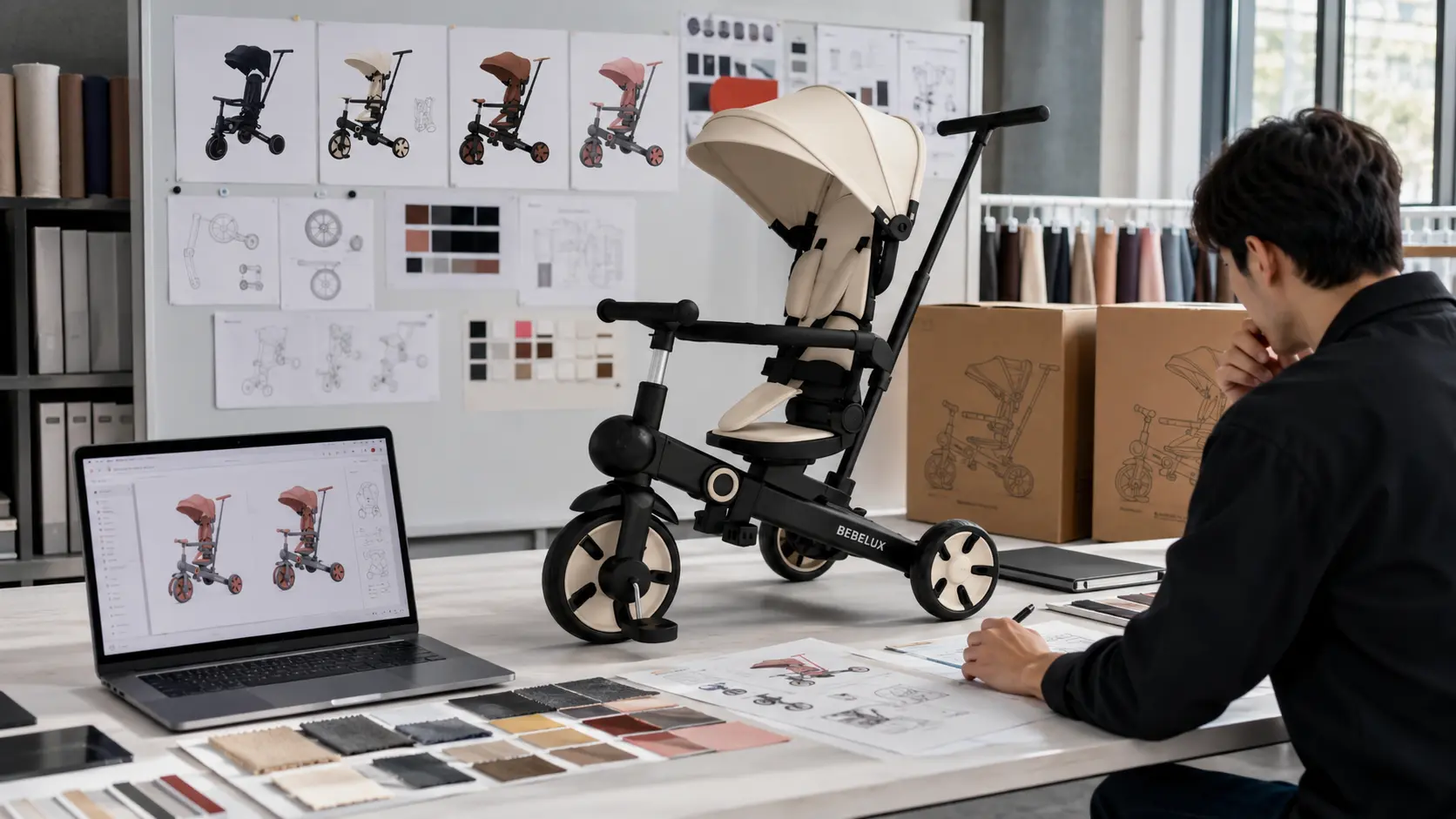
Children’s ride-on products must be designed with greater care than ordinary toys because they support a child’s weight and movement. A tricycle may be used on pavements, in gardens, at parks, or during family walks, which means every part of the product must perform reliably under regular use.
Businesses working with a trusted kids tricycle manufacturer should examine how safety, materials, production standards, and quality inspections are handled before placing a wholesale or private-label order. A visually attractive product may gain attention, but long-term customer trust depends on stable construction and consistent performance.
For retailers, distributors, and importers, quality control should begin before production and continue until the finished goods are packed for shipment. A structured process can reduce defects, improve customer satisfaction, and protect the reputation of the brand selling the product.
Safety Begins with the Product Design
Safety should be considered from the earliest design stage. It is more effective to prevent a potential issue during development than to correct it after production has already started.
The shape of the frame, distance between moving parts, seat position, wheel width, and steering range can all affect how stable and practical the tricycle feels. Designers should also consider how children may interact with the product in unexpected ways.
A good design should reduce unnecessary gaps, exposed edges, loose components, and unstable connections. It should also be clear which age group and user weight the tricycle is intended to support.
Retail buyers should request complete product specifications instead of relying only on photographs or basic catalog descriptions.
Frame Stability Is a Key Quality Area
The frame forms the main structure of a tricycle. If it is too light, poorly shaped, or weakly connected, the product may feel unstable during turns or regular movement.
Buyers should examine the width of the wheelbase, the position of the child’s seat, and the overall center of gravity. These elements influence how the tricycle responds when the child turns the handlebars or shifts body weight.
A strong frame does not necessarily need to be extremely heavy. The goal is to create a balanced structure that provides support without making the product difficult for parents to lift, fold, or transport.
Samples should be tested on suitable surfaces to check whether the tricycle remains steady during normal use.
Wheels Influence Safety and Performance
Wheels are not simply decorative components. Their size, alignment, material, and attachment method affect the way the tricycle moves.
Poorly aligned wheels may cause the product to pull to one side. Loose wheels can create noise, vibration, or instability. Very hard wheel materials may also feel uncomfortable on uneven outdoor surfaces.
During sample review and production inspection, businesses should check that:
- The wheels rotate smoothly and evenly
- Connections remain secure after repeated movement
- The wheel material suits the intended surface
Retailers should also describe the recommended riding environment clearly. A model designed mainly for smooth indoor floors may not perform well on rough outdoor paths.
Steering Should Feel Controlled
Steering should allow the tricycle to turn without feeling too loose or difficult to manage. A handlebar that moves too freely may make the product harder for a young child to control, while stiff steering can make riding frustrating.
Some parent-controlled tricycles include a push handle connected to the front wheel. In this design, the adult may control the direction even when the child moves the handlebars.
The exact steering function should be explained in the product listing and instruction manual. Customers can become disappointed when they expect full parent steering but receive a handle designed only for pushing.
Buyers should test the steering system in every available riding mode before approving a model.
Seats and Safety Supports Need Careful Inspection
The seat should remain stable and properly connected to the frame. It should also provide an appropriate sitting position for the intended age group.
Younger riders may need a supportive backrest, harness, or protective bar. These parts should be secure but still manageable for an adult to operate.
Fasteners, buckles, and adjustment points should be checked repeatedly. A feature may work correctly on a new sample but become loose if the materials or assembly are inconsistent during mass production.
The seat surface should also be easy to clean because children’s products are likely to be exposed to food, drinks, dust, and outdoor dirt.
Folding Mechanisms Must Lock Securely
Foldable tricycles can be useful for families with limited storage space, but folding joints require close attention.
The product should remain securely locked while it is open. An adult should also be able to fold and unfold it without using excessive force.
Moving parts should be designed to reduce avoidable pinch points. Clear warning labels and instructions may be necessary to show where hands should be placed during folding.
Retailers should test the mechanism several times rather than checking it only once. Repeated operation can reveal looseness, misalignment, or locking problems that may not be visible during a basic inspection.
Materials Should Match the Intended Use
Different components may require different materials. Metal may be used for the frame, while plastic, foam, rubber-like compounds, or fabric may be used for wheels, handles, seats, and canopies.
Buyers should ask for accurate material information and confirm whether the selected materials are suitable for children’s products in the destination market.
The product should not have rough surfaces, sharp plastic edges, weak stitching, or finishes that damage easily. Color consistency also matters, especially when the tricycle is sold as part of a coordinated product range.
Durability should be considered alongside appearance. A product that looks impressive when new but quickly develops loose parts or surface damage may generate complaints and returns.
Quality Control During Manufacturing
Around the middle of the sourcing process, businesses should review how the kids tricycle manufacturer manages quality during production. Final inspection is important, but it should not be the only stage where problems are identified.
Quality checks may take place when materials arrive, during component preparation, throughout assembly, and before packing. This step-by-step approach can help prevent the same defect from appearing across a large batch.
Important production checks may include frame dimensions, wheel alignment, color matching, logo position, fastener security, and correct accessory installation.
Buyers should agree on clear quality standards before production begins. Vague instructions such as “good quality” are not enough to guide manufacturing or inspection.
The Value of an Approved Sample
An approved sample gives both the buyer and supplier a clear reference for production. It should reflect the agreed materials, colors, functions, accessories, branding, and packaging.
Businesses should inspect the sample carefully and record any required changes in writing. Measurements and detailed photographs can make the approval process more accurate.
The sample should be assembled according to the customer instructions. This helps buyers identify confusing steps, missing hardware, or parts that are difficult to connect.
Once approved, the sample can be used during final inspection to compare the production units with the agreed product standard.
Packaging Protects Product Quality
Even a well-manufactured tricycle can arrive damaged if the packaging is weak. The frame, wheels, plastic parts, fabric, and painted surfaces should be protected from movement and pressure during transport.
Accessories and hardware should be packed in a clear and organized way. Missing screws, tools, or small components can prevent customers from assembling the product correctly.
Carton size should also be considered. Compact packaging may improve shipping efficiency, but the product should not be compressed or arranged in a way that causes damage.
For online retail, packaging may need extra protection because individual cartons often experience more handling than products shipped directly to physical stores.
Instructions Are Part of Product Safety
An instruction manual is not only a customer service document. It is also part of the product’s safe use.
The manual should explain assembly, adjustment, folding, maintenance, and supervision requirements. It should also show how each safety feature should be secured.
Diagrams should match the actual product. Outdated or generic images can confuse customers when components have changed.
Retailers selling in different countries may need instructions in multiple languages. Warnings and labels should also be reviewed according to the requirements of the destination market.
Clear guidance can reduce assembly mistakes and help parents understand how the product should be used.
Testing Requirements Vary by Market
Children’s product regulations may differ depending on the country or region. Importers should confirm the rules that apply before ordering and shipping the product.
Testing may cover mechanical performance, materials, small parts, labeling, stability, and other safety areas. The exact requirements depend on the product design and where it will be sold.
Businesses should not assume that one report automatically covers every market or every version of the product. A change in materials, structure, or accessories may affect the documents required.
Professional testing and compliance advice should be obtained when necessary. This is especially important for private-label brands that carry responsibility for the product under their own name.
Final Inspection Before Shipment
A final inspection allows buyers to check whether finished products meet the approved specifications before they leave the factory.
Inspectors may review product appearance, measurements, functions, packaging, labeling, and carton quantities. A selected number of units can also be assembled and operated.
The inspection criteria should be agreed in advance. Buyers should define which defects are unacceptable and which minor variations may be permitted.
If a problem is discovered, the cause should be identified rather than simply repairing a few visible units. A repeated defect may indicate an issue with materials, tools, assembly instructions, or worker training.
Spare Parts and After-Sales Support
Quality control does not end when the order is shipped. Businesses should also think about how customer issues will be managed after the product is sold.
Some components may become damaged or lost during long-term use. The availability of replacement wheels, fasteners, canopies, seats, or handles can help retailers resolve customer concerns without replacing the complete product.
Buyers should discuss spare parts before production. A small quantity may be included with the main order or stored for future support.
Clear after-sales procedures can improve customer trust and reduce the cost of handling complaints.
Honest Product Information Builds Trust
Retailers should avoid making claims that the product cannot support. Age range, weight capacity, riding modes, folding functions, and included accessories should be described accurately.
Photographs should show the real model being sold. If a feature is optional, the listing should make that clear.
It is also helpful to explain the type of assembly required and whether the parent handle controls steering. These details are often important to families comparing similar tricycles.
Accurate information helps customers choose a suitable model and reduces the likelihood of returns caused by incorrect expectations.
Final Thoughts
Safety and quality control are essential parts of the children’s tricycle business. A successful product must combine stable design, suitable materials, secure components, clear instructions, protective packaging, and consistent manufacturing.
Retailers and private-label brands should examine the entire production process rather than focusing only on unit price or appearance. Samples, written specifications, testing, inspections, and after-sales planning can all reduce avoidable risks.
A carefully managed tricycle range can provide families with a more dependable product while helping businesses build stronger customer confidence. Further information about kids’ tricycle production and customization is available through bebeluxbaby.com.
Also Read-
- 4 Practical Ways To Stretch Any Tech Budget
- Unlocking Growth: How Unsecured Business Loans Empower Your Business Expansion