
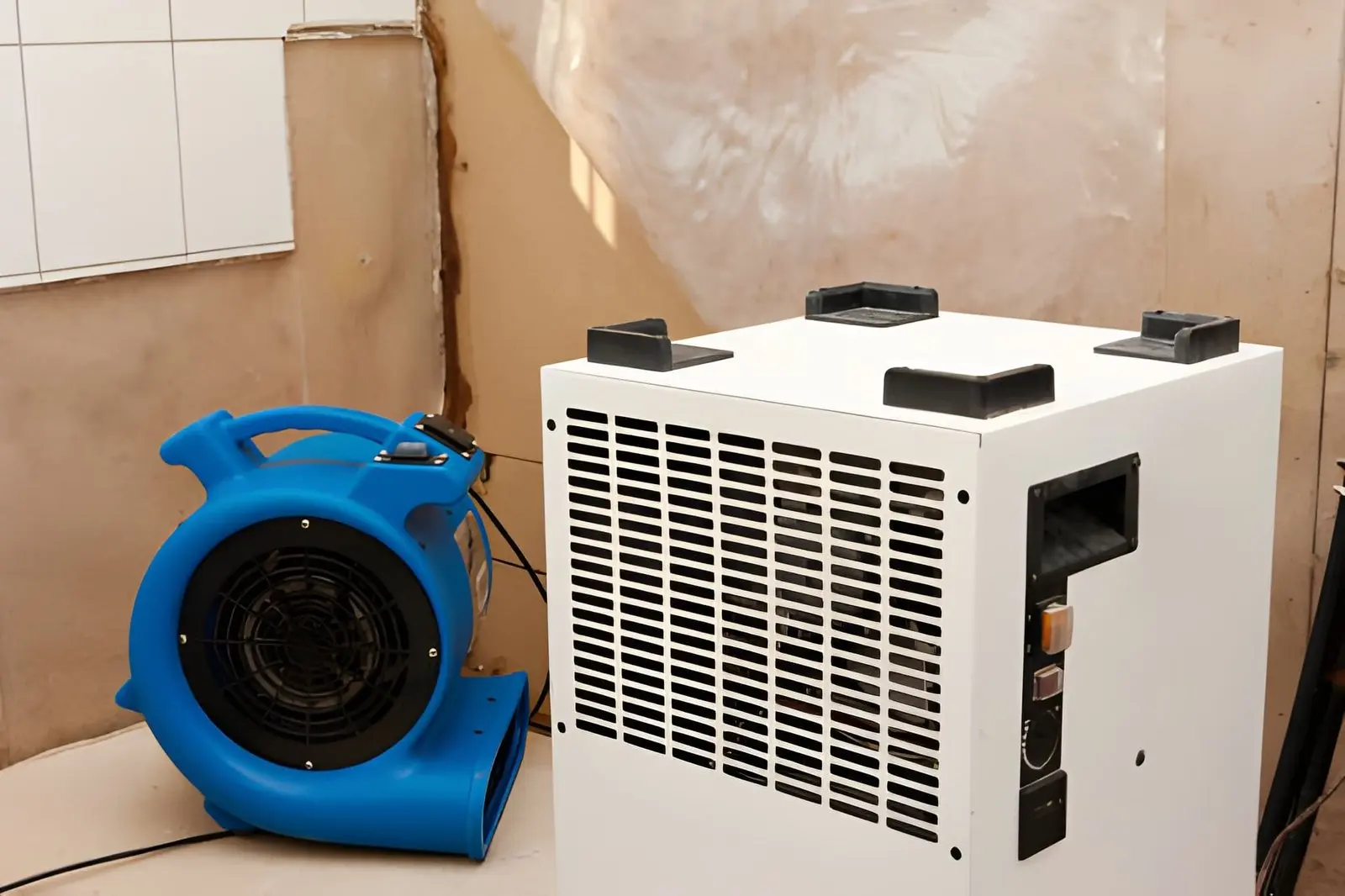
Fast drying is essential after water damage. Because moisture can hide inside carpets, walls, and floors. And if you keep the moisture that way, it can cause mold growth and structural damage.
This can be solved by using the right drying equipment. Dehumidifiers, air movers, and ventilation fans can be used to speed up the drying process. The ventilation fans play an important role in drying your space.
It helps to eliminate damp indoor air and bring in fresh and dry air. Imagine you have just experienced a water leak. Let’s explore how ventilation fans can enhance the drying system efficiency.
Air Movers Lift Moisture from Wet Surfaces
Air movers carry out the initial stage of the drying process. They generate high-velocity air over wet surfaces. This air movement expels moisture in carpets, walls, and floors. It converts trapped moisture to airborne moisture.
High velocity of air enhances the rate of evaporation. Wet materials release moisture faster. By exposing the hidden moisture, air movers improve overall drying speed.
Professionals generally install a single air mover per 70 square feet. This placement ensures even airflow across the entire area.
Dehumidifiers Remove Moisture from the Air
The second step is done by dehumidifiers. They help to eliminate moisture in the air. They pull humid air into the unit and extract the water. Then they release dry air back into the room.
The process reduces the humidity in the interiors. It prevents the moisture from settling back into surfaces. It also prevents moulding and destruction of materials.
Experts recommend using one dehumidifier with three to four air movers. This ratio ensures balanced drying.
Ventilation Fans Improve Air Exchange and Efficiency
The last and most important step is carried out by the ventilation fans. They remove humid indoor air and replace it with dry outdoor air. This improves the air change rate inside the space. Besides, this fresh airflow removes humidity faster.
This reduces the workload of the dehumidifier. It also prevents moisture from building up in the air.
Better air exchange improves drying performance. Besides, increased air change removes a large amount of moisture from walls and materials.
Ventilation Fans Help Reduce Drying Time and Energy Use
You can minimize the drying time by utilizing ventilation fans. The NHS mentioned to me that high-speed air circulation helps materials dry faster. In some industrial environments, proper airflow can reduce drying time to just a few hours.
Ventilation fans also improve energy efficiency. They decrease the working time of dehumidifiers. This lowers electricity consumption. It also eliminates overheating of equipment.
Case Study: “Vapor Vacuum”
This recently (2025) confirmed hard case from the NIST Building Science archives demonstrates how the introduction of ventilation fans corrects “stalled drying.”
THE CASE: Commercial basement flooded. After exhausting the space with air movers and dehumidifiers for 48 hours, humidity readings would not budge below 70%.
THE SCIENCE: Room air was at “saturation.” The dehumidifier was working; however, the air movers were evaporating off more water faster than the dehumidifier could extract! Basically, there was no more room for water in the air.
THE “WORKING” SOLUTION: Crew ducted a ventilation fan to exhaust the wet indoor air to the outdoors while opening a door in a dry area of the building.
THE OUTCOME: “Flushed” the system and reduced RH in the room to below 40% in less than 2 hours. At this point the dehumidifier was finally able to operate at optimum efficiency and structural studs dried 3 days ahead of schedule.
Frequently Asked Questions
Why do I need a ventilation fan if I already have a dehumidifier?
Building Science 101. The dehumidifier is your specialist whose job is to extract water; however, it works slowly. The ventilation fan is your “mover” to blow out the thick stagnant wet air that the dehumidifier can’t reach yet. Without moving that wet air out with a ventilation fan, it becomes so saturated that your air movers literally cannot “push” anymore water vapor into the air.
Where do I put this magical ventilation fan?
Cross-breeze. Place your fan in a window or door on the opposite end of the room as the wet area. You want to pull that moisture out of the house! If using a professional “Negative Air Machine” you’ll need to purchase a flex duct connected to the exhaust and vent it directly outside. This prevents wet air from simply going to another room.
Can’t I just open a window instead of using a fan?
Yes…but only if the air outside is less humid than the air in your home. If it’s raining outside or the outdoor humidity is greater than 50% RH, then you’re basically pouring water into your home by opening a window. A ventilation fan allows you mechanical advantage. You can now literally suck air from a dry hallway and blow it into a wet room.
What is this “70 Square Foot” Rule I keep hearing about?
Refers to the minimum coverage guidelines set forth by the IICRC S500 Standard (basically the “bible” for restoration). One air mover per 50–70 square feet of floor space covered in water is ideal; however, you must also put one air mover for each “offset” or corner of the room. If you aren’t feeling any breeze in that corner, that’s where the mold will be happy.
How do I know when it’s done? Can I trust this system to dry everything?
Trust your moisture meter, not the air. You run these systems until wet building materials (studs, subfloor, etc) match what is considered “Dry” in another area of the house. For most wood materials, this target is below 12% on your moisture meter.
Conclusion
Ventilation fans help to improve drying efficiency. Air movers push moisture into the air. Dehumidifiers work to remove moisture from the air. And ventilation fans remove humid air and bring in dry air.
The complete system helps to dry the area faster. Using all three devices together produces the best results.
Also Read
- 35+ Creative Metaphors for Technology (With Meanings & Examples)
- Sigma Meaning Slang: What “Sigma” Means in Texting, Social Media, and Online Chats
- Metaphors for Trees: 38+ Creative Ways to Describe Growth, Strength, and Life