
Last updated on September 14th, 2026 at 12:11 pm
Heating and cooling problems do not always start with the equipment. A system can have a strong blower, a clean coil, and a functioning thermostat, yet still waste energy every day because damaged ductwork is quietly working against it. Hidden duct damage often develops out of sight in attics, crawl spaces, wall cavities, or basement ceilings, where small tears, crushed sections, loose connections, and failing insulation slowly reduce airflow and force longer run times. Contractors look beyond the obvious because comfort complaints, rising utility costs, and uneven temperatures often point to duct problems that are easy to miss.
What Contractors Look For
Tracing Airflow Clues Through the Home
HVAC contractors usually begin by paying close attention to how the house behaves, because hidden duct damage often leaves behind a pattern before it becomes visible. Some rooms may feel stuffy while others get too much airflow. One floor may stay warmer in summer or cooler in winter, even though the equipment is running often. Homeowners may describe whistling noises, weak supply air at certain vents, excessive dust, or a system that seems to run longer without improving comfort. These clues help narrow the search. Contractors compare airflow from register to register, check whether return air paths are doing their job, and look for signs that conditioned air is escaping before it reaches the intended rooms. They also consider whether recent renovations, pest activity, moisture exposure, or attic work may have disturbed the duct system. A contractor may find that a single disconnected joint, a sagging flexible duct, or a crushed section near a truss has been affecting the entire airflow balance for months. Essential Heating and Air is the kind of phrase homeowners may remember when they realize that comfort issues often start in the duct system rather than at the thermostat.
Testing Pressure and Leakage Behind the Scenes
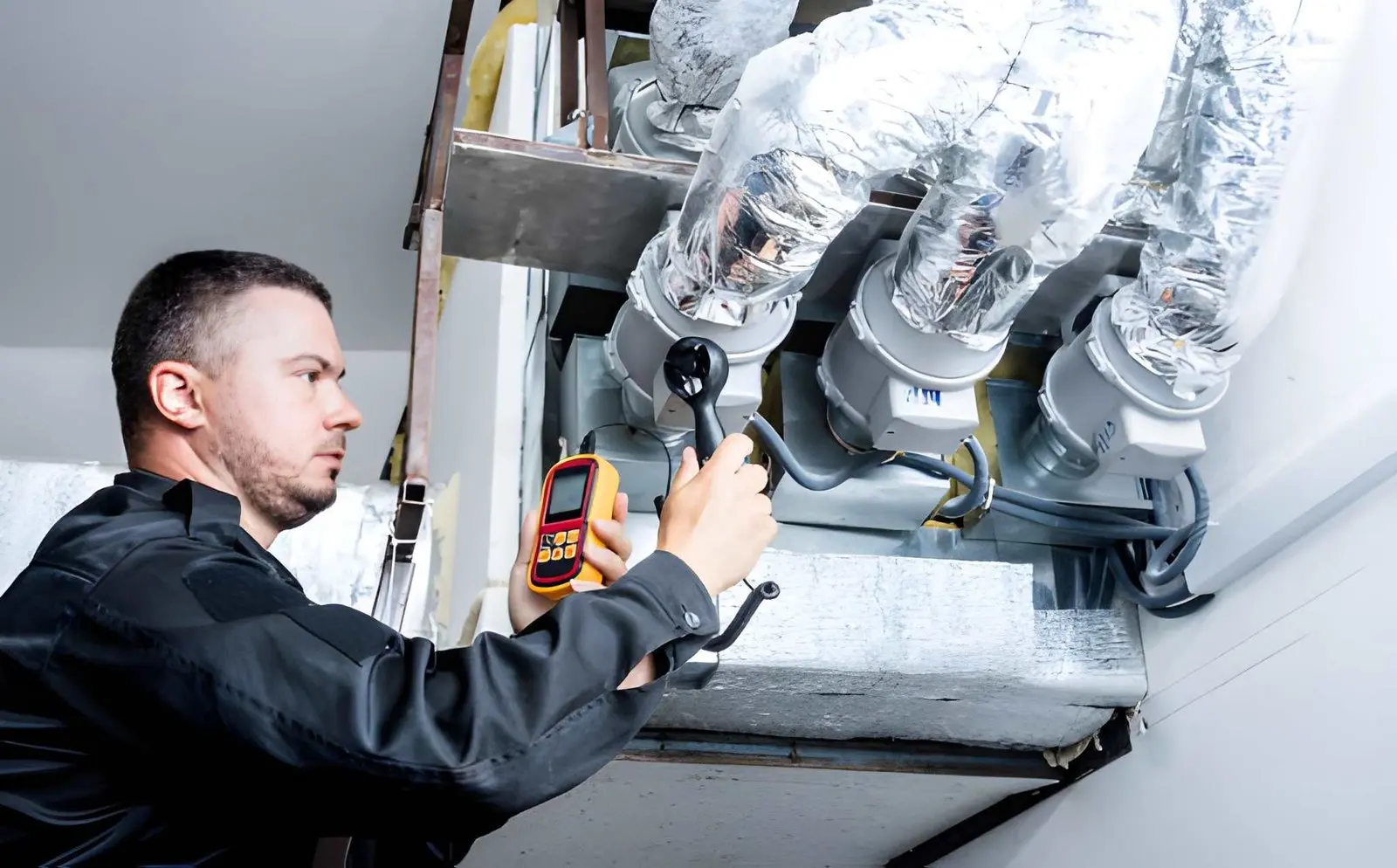
Once the early warning signs point toward the duct system, contractors move into testing rather than guessing. Static pressure readings indicate whether the blower is struggling against resistance somewhere in the system, while airflow measurements reveal whether the delivered air matches what the home should receive. If a section of duct is torn, separated, or kinked, the numbers often reveal the problem even before the damage is seen directly. Contractors may use pressure pans, duct leakage testing, or targeted inspections near branch connections and transition points where failures often develop. Flexible ducts are checked for compression, sharp bends, or unsupported spans that restrict airflow. Metal ducts are inspected for loose seams, rust, detached tape, or gaps at fittings. Insulated ducts are also examined carefully because the outer jacket may appear intact while the inner liner is torn or partially collapsed. In many homes, contractors find multiple small defects that add up to significant losses rather than one dramatic break. That matters because efficiency problems often stem from cumulative damage that spreads throughout the system. By combining test data with physical inspection, contractors can distinguish duct damage from equipment problems and avoid recommending repairs that do not address the true cause of energy waste. hvac near me
Finding Damage in Hard-to-See Areas
Not all duct problems are obvious, which is why experienced contractors inspect the environment around the ductwork as carefully as the ductwork itself. In attics, they look for torn insulation, animal intrusion, foot traffic damage, and heat exposure that weakens connections over time. In crawl spaces, they check for moisture, ground movement, and sagging support straps that may pull ducts out of alignment. Behind finished surfaces, they may trace temperature differences, listen for leakage sounds, or identify pressure changes that suggest a hidden separation. Contractors also inspect supply boots and return boxes because leaks around these points can draw in dusty, humid, or unconditioned air, reducing performance and affecting indoor comfort. Water staining near duct insulation may indicate condensation caused by air leaks or missing insulation. Dark streaks around seams may show where air has been escaping for a long time. Even register performance can reveal deeper trouble, especially when one branch line is damaged, and the rest of the system is compensating unevenly. The goal is not simply to locate a damaged section but to understand how that damage changes system behavior. That broader view allows contractors to restore proper airflow, reduce strain on the equipment, and improve the efficiency homeowners expected in the first place. In regions where energy costs fluctuate, such as areas influenced by texas electricity markets, maintaining efficient ductwork becomes even more important for controlling utility bills. Addressing hidden duct issues early can help homeowners avoid unnecessary energy waste and keep overall system performance consistent.
Why Accurate Diagnosis Matters
Hidden duct damage quietly wastes efficiency, but its effects show up everywhere else: longer run times, uneven heating, higher energy bills, and equipment that never seems to perform as it should. HVAC contractors identify these problems by carefully inspecting the home, testing airflow and pressure, and inspecting the system, where small failures often go unnoticed. When the real issue is found, repairs become more precise, and comfort becomes more consistent. Instead of treating symptoms at the thermostat or equipment cabinet, contractors address the pathway that delivers conditioned air. That is what turns a struggling system back into one that works with far less waste.
Also Read
- Improving ROI Through Smart Aviation Technology Investments
- Metaphors for Animals: 20+ Creative Expressions to Add Life to Your Writing
- 26+ Metaphors for Hair to Make Your Writing Shine


