There’s a moment on the water in Budapest when you realise you’ve been staring at the same building for three full minutes with your jaw slightly open. It’s probably the Parliament – that absurdly ornate neo-Gothic pile on the Pest bank – and it looks completely different depending on what time of day you’re floating past it. Day or night, a Danube cruise is pretty much the one thing every first-timer should do here. The question is just which version to go for, and whether you’ll actually be happy with what you booked.
This guide covers the day vs night decision, the main cruise types you’ll run into and – importantly – how to book one without getting stuck with a bad fit or losing money if your plans change. If you’d rather skip straight to browsing options, Alle Travel has the full range of Budapest boat tours with free cancellation up to 24 hours before departure + prices are very affordable.
So Why Is Everyone on a Boat?
Budapest’s been called the Pearl of the Danube for ages, and while that sounds like the kind of phrase a tourist board dreamed up, it’s actually pretty accurate from the river. The city’s UNESCO World Heritage riverfront – Buda Castle, the Chain Bridge, Fisherman’s Bastion, the Parliament on the Pest side – lines up along the water in a way that’s genuinely hard to take in from the streets. You need a bit of distance, and the Danube gives you that.
Most cruises run somewhere between 60 and 90 minutes and cover a stretch from roughly the Chain Bridge down past the Elizabeth Bridge and sometimes as far as the Liberty Bridge. That’s enough to catch all the main sights from both banks, going down and coming back – so you’ll see everything regardless of which side of the boat you’re sitting on.
Day vs Night – the Actual Difference
The Case for Going Daytime
A daytime cruise is probably better than most people expect. You get real clarity on the architecture – the stonework on the Parliament, the coloured tiles on Matthias Church, the way the castle district sits above the Buda bank. Many daytime cruises also come with an audio guide (usually in 30+ languages), so there’s actually some context for what you’re looking at rather than just floating past beautiful things you can’t name.
The other perk, which gets overlooked, is the possibility of stopping at Margaret Island. A few operators include an optional stop there during the warmer months – it’s a nice add-on if you’ve got kids or just want a bit of a wander somewhere that isn’t packed with tourists.
But – and it’s a real but – daytime doesn’t have the wow factor. The city looks good. It doesn’t look extraordinary.
The Night Cruise (This Is What People Actually Mean)
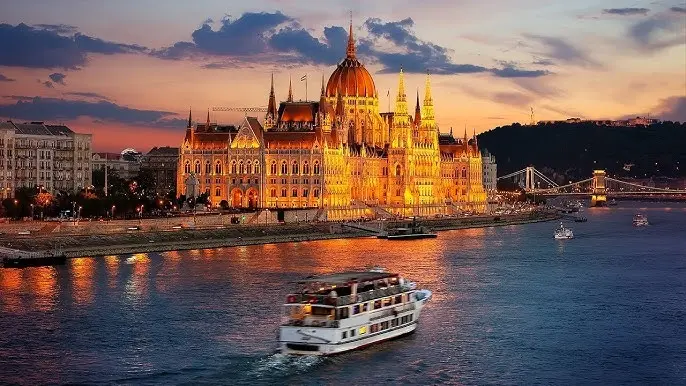
When the lights come on at dusk, Budapest does something a bit unfair to every other city. The Parliament goes gold – properly gold, not just warmly lit but kind of luminous – and the bridges string up like something from a film set. The whole riverfront is floodlit in a way that makes the daytime version feel like a rough draft.
Reviews for night cruises are almost comically consistent. Words like “spectacular” and “breathtaking” appear so often they’ve lost meaning, but the sentiment’s real. First-timers especially tend to get a bit overwhelmed by how good it looks.
One practical thing worth knowing: the decorative lighting on the main buildings typically turns off around 10pm or 11pm depending on the season. So booking a very late cruise – one that starts around 10:30 – might mean you miss the full effect. The sweet spot is a departure around sunset or early evening. You get the golden-hour view heading out and the full lit-up panorama on the way back. That’s the version you’ll want to photograph.
So Which One?
For most people visiting Budapest for the first time, the night cruise is the one to do. It’s the iconic version and genuinely hard to replicate from the banks. The daytime cruise is worth it if you’re into architecture and want to learn about the buildings, if you’ve already done a night cruise on a previous trip, or if you’re travelling with very young children who need an early bedtime. Otherwise – go after dark.
The Main Types of Cruise
A Sightseeing Cruise With a Welcome Drink
This is the sweet spot for most visitors – a 60-minute cruise with a welcome drink included (usually prosecco, beer or a soft drink) for roughly €15-20 per person. It’s relaxed, it’s not overly long and you’re not committed to a whole evening on a boat. A good audio guide makes a real difference here, so it’s worth checking whether it’s included before you book.
The Unlimited Drinks Cruise
These run about 75 minutes and typically include unlimited prosecco, beer and Aperol spritz for somewhere around €25-30. The vibe’s more social – more of a party atmosphere than a sightseeing one, though you still get the views. It’s a genuinely fun option for groups or couples who want an evening out rather than a cultural experience. Just go in knowing the atmosphere’s going to be lively – that’s the point of it, isn’t it?
Not ideal for families with young kids. Fine for pretty much everyone else.
Dinner Cruises and the Folk Show Option
Dinner cruises run longer – usually 2 to 2.5 hours – and include a full meal. Some come with live music, jazz, classical performances or a Hungarian folklore show with dancing. Prices vary quite a bit, from around €40 for a buffet-style dinner up to €110+ for an a la carte experience with proper table service.
Honest take: Budapest is a genuinely great city for restaurants, and most cruise dinners aren’t going to be the best meal you’ll have here. If you’re celebrating something and want the combined experience of dinner plus the riverfront at night, it can be really lovely. But if food is your main priority, you’d probably rather eat somewhere in the city and book a separate sightseeing cruise. The folk show cruises are a slightly different category – they’re more of an entertainment package and tend to get decent reviews from people who know what they’re signing up for.
Private Cruises and Specialist Options
A handful of operators run private setups – water limousines with mahogany and leather interiors, hire-your-own-boat for groups, bachelor or bachelorette party boats with an open bar. These start at higher prices but are worth knowing about if you’re planning something for a group or a special occasion and don’t want to share with a hundred strangers.
A Quick Comparison
| Cruise Type | Duration | Price Range | Best For |
| Sightseeing + welcome drink | 60 min | €15-20 | Most first-timers, couples, families |
| Unlimited drinks cruise | 75 min | €25-30 | Groups, social evenings |
| Dinner cruise (buffet) | 2 hrs | €40-60 | Combined experience |
| Dinner + live folk show | 2-2.5 hrs | €55-80 | Culture + dining together |
| A la carte dinner cruise | 2.5 hrs | €100-110+ | Special occasions |
| Private cruise | 60-120 min | From €100+ | Groups, events, celebrations |
Where to Book – and Why Free Cancellation Matters
This is probably the part people think about least and should think about most. Budapest cruise operators sell a lot of the same tours through different platforms at different prices, and it’s easy to end up paying more than you needed to – or booking something non-refundable for a date that ends up changing.
Alle Travel’s Budapest Danube cruise page is genuinely one of the better places to sort this out. They’ve got the full range in one spot – evening sightseeing cruises with a drink, dinner options, jazz cruises, folk show boats, unlimited drinks tours and private experiences – all with verified reviews and clear pricing. No hunting through five different operator websites trying to figure out what’s included.
The thing that makes a real difference for most travellers, though, is the free cancellation policy up to 24 hours before departure. If you’re the kind of traveller who books things a week out but isn’t 100% sure your schedule will hold – or if Budapest weather’s looking a bit uncertain and you want flexibility – being able to cancel or reschedule without losing your money is actually a pretty big deal. A lot of direct bookings through cruise operators don’t give you that. Alle Travel does.
Prices across their listings run from around €17 for a basic evening cruise up to about €110 for a full dinner experience, with instant confirmation on most options – and it’s worth knowing that the same tours often come out a few euros cheaper here than on the bigger aggregators like GetYourGuide or Viator, simply because the platform takes a smaller cut. And if you’re after something specific – a cruise with live music, something family-friendly, a private boat for a group – the filtering makes it pretty easy to narrow down without reading through a load of descriptions that all sound the same.
One thing worth knowing: the sunset and early-evening departure slots fill up fast in peak season (June through August especially). Booking a few days ahead saves a lot of stress – and with free cancellation as a safety net, there’s not much reason to wait until the day.
Practical Info Before You Go
Finding your dock. Departure points are mostly on the Pest bank between the Chain Bridge and Elizabeth Bridge. The dock numbers are a bit confusing – several in a row, not always well signed. Use the exact dock name or number from your booking and put it straight into maps on your phone. Give yourself an extra 10-15 minutes the first time.
What to wear. Smart casual is fine for an evening cruise. More importantly, bring a layer – it gets noticeably cooler on the water once the boat’s moving, even on warm summer nights. This is the thing people mention most in post-trip reviews and then forget to actually do.
Getting a good spot for photos. The open upper deck fills up fast. Arriving 20-30 minutes before departure is worth it if photos matter to you. But most cruises do an out-and-back route, so you’ll see everything on both banks either way – don’t stress about which side you’re on.
Can you just turn up on the day? Sometimes, yes – especially for simpler sightseeing cruises outside peak season. But popular evening slots and anything with food or a show really need advance booking. And frankly, booking online through somewhere like Alle Travel is pretty much always cheaper than buying at the dock.
A Danube cruise in Budapest is one of those rare tourist activities that actually delivers. Pick the right version for what you want, book it with the flexibility to change your mind, bring a jacket and enjoy what is genuinely one of Europe’s better views from the water. It’s a pretty good deal, really.
Also Read-Improving ROI Through Smart Aviation Technology Investments