
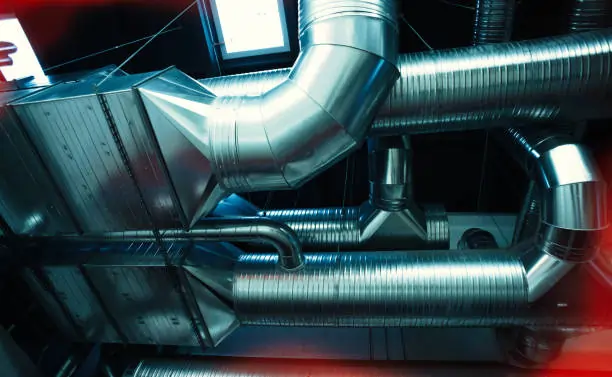
Many homeowners focus on the furnace or air conditioner and assume those machines alone determine indoor comfort. That is understandable, since the main unit gets most of the attention during repairs, maintenance visits, and replacement decisions. But the system that carries heated or cooled air through the house has just as much influence on performance. Ductwork affects how efficiently air moves, how evenly rooms stay comfortable, and how hard the equipment has to work to maintain the temperature you set. If the ducts are leaking, poorly insulated, dirty, crushed, or badly designed, even a newer unit can struggle to deliver steady, efficient results.
Why the hidden system matters
- Damaged Ducts Can Undermine the Entire System
Ductwork condition matters because the heating and cooling unit does not deliver comfort directly into your rooms. It produces conditioned air, but the duct system carries it where it needs to go. If the ducts have gaps, loose connections, sagging sections, or restricted passages, a significant portion of the treated air can be lost before it reaches the living space. That changes the performance of the entire system. Rooms farther from the unit may stay too warm in summer or too cold in winter, while the equipment runs longer trying to make up the difference. In houses with aging ductwork, homeowners may blame the air conditioner or furnace for weak results when the real problem is distribution. Many property owners researching airflow and duct performance also end up reading service pages such as https://atticmanhvac.com/elk-grove-hvac/ while trying to understand why some rooms never seem to match the thermostat setting. When ducts are compromised, the unit does not stop working, but it no longer operates efficiently. That difference can quietly affect comfort every day without producing one dramatic failure that makes the cause obvious.
- Air Leaks and Poor Insulation Raise Operating Strain
One reason ductwork deserves the same attention as the main unit is that air loss and heat transfer inside the duct system can create a constant drain on efficiency. If cooled air travels through hot attic spaces in summer, or heated air moves through cold crawlspaces in winter, poorly insulated ducts can lose a significant amount of the temperature the system worked to create. The same problem occurs when small air leaks allow conditioned air to escape into unoccupied areas rather than reaching bedrooms, living rooms, and offices. That wasted air forces the furnace or air conditioner to cycle longer, which can increase utility costs and add wear to motors, blowers, and compressors over time. The unit may still operate, but it is doing more work for less useful output. This is why some homes never feel comfortable despite repeated thermostat adjustments. The problem is not always the temperature setting or the equipment size. Often, the air simply is not being delivered effectively. Duct performance determines how much of the unit’s effort translates into real comfort, and poor duct condition can turn a capable system into one that feels underpowered and inconsistent.
- Duct Condition Also Affects Air Quality and Balance
Ductwork is not only about temperature delivery. It also affects indoor air quality, airflow balance, and the general feel of the home. Damaged or dirty ducts can pull in dust, insulation particles, and other contaminants from attics, basements, garages, or wall cavities if the system is leaking on the return side. That means the air circulating through the home may carry more debris than homeowners expect, even when filters are being changed regularly. At the same time, improper duct sizing or deteriorated duct sections can create pressure imbalances that leave some rooms stuffy while others receive too much airflow. People often notice this as hot and cold spots, weak airflow from certain vents, doors that move slightly when the HVAC turns on, or a house that never feels evenly conditioned from one zone to another. These problems are easy to misread as equipment weakness, but they often begin with the path the air takes after leaving the unit. Ductwork serves as the delivery network for the entire HVAC system. If that network is leaking, contaminated, or unbalanced, the indoor environment can feel uncomfortable even when the equipment itself is still functioning within a normal range.
The Hidden Path Deserves Equal Attention
Ductwork condition matters as much as your heating and cooling unit because comfort depends on both production and delivery. The furnace or air conditioner creates the temperature change, but the ducts determine whether that conditioned air reaches the right places in the right amount. Leaks, poor insulation, contamination, restriction, and imbalance can all reduce efficiency, increase operating strain, and make a home feel uncomfortable even when the equipment itself seems functional. Paying attention only to the main unit tells only half the story. A home feels consistently comfortable when the equipment and the duct system support each other instead of working against one another.
Read more: IKKYU Tea Japanese Tea Craftsmanship: The Art and Tradition Behind Every Sip – metaphorhaven.com
Choosing the Right Caster Wheels for Various Applications – metaphorhaven.com