Keeping safety programs organized is harder when teams rely on paper forms, scattered spreadsheets, and disconnected training records.
The best EHS safety management software helps centralize inspections, incident follow-up, policy acknowledgments, and compliance tracking so teams can act faster and document work more clearly.
This list reviews six platforms with different strengths, from mobile field execution to enterprise learning and compliance administration.
1. iTacit
Overview
iTacit is an EHS safety management software platform built to simplify compliance, inspections, training, and risk tracking for frontline teams. It brings forms, certifications, policy management, and audit documentation into one mobile system, which makes it easier to keep records accurate and accessible across sites.
Key Features and Strengths
iTacit stands out for its practical approach to field safety management. Teams can complete digital forms for inspections, JSAs, tailboards, and corrective actions directly from mobile devices. Workers can also capture photos, signatures, and notes on site, which helps reduce delays and missing documentation.
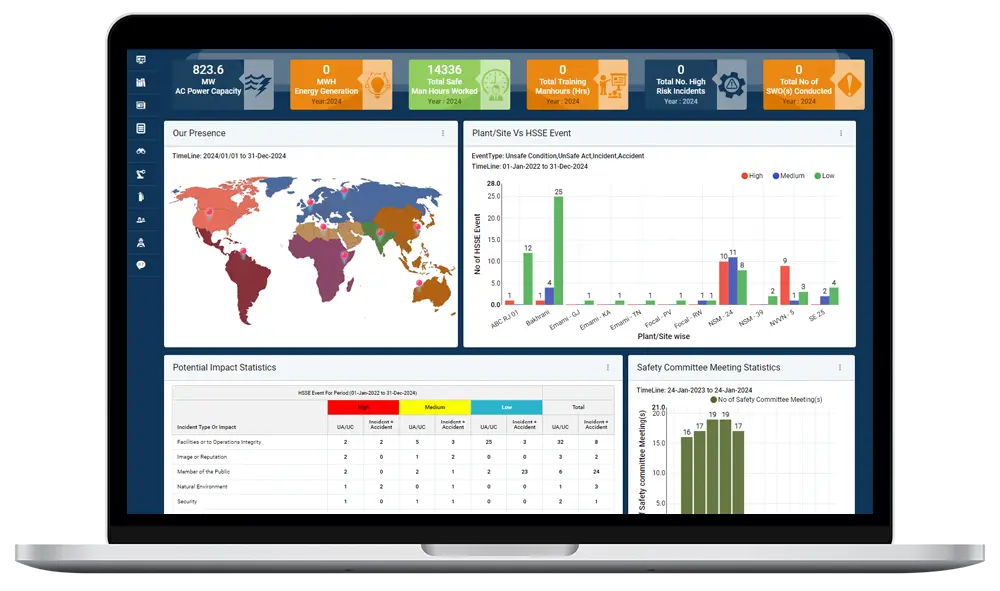
The platform also supports automated tracking for training and certification deadlines. That gives EHS leaders a clearer view of expiring requirements, overdue actions, and open compliance tasks. Document control features help teams manage policies and SOPs while keeping acknowledgment records in one place. Real-time visibility across locations makes it easier to spot gaps early and prepare for audits with less manual work.
Ideal For
iTacit is a strong fit for construction, manufacturing, logistics, and other operational environments where frontline workers need mobile access to safety tasks, training, and compliance records.
Why It Stands Out
iTacit combines mobile usability, digital recordkeeping, and compliance oversight in one platform. For teams that want to reduce paperwork, standardize processes across sites, and improve audit readiness, it offers a focused EHS workflow rather than a general learning system.
2. Saba
Overview
Now part of Cornerstone, Saba is better known as a learning and talent management platform than a dedicated EHS system. It can still support safety programs through structured training delivery, compliance learning, and reporting for large organizations that want EHS training managed alongside broader workforce development.
Key Features and Strengths
Saba supports personalized learning, course delivery, skills development, and enterprise-scale administration. Organizations can manage training assignments, learning paths, and reporting from a centralized platform. Its broader ecosystem also appeals to companies that want compliance training connected to workforce development rather than handled in a separate tool.
Because it sits within the Cornerstone platform, Saba is more relevant for organizations with complex learning environments than for teams looking for inspection-first EHS software.
Ideal For
Large enterprises that need compliance and safety training to sit within a wider learning and talent management strategy.
Why It Stands Out
Saba stands out for enterprise learning depth. It is best viewed as a training-led option for EHS support, not as a purpose-built safety operations platform.
3. ILIAS
Overview
ILIAS is an open-source learning management system with a long history in education, public administration, and structured training environments. While it is not designed as a dedicated EHS platform, it can support compliance training, policy delivery, and assessment workflows for organizations that want a customizable LMS without licensing fees.
Key Features and Strengths
ILIAS supports course management, tests, assessments, role-based permissions, and multilingual use. Its open-source model makes it appealing to organizations that want more control over deployment and customization. It also has a long-standing reputation for reliability in large and security-conscious environments.
For EHS use, ILIAS is most useful where the main requirement is training administration rather than field inspections, hazard reporting, or corrective action workflows.
Ideal For
Public institutions, large administrative bodies, and organizations need a compliance training infrastructure on an open-source LMS.
Why It Stands Out
ILIAS offers a flexible, license-free way to manage structured learning and assessments. It makes the most sense for training-heavy compliance programs with in-house technical support.
4. OpenOlat
Overview
OpenOlat is another open-source LMS that can support EHS and compliance training through course delivery, testing, collaboration tools, and learning paths. It is designed for organizations that want a scalable learning platform with room for customization.
Key Features and Strengths
The platform supports course management, assessments, group administration, and virtual learning integrations. It also offers collaboration features and learning path functionality, which can help organizations structure recurring compliance education for distributed teams.
Like ILIAS, OpenOlat is more training-oriented than operations-oriented. It can help manage EHS knowledge and mandatory learning, but it is not built around inspections, incident logging, or field documentation.
Ideal For
Organizations want open-source compliance training software with flexible learning workflows and internal technical resources to support it.
Why It Stands Out
OpenOlat offers a broad feature set without commercial licensing costs. It is a reasonable option for teams that prioritize training delivery and customization over hands-on safety workflow management.
5. Trainual
Overview
Trainual focuses on documenting processes, policies, and role-based training in one searchable system. It is not a full EHS operations platform, but it can work well for companies that need to organize SOPs, onboarding, policy sign-offs, and recurring training in a way that is easy for teams to access.
Key Features and Strengths
Trainual helps businesses centralize policies, process documentation, and training content. Teams can assign content by role, track completion, and keep operational knowledge more consistent across locations.
Mobile access and searchable documentation make it easier for employees to find procedures without relying on printed manuals or scattered files.
For EHS use, its value is strongest in training consistency, policy delivery, and process documentation rather than inspection management or corrective action tracking.
Ideal For
Small to mid-sized teams that want clearer SOP management, policy acknowledgment, and structured employee training tied to operational processes.
Why It Stands Out
Trainual bridges documentation and training in a straightforward way. It is especially useful for businesses that want to reduce knowledge gaps and keep process guidance easy to access.
6. Gomo Learning
Overview
Gomo Learning is a cloud-based authoring platform built for creating responsive digital learning content. It is not traditional EHS management software, but it can support safety programs by helping organizations build and publish mobile-friendly compliance training at scale.
Key Features and Strengths
Gomo is built for collaborative course authoring, multi-device delivery, and multilingual learning content. Teams can create training content that works across desktops, tablets, and smartphones without building separate versions. Its cloud-based workflow also helps multiple contributors work on training content more efficiently.
This makes Gomo more relevant for organizations that already have a learning ecosystem in place and want to improve the speed and consistency of safety training content creation.
Ideal For
Global or distributed organizations that need to create multilingual compliance and safety training content quickly.
Why It Stands Out
Gomo stands out as a content creation tool rather than a full EHS platform. It is best suited to teams focused on scalable digital training production.
Conclusion
The right EHS safety management software depends on what your team needs to manage every day.
Some platforms focus on training delivery, policy distribution, or course authoring, while others are better suited to inspections, compliance tracking, and audit readiness in the field.
For organizations that need a practical system for frontline execution, iTacit is the strongest fit in this list because it connects mobile forms, training oversight, document control, and site-level visibility in one place.
That combination can help teams reduce admin friction, keep records current, and maintain more consistent safety processes across locations.
Also Read-Improving ROI Through Smart Aviation Technology Investments