It is vital to know how to use different tenses while communicating, and the past continuous tense is one of them. With the help of this tense, one can talk about events in the past and say what was going on at a particular point in time, which makes sentences sound more vivid.
In our daily discussions, stories, or business communications, the use of the past continuous tense enables you to create links between the actions and illustrate the developments in the situation. By knowing how to use it, you can greatly enhance your ability to communicate in English.
What is the Past Continuous Tense?
The past continuous tense (also can be named as past progressive) is used to describe actions that were ongoing at a specific moment in the past. If you are looking for a deeper explanation of how to use the Past Continuous tense, click on the link and read more.
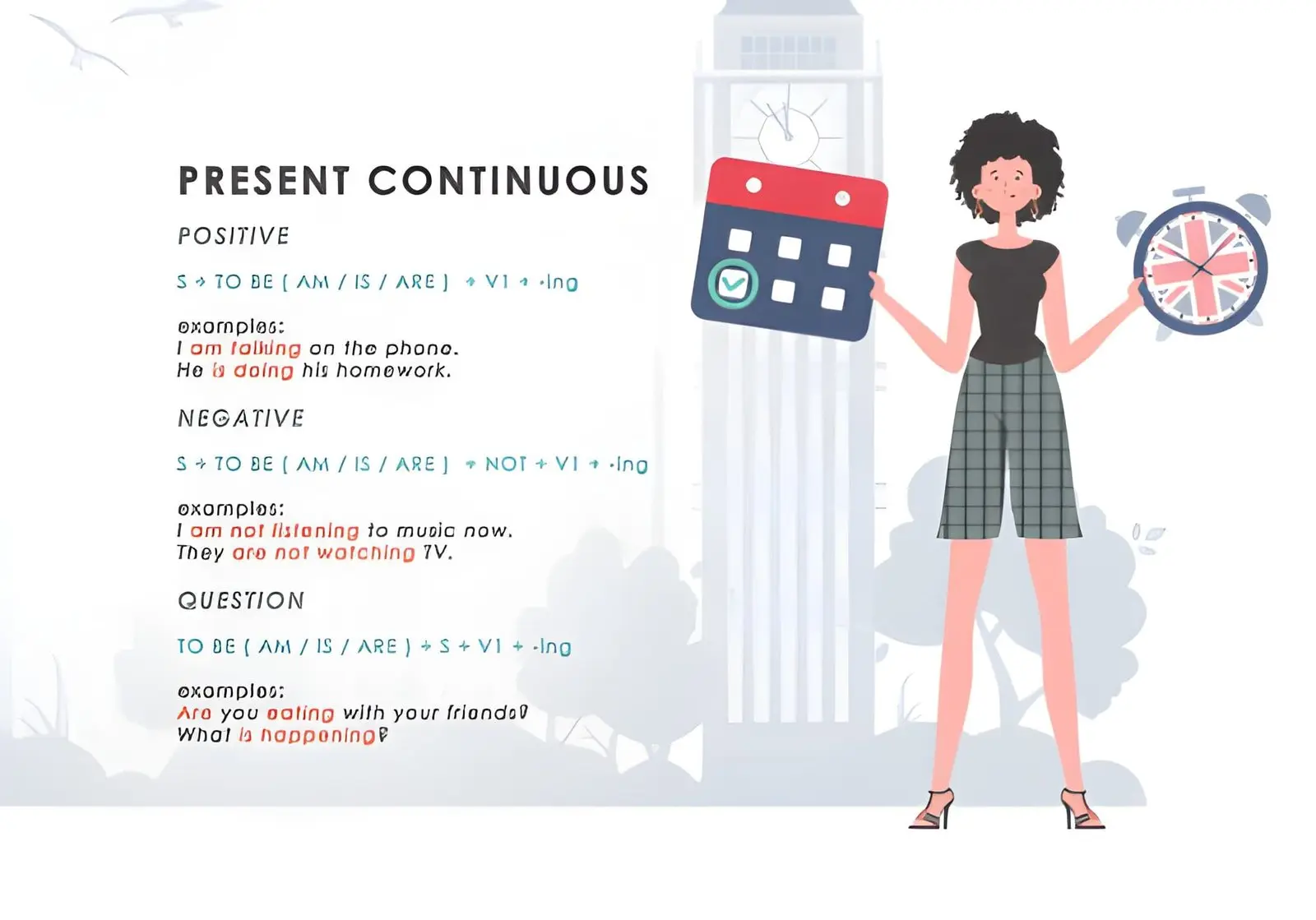
The basic structure of this tense looks like this:
Subject + was/were + verb (-ing)
- Turn on the lights. I was reading a book.
- They were playing football.
- She was working late.
When to Use the Past Continuous
Only through practice will the significance of the past continuous be fully grasped. The past continuous is more than simply a grammatical construction; rather, it is a means for adding motion and background information to your statements.
It helps the listener understand what was previously occurring, what happened suddenly, and how various past actions related to one another.
Regardless of whether you are narrating an event, giving an explanation about something that happened, or just stating what was happening at a particular point in time, the past continuous makes the sentence more interesting and realistic.
- Actions in progress at a specific time
Use it to describe something that was happening at a particular moment.
- At 8 p.m., I was watching a new TV series.
- This time yesterday, we were looking for a bus.
- Interrupted actions
The past continuous is often used with the simple tense to show that one action interrupted another.
- I was cooking when the phone rang.
- They were walking when it started to rain.
- Parallel actions
If two or more actions are happening at the same time, you can use Past Continuous as well.
- She was listening to music while I was studying.
- We were talking and laughing all evening.
- Setting the scene in stories
If you are about to write a book or make a long speech, the Past Continuous can lend you a helping hand to create background context.
- The sun was setting, and people were going home.
- It was raining, and the wind was blowing, so we decided to go home.
Common Time Expressions
There are some words and expressions that tend to be used with the past continuous tense to indicate that the activity happened over a certain period of time. Being familiar with such language cues may aid in identifying the tense when reading texts or speaking.
They are particularly helpful since they relate actions with time, show a relationship between actions at certain times, or refer to a particular point in the past. As soon as you start picking up on them, the sentence pattern is revealed.
| Typical signals | Examples |
| while | While I was driving, I saw a bird. |
| when | I was taking a shower when the lights went out. |
| at the moment | At that moment, I was thinking about buying this book. |
| all day/all night | She was working all day. |
| as | He was smiling as he was reading the letter. |
Common Mistakes to Avoid
Even where the structure is known, errors occur when using the tenses. Often, the error does not lie in the construction, but rather in the appropriate use of the tenses in a particular situation. This is why it is necessary to consider common errors in the use of tenses and their causes.
- Using stative verbs incorrectly
Some verbs, like know, love, and believe, are rarely used in this tense.
Incorrect: I was knowing the answer.
Correct: I knew the answer.
- Overusing the Past Continuous
Incorrect: Yesterday I was going to the store and was buying a steak.
Yesterday, I was going to the store and bought a steak.
- Confusing “was” and “were”
Incorrect: She were writing a new song.
Correct: She was writing a new song.
Conclusion
The use of the Past Continuous tense is extremely important when describing an action that is taking place in the past. These tenses will enable you to illustrate the background, interruption and parallel action effectively.
Learning it involves comprehending the function it plays in conjunction with the past simple and applying it in practical situations. Focusing on the fact that the action is ongoing will automatically result in its proper use.
With consistent practice and exposure, the tense will become an intuitive part of your everyday English.
Also Read
- Quick Steps to Switch to an Educational Diagnostician Career Online
- The Art of Adaptive Reuse: Breathing New Life into Historic Structures
- The Hidden Financial Risks of Rapidly Scaling a Business