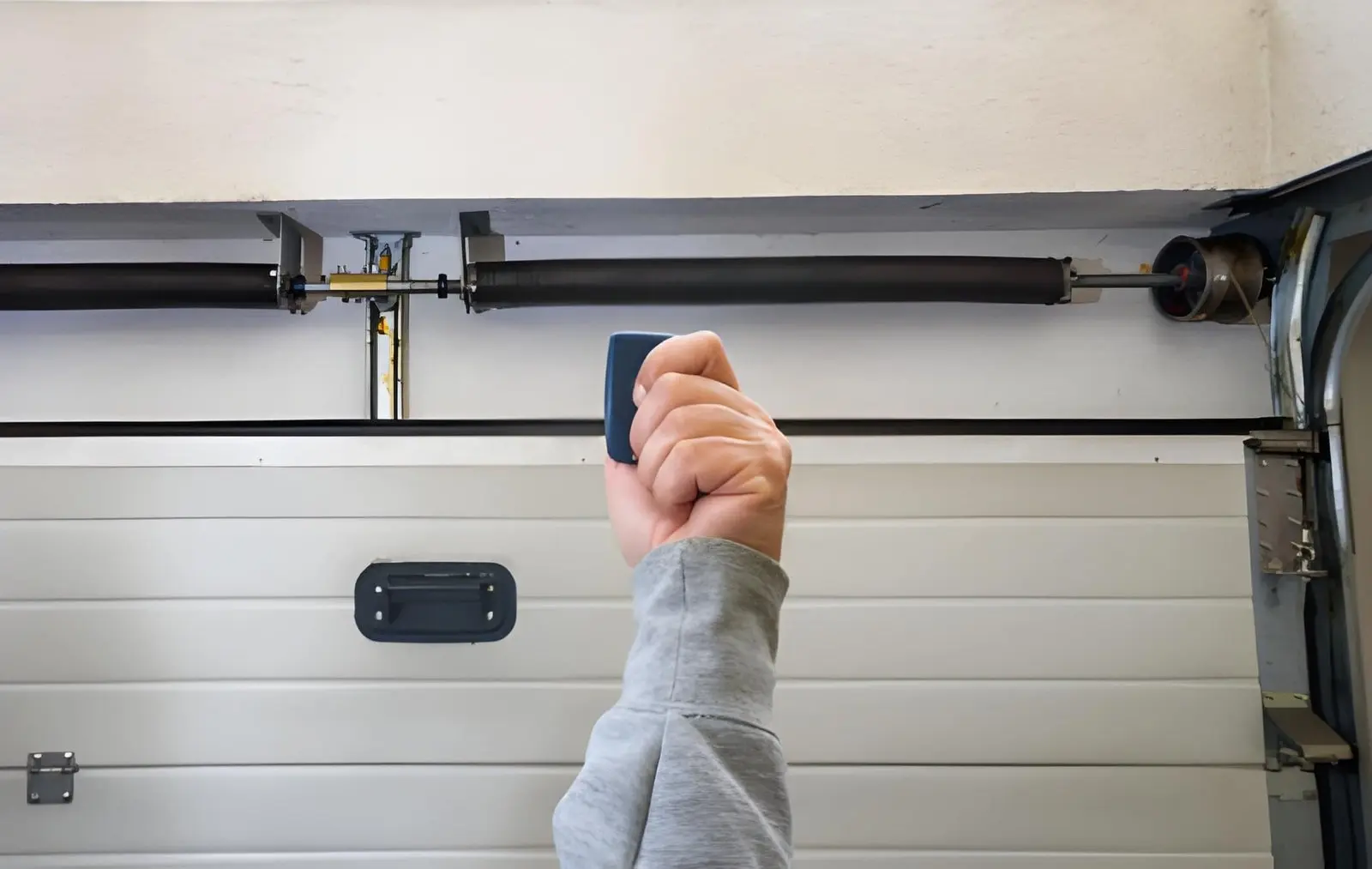
If you just want the quick answer before we get into the details here it is. The most important parts of a residential garage door system are the door panels, the opener, the springs (either torsion or extension), the cables, the tracks & rollers. These components work together to counterbalance the heavy weight of the door. The springs and cables actually carry the physical load while the opener simply controls the movement.
I know exactly how frustrating it is when your car is trapped inside on a Monday morning. You press the button and hear a terrible grinding noise or a loud bang. It happens to the best of us.
Most people ignore their garage door until it completely stops working. I think that is a huge mistake. A little knowledge about what is actually happening above your head can save you a lot of money. It keeps your family safe too.
The Visible Parts We See Every Day
The panels make up the bulk of what you see from the driveway. They provide security and insulation for your home. A typical insulated steel residential door often weighs between 150 to 300 pounds.
Some double wide doors can even exceed 400 pounds depending on the material. That is a massive amount of weight hanging right over your head and your car. The sheer heft of those panels dictates the needs of the entire mechanical setup. Everything else is built around supporting that specific weight.
Then you have the opener hanging from the ceiling. It looks like the boss of the operation. It has the flashing lights and the smart features and the motor that hums when you press the button. Appearances are pretty deceiving here.
I used to stare at my old chain drive opener and marvel at how strong it must be to lift that massive slab of wood & steel.
The Truth About Your Garage Opener
Here is a massive misconception that almost every homeowner believes. The motor does not actually lift the heavy door.
The opener simply acts as a control unit to guide it. It signals when to open or close and dictates the timing of the movement. The motor alone controls when the door moves up and down but it relies entirely on other parts to do the heavy lifting. Think of it more like a traffic cop rather than a weightlifter.
Without properly balanced components doing the real work the opener is forced to fight against the full weight of the panels. This usually leads to premature opener failure or stripped gears.
You can buy the fanciest Wi-Fi enabled smart opener on the market. If the rest of the hardware is worn out that expensive motor will burn itself out trying to overcompensate. It just cannot handle the strain.
The Real Lifting Power Is Hidden
This brings us to the core lifting mechanism. Torsion and extension springs are arguably the most critical components in the entire setup. They act as the vital counterweight for those incredibly heavy panels.
Springs store elastic potential energy when the door is closed. When you press the remote they release that energy to pull the door upward. Most modern U.S. residential systems use torsion springs mounted horizontally above the opening. Older or budget installations might still rely on extension springs that stretch along the side tracks.
A typical spring is rated for maybe 10,000 to 20,000 cycles. One cycle is just a single open and close. At about four cycles a day that equates to roughly seven to fourteen years of service under normal use. High use households will definitely wear them out much faster.
When these high tension coils snap or wear out scheduling a professional garage door spring replacement is the only safe way to restore balance and function to the system.
If a spring breaks you will usually hear a sudden loud bang that sounds like a gunshot. The door becomes extremely heavy or totally impossible to lift manually. It might even slam shut if you try to force it.
Tracks Rollers And Lifting Cables
The springs cannot do their job alone. They rely on a network of supporting hardware to transfer that pulling power. The vertical and horizontal tracks keep the door aligned as it travels.
Rollers are designed to allow the door to glide smoothly within those tracks. This reduces friction and keeps the noise down. Worn out rollers can make your garage sound like a freight train is pulling into your living room. Swapping them out for nylon rollers is a game changer.
Then we have the cables. These steel wires connect the bottom of the door to the drums and springs. They are sometimes referred to as the workhorse of the setup because they physically pull the panels up and control the descent.
Frayed cables put extra strain on the entire system which can lead to premature failure. I always tell my friends to look closely at their cables twice a year. If you see metal splinters it is time to call a pro.
Why High Tension Parts Are Dangerous
I need to be very clear about something. Broken or fatigued springs are incredibly dangerous.
They hold a massive amount of stored tension. You should never try to adjust or remove them yourself unless you are a trained professional with the right tools. A mistake here can cause serious injury or massive property damage. NEVER try to fix them with pliers and a ladder.
The Danger of DIY Repairs
I had a buddy a few years ago who thought he could save a few bucks by tweaking his own torsion spring. He bought a cheap winding bar online and went to work. The bar slipped and the spring unwound violently. He ended up with a fractured wrist and was lucky he did not lose a finger. It was a harsh lesson.
Extension spring systems also require safety cables threaded right through the middle of them. These contain the spring if it snaps so it does not whip across the room like a metal missile. If your older home does not have these safety cables you need to get them installed immediately.
The Unsung Heroes of Safety
Photo eye sensors sit near the floor on both sides of the opening. They shoot an invisible beam across the gap.
If a child or a pet breaks that beam while the door is closing the system automatically reverses. This auto reverse mechanism is a literal lifesaver. You should test it every few months by waving a broom through the beam while the door comes down. If it doesn’t stop and reverse you have a big problem.
There is also the manual release cord hanging from the trolley. Usually it has a red handle. Pulling that cord disconnects the door from the opener so you can lift it by hand during a power outage.
Just be careful. If you pull that cord while the door is stuck open and you have a broken spring the whole thing will crash down instantly. Gravity always wins.
Midwest Weather Changes Everything
Living in Eastern Iowa means dealing with some pretty extreme weather. The temperature swings in Cedar Rapids, Marion and Iowa City take a huge toll on metal components.
Cold winters make steel brittle. High humidity in the summer invites rust on your springs and cables. Road salt from your car tires can splash up and corrode the bottom brackets and tracks faster than you might expect.
Because garages are increasingly integrated into the conditioned parts of our homes we are using heavier insulated panels. This added weight places more demand on the springs and hardware. Proper sizing and professional installation become even more critical to accommodate these heavy panels.
Good weather seals around the perimeter protect the hardware from moisture and keep your energy bills down. But they also freeze to the concrete sometimes. If you try to open a frozen door the opener will rip the top panel right off.
Keeping Things Running Smoothly
Regular maintenance prevents unexpected failures. You do not want to be stuck dealing with an emergency repair on a freezing January morning.
You can do a lot of the basic upkeep yourself. Visually inspect the springs for rust and gaps. Check the cables to see if they are fraying. Look at the rollers for flat spots or a weird wobble.
Routine lubrication of the rollers and hinges makes a huge difference. Tightening minor hardware keeps the vibrations down. A well maintained system operates quietly and smoothly.
But when it comes to major balancing and high tension adjustments you really need to step back. Proactive service from a pro reduces the likelihood of hazardous failures. They have the right tools and the experience to spot metal fatigue before it turns into a disaster.
Final Thoughts
I think we take our garage doors for granted most of the time. We press a button and expect ‘magic’ to happen.
Once you actually look at the mechanics involved it is pretty impressive. Hundreds of pounds of steel and wood floating in the air suspended by a few tightly wound coils of wire. It is a delicate balance.
If you live around Eastern Iowa and notice your door is getting noisy or struggling to open do not ignore it. Getting a professional inspection now is way better than dealing with a snapped cable later.
Also Read-Unlocking Growth: How Unsecured Business Loans Empower Your Business Expansion