
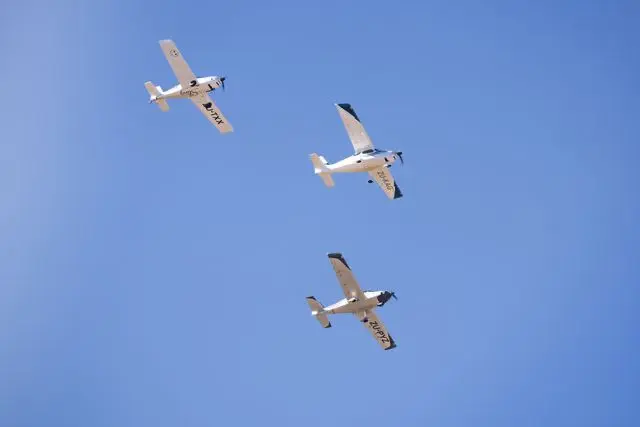
What if the next flight you take produces zero emissions and completes its journey 30 percent faster than today’s standard aircraft? This question is no longer theoretical. The aviation industry is undergoing one of its most significant transformations in decades, driven by the convergence of three critical forces: the need for speed, the demand for intelligent systems, and the urgency of environmental responsibility. Airlines, manufacturers, and governments are investing billions into research and development to create aircraft that fly faster, operate more efficiently, and leave a dramatically smaller carbon footprint.
1. Speed Innovations and Next-Generation Propulsion
The race for faster aircraft represents one of aviation’s most compelling technical challenges. Modern commercial jets cruise at approximately 460 miles per hour, a speed that has remained largely unchanged for decades. Manufacturers are now exploring hypersonic and supersonic technologies that could cut flight times by half for long-distance routes. Advanced materials such as carbon composites and titanium alloys can withstand the extreme stresses of high-speed flight while remaining lightweight enough to be commercially viable. Traditional jet engines are also being reimagined with open rotor designs and variable geometry components that adapt to different flight conditions, optimizing performance across the entire journey.
Beyond conventional propulsion, manufacturers are investigating hybrid-electric and fully electric engines for shorter routes. These systems combine traditional fuel combustion with electric motors to produce significant efficiency gains. Regional flights under 1,000 miles could eventually rely on battery or fuel cell technology, eliminating conventional turbines entirely. The challenge lies in developing batteries that store enough energy while remaining light enough for practical aviation use. Within the next decade, electric aircraft are expected to enter commercial service on short-haul routes, fundamentally changing how regional travel operates.
2. Smart Aircraft and Advanced Avionics Systems
Intelligence embedded directly into aircraft systems represents a quiet revolution that profoundly impacts every flight. Modern avionics incorporate artificial intelligence and machine learning algorithms that optimize flight paths, fuel consumption, and engine performance in real time. These systems analyze weather patterns, air traffic, and thousands of operational variables simultaneously to make split-second decisions that improve safety and efficiency. Predictive maintenance powered by artificial intelligence examines engine sensors and structural data continuously, identifying potential issues before they become dangerous or costly, reducing unscheduled maintenance events by 40 to 50 percent according to major aerospace suppliers.
Connected aircraft systems allow pilots and ground crews to receive continuous performance data throughout every flight. This information flows to maintenance teams on the ground, who can prepare replacement parts and procedures before the aircraft lands. Autonomous systems handle increasingly complex tasks, from navigation to landing procedures, while pilots focus on oversight and decision-making. Aviation professionals seeking equipment and resources aligned with these evolving cockpit technologies can find relevant professional pilot supplies through companies like the reputable pilot john international. These technologies work together to create an ecosystem where aircraft communicate their own operational needs, allowing operators to manage fleets with greater precision and safety.
3. Environmental Sustainability and Emission Reduction
Environmental pressure is reshaping aviation faster than any other single factor. Aviation currently accounts for roughly 2 to 3 percent of global carbon emissions, and regulatory bodies worldwide are establishing increasingly strict emissions standards. Manufacturers are pursuing sustainable aviation fuels derived from agricultural waste, algae, and other renewable sources that can reduce lifecycle carbon emissions by 50 to 80 percent compared to conventional jet fuel. Airlines are blending these fuels with traditional kerosene, with some carriers already operating flights using 50 percent sustainable fuel blends. The challenge involves scaling production to meet demand while keeping costs competitive with traditional fuel sources.
Aircraft design itself is becoming fundamentally greener. Lighter airframes made from advanced composites reduce fuel consumption because engines work less hard to achieve the same performance. Winglet technology and laminar flow designs minimize aerodynamic drag, allowing aircraft to travel farther on less fuel. New engine designs produce sounds that are 50 percent quieter than engines from two decades ago, and smaller auxiliary power units eliminate the need to run engines while aircraft sit at gates. These improvements accumulate across thousands of daily flights globally, creating measurable reductions in pollution and energy consumption.
4. Regulatory Frameworks and Industry Standards
Governments and international organizations are establishing guidelines that incentivize green aviation development. The International Civil Aviation Organization has set targets requiring the aviation industry to stabilize net carbon emissions at 2020 levels through 2050, pushing manufacturers and operators toward rapid innovation. The European Union implements emissions trading schemes that penalize inefficient aircraft and reward new technology adoption, creating financial pressure on airlines to modernize their fleets. This regulatory environment accelerates investment in research and development because staying compliant requires continuous improvement.
Certification standards ensure that all innovations meet rigorous safety and performance requirements before entering commercial service. Aviation authorities work with manufacturers to establish testing protocols for new propulsion systems, materials, and autonomous features. These standards operate across international borders so that aircraft approved in one region can operate globally, preventing fragmented marketplaces where inconsistent standards might slow innovation. Manufacturers invest heavily in compliance testing, which adds cost but confirms that new technologies are ready for widespread deployment.
5. Investment and Collaboration Across the Industry
The financial commitment required to transform aviation far exceeds what any single company can invest alone. Major aircraft manufacturers, engine producers, aerospace suppliers, and technology firms are forming partnerships and consortiums to share research costs and accelerate development timelines. Airlines are committing to purchase electric and hydrogen aircraft years before production begins, providing manufacturers with guaranteed demand that justifies large development investments. Government agencies provide grants and tax incentives for companies developing sustainable propulsion systems, while universities receive funding to explore foundational technologies like alternative fuels and battery chemistry.
These collaborations create networks where knowledge flows among organizations that traditionally operated in isolation. A materials breakthrough discovered by a university research lab can be adopted by multiple manufacturers within months. Startups focused on electric propulsion or hydrogen storage receive investment from established aerospace firms seeking to accelerate their own transformation. This ecosystem approach reflects recognition that the scale of change required cannot be achieved through isolated corporate efforts, and the result is more diverse technological approaches and faster commercialization of promising innovations.
Conclusion
The aviation industry stands at an inflection point where performance demands, environmental necessity, and technological capability are converging to create significant opportunities for transformation. Faster aircraft powered by advanced propulsion systems, intelligent avionics that optimize every aspect of flight, and sustainable designs that minimize environmental impact represent the near-term future of commercial aviation. Regulatory frameworks ensure that innovations meet stringent standards while providing incentives for continued progress. The aircraft flying 10 years from now will be measurably faster, dramatically smarter, and substantially greener than those operating today, reflecting both the capability of modern engineering and the collective determination of an industry building a more sustainable future in the skies.
Also Read
- 4 Practical Ways To Stretch Any Tech Budget
- Unlocking Growth: How Unsecured Business Loans Empower Your Business Expansion