Australia offers some of the most spectacular off-grid touring in the world. With over half of all new vehicle sales in the country now falling into the SUV and 4WD categories, more motorists are choosing to explore rugged domestic tracks instead of travelling overseas. However, taking a daily commuter vehicle into unpredictable terrain requires serious forethought. A standard road trip preparation is a great starting point for coastal holidays, but venturing into the remote outback demands heavy-duty vehicle modifications and outfitting to ensure complete self-reliance.
Establishing Reliable Water and Fuel Reserves
One of the most critical aspects of remote touring is managing your liquid resources. Relying solely on a standard factory fuel tank is a highly risky strategy when distances between reliable roadhouses can stretch for hundreds of kilometres. For instance, traversing sections of the famous Canning Stock Route in Western Australia often requires vehicles to carry enough extra fuel to bridge gaps of over 1,000 kilometres. To safely navigate these massive expanses, experts recommend establishing a functional fuel range of at least 600 to 700 kilometres to account for sudden detours or strong headwinds.
Water storage is just as vital for outback survival. The arid Australian climate is unforgiving, and running dry during a mechanical breakdown can quickly become a severe emergency. According to the Queensland Government in their road safety and vehicle maintenance guide, motorists travelling in the outback must carry 20L of emergency water, plus an additional 4L per person per day. Meeting these requirements means carrying significant extra weight, which must be factored into your total payload.
Carrying these essential reserve fluids safely requires proper exterior storage solutions. Storing volatile fuel or heavy water containers inside the cabin is dangerous and impractical. Instead, outfitting your vehicle with a heavy-duty jerry can holder provides a secure, functional way to carry extra liquids on the outside of your rig. This ensures that your reserves remain easily accessible while keeping the interior safe from spills and hazardous fumes. Quality external mounts also prevent heavy containers from becoming dangerous projectiles during sudden stops.
Heavy-Duty Upgrades and Preventative Maintenance
According to the Australian Automotive Aftermarket Association, the average age of a vehicle in Australia has reached a record 11.2 years. Taking an older, unmodified 4WD onto corrugated dirt roads without preventative maintenance is a recipe for disaster. The domestic 4WD aftermarket is booming as drivers recognise the absolute necessity to outfit their vehicles for harsh, unforgiving conditions.
When upgrading your 4WD for remote outback conditions, consider these essential modifications:
- Upgraded Suspension: Factory suspension systems are rarely designed to handle the constant, punishing vibrations of corrugated roads while carrying heavy touring loads. Heavy-duty shocks and springs improve handling and prevent vehicle sagging.
- All-Terrain Tyres: Swapping standard highway tyres for robust all-terrain or mud-terrain options drastically reduces the risk of punctures from sharp rocks and outback debris. Always carry at least two full-size spare tyres.
- High-Frequency Communications: Standard cellular networks are non-existent in the deep outback. Installing a UHF radio or joining the Australian National 4WD Radio Network (VKS-737) provides a vital communication lifeline for remote travellers.
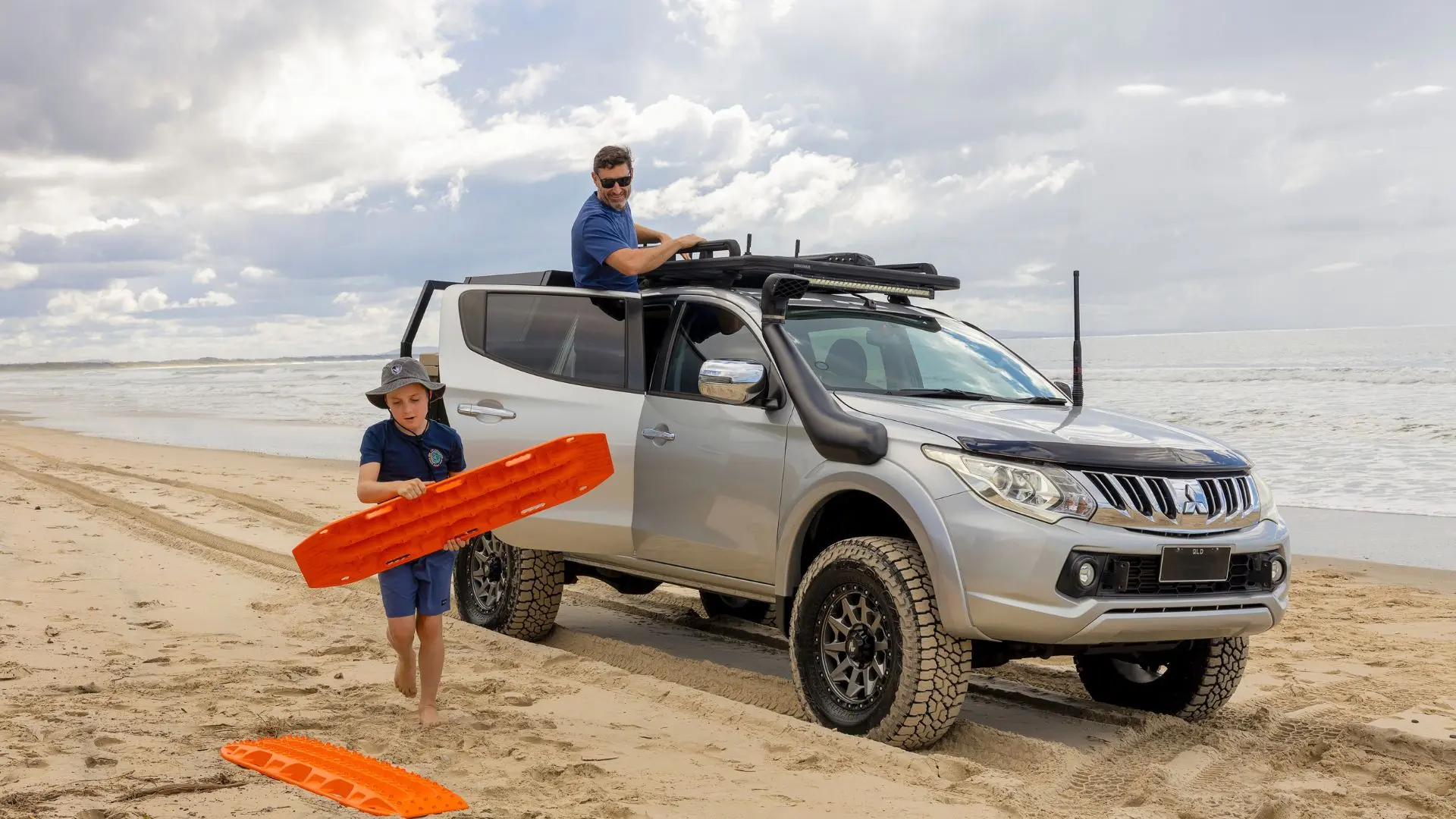
- Rated Recovery Gear: A comprehensive recovery kit including snatch straps, rated bow shackles, and a high-lift jack is non-negotiable for self-recovery in deep sand or mud.
Understanding Outback Isolation and Recovery Risks
Tourism Research Australia frequently notes that self-drive travellers commonly underestimate the vastness of remote areas. Visually short map routes can easily take four to eight hours to navigate over challenging tracks. If you break down in isolation without the ability to self-recover, you face significant logistical and financial hurdles. Emergency commercial towing from remote locations can easily cost thousands of dollars, assuming you can even reach someone to call for help.
More importantly, the physical risks of being stranded without preparation are severe. Aeromedical retrieval services work tirelessly to assist motorists who run into trouble. The Royal Flying Doctor Service logs over 345,000 patient contacts annually, flying more than 27 million kilometres to provide critical care across isolated regions. Similarly, LifeFlight rescue crews in Queensland airlift thousands of people each year, many of whom are stranded or injured in remote motoring accidents. Proper vehicle preparation drastically reduces the likelihood of adding to these statistics.
By investing in the right aftermarket upgrades and meticulously planning your resource reserves, you can safely experience the unparalleled beauty of remote Australia. A well-prepared 4WD not only protects your passengers but ensures your off-grid adventure remains memorable for all the right reasons. Thorough preparation transforms a potentially dangerous journey into the trip of a lifetime.
Also Read
- 4 Practical Ways To Stretch Any Tech Budget
- How to Choose Quality Car Parts in Sarasota, Florida: A Comprehensive Guide
- LOC For Business: When Flexible Funding Makes Sense