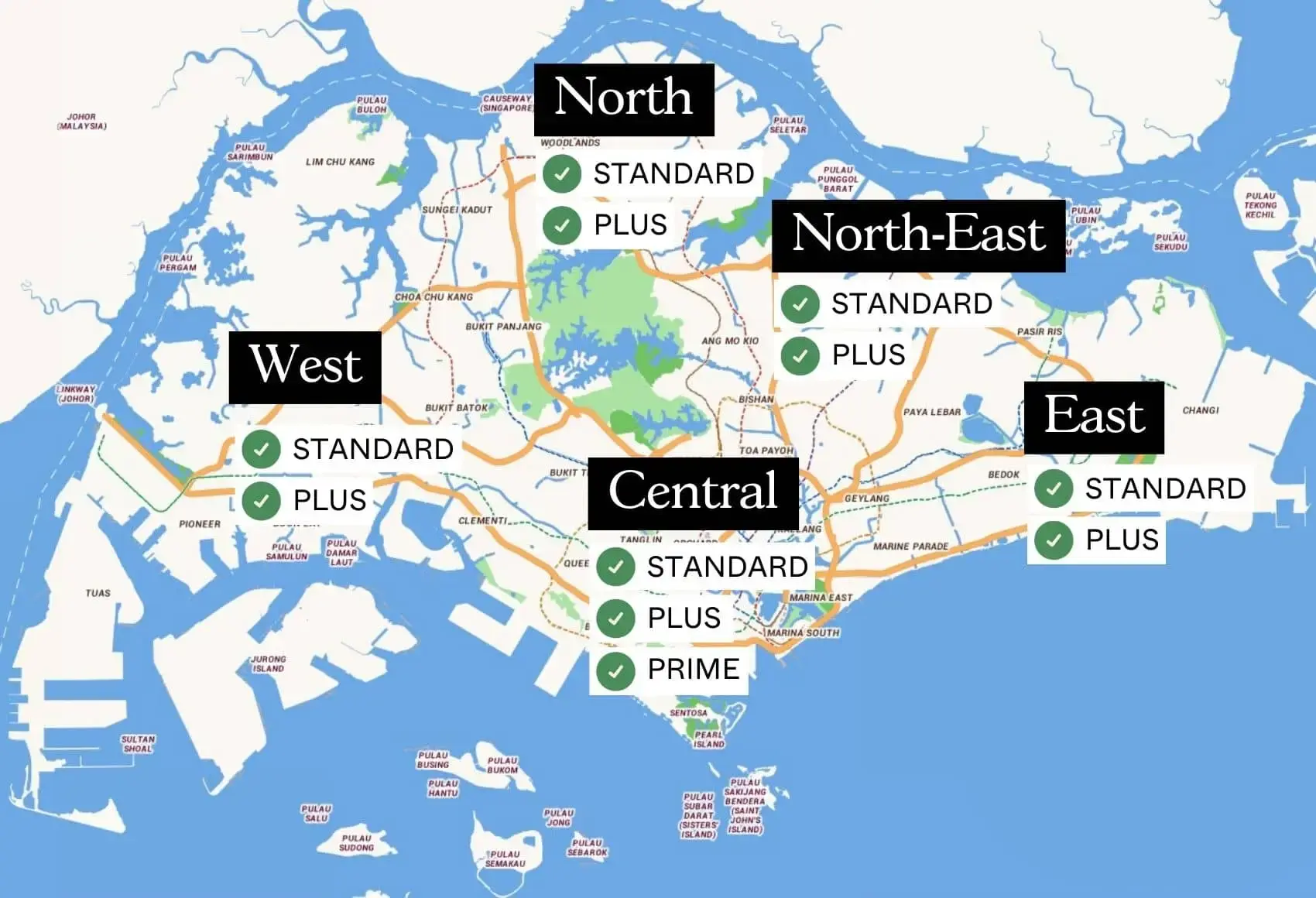
Singapore’s HDB BTO classification framework introduced a new way to categorize public housing based on location value, subsidy levels, and resale restrictions. Instead of the old “mature vs non-mature estate” distinction, new Build-To-Order (BTO) launches are classified into Standard, Plus, and Prime flats.
This system, implemented starting with the October 2024 BTO exercise, aims to balance affordability with fairness in highly desirable locations. Buyers receive higher subsidies for homes in attractive areas, but those homes also come with stricter resale and rental rules.
This guide explains how the Standard vs Plus vs Prime HDB BTO classification works, compares the key differences, and helps buyers choose the right category based on budget, lifestyle plans, and long-term housing goals.
Quick Summary
• Singapore introduced Standard, Plus, and Prime HDB BTO classifications starting October 2024.
• Standard flats have the fewest restrictions and a 5-year Minimum Occupation Period (MOP).
• Plus and Prime flats require a 10-year MOP and include stricter resale and rental rules.
• Whole-flat rental is allowed only for Standard flats after MOP, subject to HDB approval.
• Plus and Prime flats prohibit whole-flat rental even after MOP, though spare bedrooms may be rented.
• Subsidy recovery applies when the first owner sells a Plus or Prime flat purchased directly from HDB.
• Singapore’s public housing system houses close to 80% of the resident population and includes over 1 million flats built since its inception.
The framework aims to ensure that homes in attractive locations remain affordable while maintaining a fair and sustainable subsidy system.
HDB BTO Classification Comparison
The following comparison summarizes the major policy differences between Standard, Plus, and Prime HDB BTO flats (as of March 2026).
| Feature | Standard Flats | Plus Flats | Prime Flats |
| Typical Location | Most estates across Singapore | Choicer locations near MRT stations or town centres | Prime central districts and highly desirable areas |
| Subsidy Level | Baseline BTO subsidy | Higher subsidies | Highest subsidies |
| Minimum Occupation Period (MOP) | 5 years | 10 years | 10 years |
| Whole-Flat Rental | Allowed after MOP with approval | Not allowed | Not allowed |
| Spare Bedroom Rental | Allowed | Allowed | Allowed |
| Resale Buyer Income Ceiling | None | Applies | Applies |
| Subsidy Recovery | None | Applies to first owner selling after BTO purchase | Applies to first owner selling after BTO purchase |
| Typical Buyer Profile | Buyers prioritising flexibility | Families seeking good locations | Long-term owner-occupiers in central areas |
| Key Trade-Off | Greater resale flexibility | Strong location with added restrictions | Prime location with the strictest rules |
The key concept behind the framework is targeted subsidies. Homes in more desirable locations receive larger government subsidies but carry conditions designed to maintain long-term affordability.
How to Choose the Right HDB BTO Classification
Selecting the right classification depends on three major considerations: location value, financial planning horizon, and housing flexibility.
1. Location vs Resale Flexibility
Location is one of the biggest drivers of housing value.
• Prime flats are typically in central districts close to major amenities and employment centres.
• Plus flats are often near MRT stations, transport hubs, or town centres.
• Standard flats are more widely distributed across Singapore.
However, the better the location, the more restrictive the policies become. Buyers who prioritize resale flexibility and investment liquidity often prefer Standard flats.
2. Long-Term Financial Planning
The Minimum Occupation Period significantly affects financial planning.
• Standard flats require 5 years before resale.
• Plus and Prime flats require 10 years before resale.
For buyers planning to upgrade within a decade, the longer MOP of Plus and Prime flats can limit flexibility.
Another important factor is subsidy recovery. When the first owner sells a Plus or Prime flat purchased from HDB, a portion of the additional subsidy must be returned to the government.
This reduces resale proceeds but helps keep future resale prices more affordable.
3. Rental Intentions
Rental flexibility varies significantly across classifications.
• Standard flats allow whole-flat rental after MOP with HDB approval.
• Plus flats prohibit whole-flat rental but allow spare bedroom rentals.
• Prime flats also prohibit whole-flat rental even after MOP.
Buyers who anticipate generating rental income from their property typically prefer Standard flats.
The 3 Main HDB BTO Classifications Explained
Rather than ranking by prestige, the categories below highlight which type may be most suitable for different buyer profiles.
1. Standard HDB BTO Flats – Best for Flexibility
Best for: buyers who value resale flexibility and shorter occupancy requirements.
Quick facts
Location profile
Island-wide distribution across many estates
Minimum Occupation Period
5 years
Rental rules
Whole-flat rental allowed after MOP with approval
Subsidy recovery
None
Why it stands out
Standard flats provide the largest resale buyer pool because there is no income ceiling for resale buyers. This makes resale transactions simpler and improves market liquidity.
For homeowners who expect potential life changes—such as career moves or upgrading to private property—this flexibility can be valuable.
Trade-offs
Standard flats may be located further from central districts or transport hubs compared with Plus and Prime categories.
2. Plus HDB BTO Flats – Best Balance of Location and Affordability
Best for: families who want good connectivity but can accept tighter resale rules.
Quick facts
Location profile
Near MRT stations, town centres, or desirable neighbourhoods
Minimum Occupation Period
10 years
Rental rules
Whole-flat rental not allowed; spare bedrooms allowed
Resale restrictions
Income ceiling applies to resale buyers
Subsidy recovery
Applies when the first owner sells
Why it stands out
Plus flats offer improved location benefits compared with Standard flats while remaining more affordable than private housing in similar areas.
The additional subsidy helps keep initial purchase prices manageable for eligible buyers.
Trade-offs
Resale demand may be narrower due to the income ceiling imposed on resale buyers.
The 10-year MOP also requires a longer commitment before upgrading.
3. Prime HDB BTO Flats – Best for Central Living
Best for: buyers who intend to live long-term in prime central locations.
Quick facts
Location profile
City centre and highly desirable districts
Minimum Occupation Period
10 years
Rental rules
Whole-flat rental not allowed
Resale restrictions
Income ceiling applies
Subsidy recovery
Applies when the first owner sells
Why it stands out
Prime flats allow residents to live in central urban locations at subsidised prices, often near major employment areas, cultural districts, and transport hubs.
These flats are designed primarily for long-term owner-occupiers rather than short-term investors.
Trade-offs
Prime flats have the strictest resale and rental limitations, including a 10-year MOP and restrictions on renting out the entire unit.
Best HDB BTO Classification for Different Use Cases
Best for Budget-Conscious Buyers
Standard flats
Reason
Lower subsidy complexity and fewer resale restrictions simplify long-term financial planning.
Best for Families Who Want Good Connectivity
Plus flats
Reason
Locations near MRT stations or town centres provide strong everyday convenience.
Best for Central City Living
Prime flats
Reason
Access to prime districts at subsidised prices makes central living more attainable.
Best for Buyers Who May Upgrade Later
Standard flats
Reason
A 5-year MOP and wider resale pool allow greater housing mobility.
Best for Long-Term Homeowners
Plus or Prime flats
Reason
Location advantages may support lifestyle stability for households planning to stay long term.
Frequently Asked Questions
What changed in the HDB BTO classification system?
Singapore replaced the old mature vs non-mature estate model with Standard, Plus, and Prime classifications starting from the October 2024 BTO exercise.
What are the MOP rules for each classification?
As of 2026:
• Standard flats: 5-year MOP
• Plus flats: 10-year MOP
• Prime flats: 10-year MOP
Can owners rent out their flats?
Rental rules vary by classification.
• Standard flats may rent out the entire flat after MOP with HDB approval.
• Plus and Prime flats cannot rent out the whole flat, even after MOP.
• Spare bedroom rental is generally allowed under HDB regulations.
Does subsidy recovery apply to every owner?
No.
Subsidy recovery applies only to the first owner who purchased the Plus or Prime flat directly from HDB. Buyers who purchase those flats later on the resale market do not pay subsidy recovery when they eventually sell.
Which HDB BTO classification has the fewest restrictions?
Standard flats have the fewest additional restrictions beyond existing HDB policies.
Conclusion
Singapore’s Standard, Plus, and Prime HDB BTO classification system represents a shift toward location-based housing policy. Instead of categorizing estates by maturity, the framework links subsidy levels to location attractiveness and applies corresponding resale safeguards.
For buyers, the choice usually comes down to balancing three priorities:
• Location quality
• Resale and rental flexibility
• Long-term housing plans
Standard flats typically offer the most flexibility, while Plus and Prime flats provide stronger location advantages with stricter conditions.
Because policies, subsidies, and eligibility criteria can evolve, prospective buyers should always verify the latest rules with official Housing & Development Board (HDB) sources before applying for a BTO flat.
Also Read
- How Location Impacts Apartment Prices in Dubai
- Securing Corporate Networks with Cloud-Delivered Services
- Hyy Meaning in Text: What It Really Stands For in Chats (Updated 2026)💬