
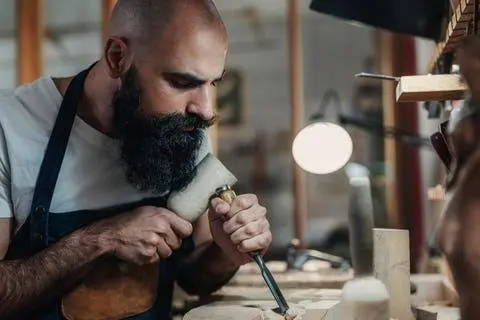
The global luxury landscape is undergoing a profound transformation. For decades, the industry was dominated by ubiquitous logos and mass-produced prestige. Today, however, affluent consumers are actively pivoting away from uniformity. They are seeking out unique origin stories, ethical production methods, and items tailored specifically to their individual tastes. This shift reflects broader changes in evolving retail strategies in the modern market, where consumers now prioritise intention and meaning over mere brand recognition.
As artificial intelligence automates routine e-commerce tasks, buyers are placing a much higher premium on human connection. They want to know who made their products, how they were crafted, and what traditions influenced their design. This desire for authenticity has paved the way for independent artisan studios to compete directly with global luxury conglomerates, proving that small-scale, bespoke manufacturing is a highly viable economic model.
The Economic Power of Personalisation
The numbers behind this shift are striking. The global personalised jewellery market reached an estimated valuation of $42.5 billion in 2024, driven heavily by generational changes that favour bespoke styling. According to Bain & Company, the absolute luxury tier remains resilient specifically because of consumers’ appetite for ultra-personalisation. Their latest market report advises that future brand growth will rely heavily on a return to core pillars, namely desirability fuelled by genuine craftsmanship, creativity, and culturally resonant customer connections.
By 2025, the broader global luxury jewellery sector grew to an estimated $54.27 billion. Bespoke and heritage-inspired segments acted as primary catalysts for this sustained expansion. Rather than scaling up mass production lines, successful businesses in this sector are scaling up the depth and quality of the customer experience, focusing on long-term value and individual expression.
A Global Case Study in Local Heritage
To understand how local artisans capture international luxury markets, one only needs to look at Northern Thailand. Chiang Mai boasts a rich, seven-century history of silversmithing that began in 1296 when skilled artisans brought specialised hand-hammering techniques to the Lanna Kingdom. Today, the exquisite bespoke jewelry in Chiang Mai offers to international buyers serves as a prime example of how localised artisan industries can command global appeal. Furthermore, local landmarks like Wat Sri Suphan, famously known as the Silver Temple, feature the world’s first entirely silver-clad ordination hall, acting as a real-world showcase of the region’s enduring artisanal mastery.
This dedication to slow, ethical production aligns perfectly with modern luxury demands. Independent studios in the region are successfully competing against mass-market luxury by securing highly respected certifications from state-backed organisations like the Gem and Jewelry Institute of Thailand. By offering custom designs and maintaining transparent material sourcing, these independent studios create a level of trust and exclusivity that mass-market brands struggle to replicate.
Why Independent Studios Are Outpacing Mass Production
The resurgence of the independent craftsman is not just a romantic ideal. It is backed by solid retail economics. Traditional bench jewellers and bespoke studios hold several distinct competitive advantages in today’s marketplace.
- Lower Return Rates: Industry data from 2025 reveals that in-store, highly personalised purchases experience significantly lower return rates. These bespoke items see return rates of just 8 to 12 percent, compared to the 22 to 28 percent return rates typical of online fashion accessory sales.
- Experiential Retail Growth: Retail formats that incorporate hands-on elements, such as in-studio consultations or making workshops, yield a 40 percent increase in customer dwell time. This translates to up to 30 percent higher sales compared to traditional, static retail models.
- Transparent Supply Chains: Independent studios have a distinct advantage in offering verifiable, recycled precious metals and conflict-free gemstones. This transparency fundamentally alters luxury supply chains and appeals directly to the conscious consumer.
- Technological Integration: The bespoke sector is currently experiencing a technical renaissance. Artisans are successfully merging cutting-edge Computer-Aided Design and 3D printing technologies with traditional hand-finished techniques, offering buyers the best of both worlds.
The Future of Experiential Retail
As the market continues to evolve, the concept of quiet luxury is becoming deeply intertwined with experiential retail. Consumers are deliberately bypassing global mega-brands to engage in interactive design consultations. These collaborative experiences result in unique pieces with localised origin stories, providing buyers with emotional reassurance during milestone purchases.
Even global luxury conglomerates are taking note of this trend. Major corporate players are actively acquiring heritage artisan workshops to integrate traditional, non-mechanised techniques into their portfolios. Yet, the agility and authenticity of the independent bespoke studio remain difficult to emulate on a massive corporate scale.
Ultimately, the modern luxury business is being reshaped by a return to its roots. Bespoke craftsmanship is no longer a niche segment of the market, but rather the guiding force for its future. Brands that can deliver authentic, highly personalised experiences will continue to thrive, proving that true luxury lies in the human touch.
Also Read-Best SEO Agencies in Australia for SaaS and Tech Brands