
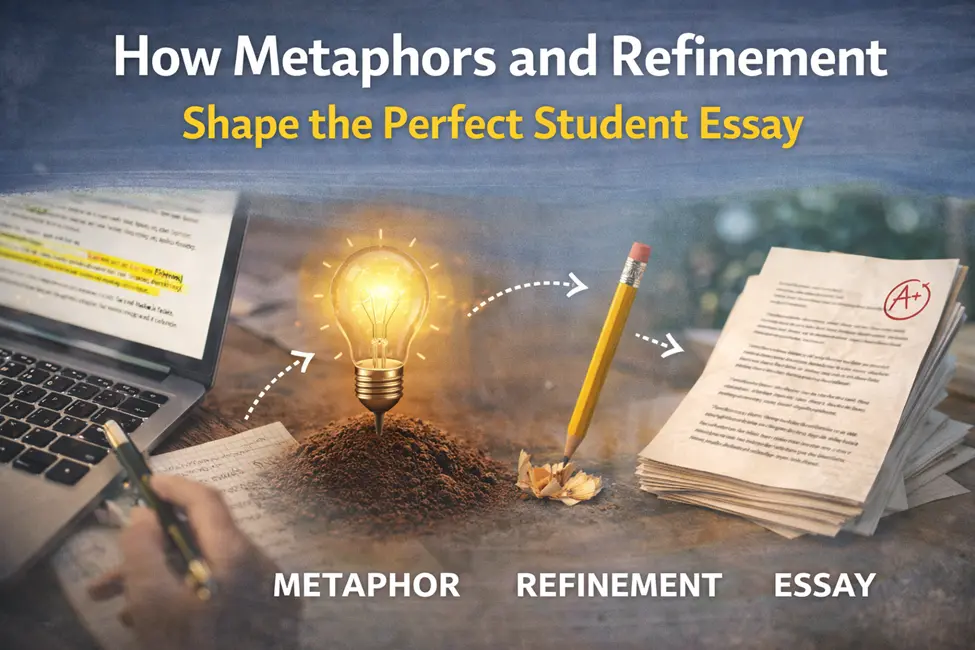
Writing a high-level academic essay is often compared to building a cathedral. It requires a solid foundation (the thesis), a clear structure (the outline), and intricate stained-glass windows (the metaphors) that allow light to shine through complex ideas. For undergraduate students across the globe, the transition from simple report writing to sophisticated academic persuasion is one of the most significant challenges in higher education. It is not merely about hitting a word count; it is about the evolution of a raw thought into a polished, authoritative voice.
When students embark on a massive project, such as a 5000-word essay, the primary challenge isn’t just the sheer volume of text—it’s ensuring that every paragraph acts as a vital organ in the body of the argument. In these long-form assignments, the risk of “thematic drifting” is high. Without a unifying metaphor or a consistent rhetorical thread, a long essay can quickly become a collection of disjointed facts rather than a cohesive narrative. By using Myassignmenthelp strategies, students can learn to anchor their research in a way that remains engaging from the first page to the last.
The Power of the “Conceptual Anchor”
In academic writing, a metaphor isn’t just a poetic flourish; it is a cognitive tool. It helps the reader bridge the gap between what they already know and the new, complex information you are presenting. For example, if you are writing about economic inflation, comparing it to “a balloon stretching toward its breaking point” provides an immediate mental image that a dry statistic cannot achieve.
Why Metaphors Matter in Undergraduate Research:
- Simplification: They break down “ivory tower” concepts into relatable terms.
- Retention: Readers are more likely to remember a vivid image than a bland statement.
- Flow: Metaphors act as the “connective tissue” between different sections of your paper.
The Stages of Academic Refinement
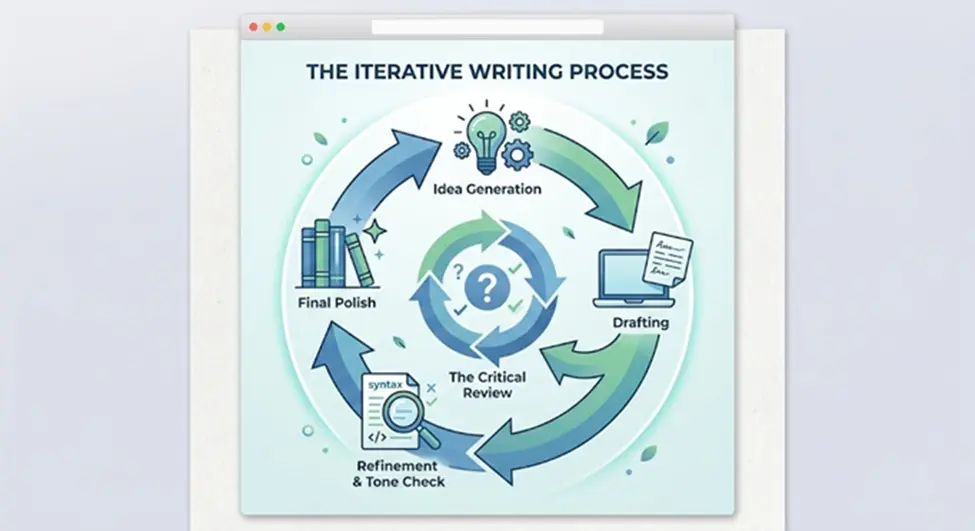
Refining an essay is a recursive process. It is rarely a straight line from Point A to Point B. Instead, it is a series of loops where you constantly revisit your initial ideas to see if they still hold weight after the research phase.
| Refinement Stage | Focus Area | Goal |
| The Structural Audit | Logic and Flow | Ensuring the argument follows a natural progression. |
| The Linguistic Polish | Tone and Vocabulary | Removing “fluff” and replacing weak verbs with strong ones. |
| The Perspective Shift | Reader Engagement | Checking if a metaphor or analogy is used correctly. |
| The Final Proof | Technical Accuracy | Catching citations, grammar, and formatting errors. |
Navigating the “Messy Middle” of Writing
Midway through the writing process, many students experience “writer’s block” or “thematic fatigue.” This is the point where the initial excitement of the topic fades, and the technical requirements become heavy. This is also the stage where most errors in tone occur. You might start out formal and end up sounding too casual, or vice versa.
To maintain a consistent global tone, you must treat your draft as a sculpture. You start with a large block of information and slowly chip away the parts that don’t belong. Often, a writer must strip away the clutter to let the core message shine. Utilizing an essay rewriter through Myassignmenthelp can help students view their own work from a new perspective, identifying repetitive structures and refreshing their linguistic choices without losing the original intent of the research. This “second look” is what separates a passing grade from a distinction.
Balancing Data with Narrative
Modern academic standards in the US, UK, and Australia are shifting. While data remains king, the “story” of the data is what wins over professors. A student who can explain why a set of statistics matters by using a well-placed analogy will always outrank a student who simply lists the numbers.
Think of your evidence as the “bricks” of your essay and your analysis—your metaphors and explanations—as the “mortar.” Without the mortar, the bricks will eventually collapse. To rank well in the eyes of an examiner (or even a search engine), your content must show depth. It needs to show that you haven’t just “copy-pasted” ideas, but that you have synthesized them into something new.
The Role of Global Tone in Modern Education
In a globalized academic environment, your writing needs to be accessible. This means avoiding region-specific slang or overly obscure idioms that might confuse an international reader. A “global tone” is one that is clear, professional, and inclusive. It relies on standard English conventions while remaining vibrant enough to keep the reader’s attention.
Final Polishing: The “Read Aloud” Test
Before submitting any major work, the best “human” trick is to read your essay out loud. Your ears will often catch rhythmic errors, awkward metaphors, or repetitive phrasing that your eyes missed. If you find yourself tripping over a sentence, it’s a sign that the “refinement” stage isn’t quite finished. Academic excellence is not about being a perfect writer on the first try; it’s about being a relentless editor.
Frequently Asked Questions (FAQ)
Q: How many metaphors are “too many” in a formal essay?
A: Metaphors should be used like salt in cooking—enough to enhance the flavor, but not so much that it’s all you taste. Aim for one primary “conceptual anchor” per major section.
Q: Can I use AI tools to help with my essay?
A: Tools should be used for inspiration and refinement, not for original generation. The goal is to use resources to help you see your work through a different lens, ensuring the “human” voice remains the leader of the narrative.
Q: How do I maintain a global tone?
A: Stick to standard academic English. Avoid localized metaphors (like sports analogies that only make sense in one country) and focus on universal concepts like nature, architecture, or journeys.
Q: What is the most important part of the 5000-word essay structure?
A: The transition. In a long-form paper, the “bridge” between your points is where most students lose marks. Ensure each paragraph starts by linking back to the previous one.
A: Because writing is rewriting. No professional author publishes their first draft. The act of looking at your sentences and asking “How can I say this more clearly?” is the definition of critical thinking.
Also Read
- 35+ Creative Metaphors for Technology (With Meanings & Examples)
- Sustainable Tree and Landscape Care Tips for Residents in the Outer Banks, NC
- Best Options for IUI in Riverside County, CA: Support and Success with ARC Babies