
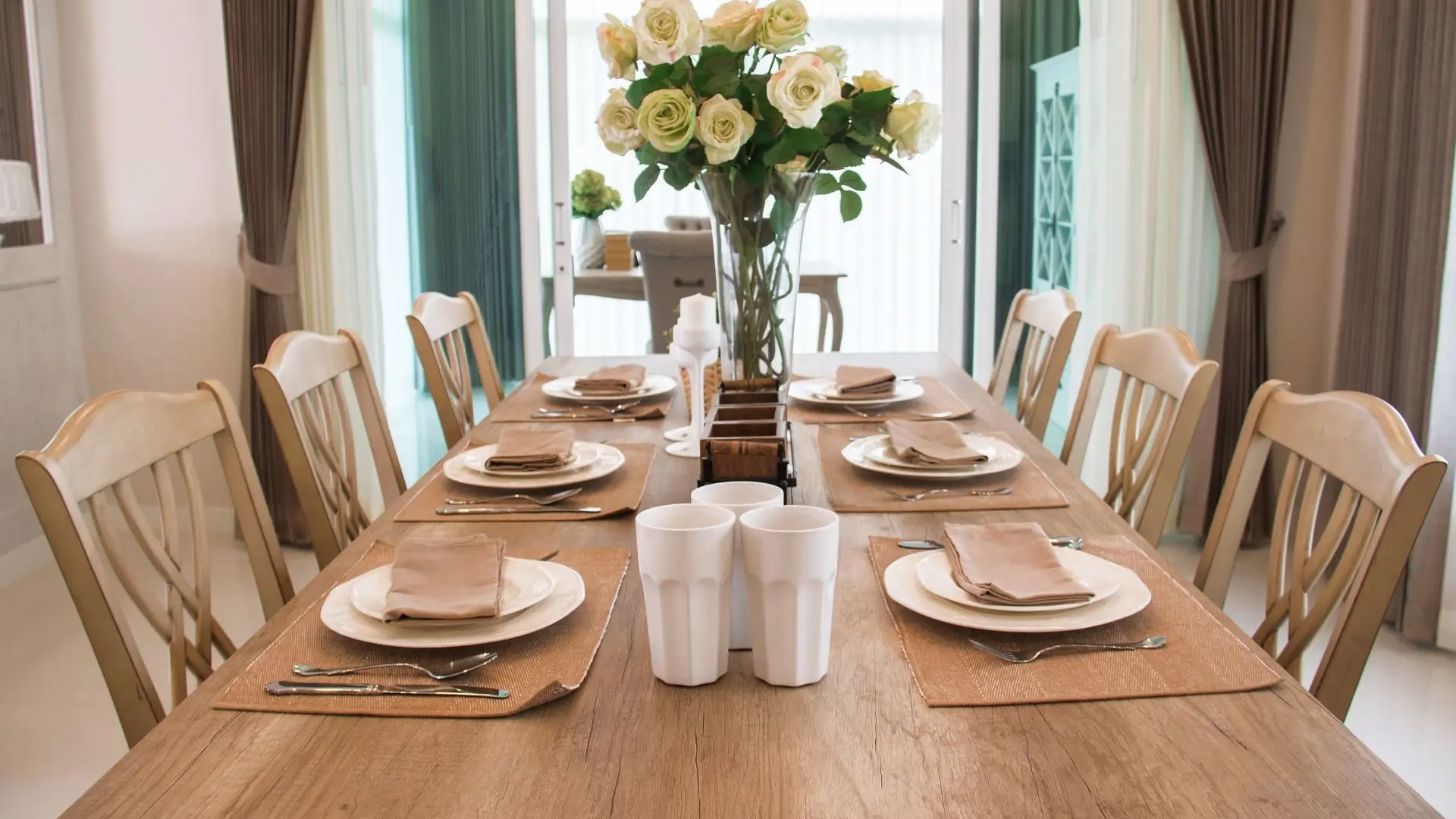
Open-concept homes aren’t going anywhere. Walk through any new build or recently renovated house, and you’ll almost certainly find a kitchen that bleeds into a dining space that flows right into the living room. It feels social, bright, and modern.
But here’s the part nobody really warns you about: choosing a dining set for that kind of layout is genuinely hard. No walls means no visual boundaries, and suddenly every furniture decision carries far more weight than it would in a traditional, walled-off room.
According to a Houzz study, 64% of homeowners create open-concept spaces to improve functionality, and 54% do it to enhance their entertaining experience. That tells you something important. Matching dining sets for open layouts isn’t a purely aesthetic exercise.
So before you start browsing tables, let’s talk about what actually works, and why.
Setting the Stage for Harmony in Open Spaces
Furniture has to do a job that walls used to do for free. Visual zoning, clearance, and material continuity aren’t nice-to-haves. They’re the whole game.
Every good open-concept dining room design starts by answering one question: how do you signal where the dining zone begins and ends without building anything? Get that answer right, and the rest falls into place naturally.
Start With the Anchor Points
Two tools do most of the heavy lifting here: a rug and a pendant light. A well-scaled rug planted under the dining table tells every guest’s eye, “this is the dining zone.” Hang a pendant light directly overhead, and you’ve reinforced that message without a single wall stud. Simple? Yes. Effective? Every single time.
Material Choices That Travel Well
Cohesion in an open floor plan doesn’t come from buying matching sets; it comes from repeating finishes thoughtfully across zones. Brushed brass hardware in the kitchen? A dining table with similar metal accents will quietly connect those two spaces in a way that feels natural rather than forced.
Choosing the right dining room furniture is one of the most impactful decisions you’ll make in an open-concept home, not just because it lives in the dining zone, but because it visually converses with your kitchen and living space simultaneously. Get it right, and the whole floor plan feels like it was designed by someone who actually thought it through.
Top Dining Layout Approaches for Open-Plan Harmony
Knowing the principles is one thing. Applying them is another. Here’s how the best open-plan dining areas actually come together.
Zone Anchoring With Rugs and Lighting
Scale matters more than you’d expect. A rug that’s too small makes your dining set look like it’s marooned on an island of hardwood floor, which is not a good look. The rule of thumb: all four chair legs should stay on the rug even when the chairs are pulled out. Go bigger than feels intuitive.
Some of the strongest open-concept dining set ideas are built around rug placement and pendant positioning before a single chair is even selected. Those two elements do so much of the visual work that everything else becomes easier.
Furniture Configuration That Frames the Space
Floating sofas. Console tables behind seating. Furniture edges that align across zones. These choices aren’t random; they guide traffic flow and signal intention. When a space is arranged with purpose, guests move through it naturally. When it isn’t, everyone bumps into chair backs and apologizes awkwardly. You want the former, obviously.
Matching Dining Sets That Complement Open Living Areas
Once your zones are anchored, the dining set itself becomes your biggest lever. Choose well, and it anchors the whole space. Choose poorly, and it quietly undermines everything else you’ve done.
Choosing Table Shapes That Flow With the Layout
Rectangular tables are genuinely the workhorses of open-concept spaces. They define a clear zone, seat more people, and align naturally with the linear geometry of most floor plans. Round tables can be beautiful, but they tend to work better in smaller or square-shaped layouts where the softer silhouette doesn’t feel lost.
Worth noting: research indicates that 40% of remodeling projects involve removing interior walls to open up main floors. That’s a lot of homeowners suddenly staring at an undefined dining space for the first time. Table shape is often decision number one, and it matters.
Building Visual Cohesion Through Materials and Finishes
The goal of how to match dining furniture in open living spaces isn’t visual uniformity; it’s visual conversation. A lighter oak table with walnut chairs feels curated and intentional. An all-oak room with perfectly matched everything feels like a showroom floor sample.
Repeat wood tones, metal finishes, and upholstery textures across your dining, kitchen, and living zones. Not identically. Just enough to create a throughline that the eye follows without effort.
Embrace Stylish Eclecticism Over Perfect Matching
Perfectly matched chair sets are quietly going out of style, and honestly, good riddance. Mismatched chairs, a bench on one side, two upholstery fabrics working in tandem, these choices add personality and actually help the space feel less stiff.
The best open-concept dining set ideas lean hard into this eclecticism. The only rule? Keep chair heights consistent. Vary materials all you want, but proportion keeps things cohesive.
Designing for Flow, Comfort, and Engagement
A beautiful dining set means nothing if it blocks a doorway or turns every dinner party into an obstacle course.
Ensure Movement and Comfort
Maintain 36 to 42 inches of clearance around the dining table on all sides. That’s not a design preference; that’s the line between a dining area that feels generous and one that genuinely frustrates people every night.
Combat Noise and Enhance Mood
Open layouts echo. Hard floors, high ceilings, no walls, sound bounces freely, and a dinner gathering can start feeling like a cafeteria. Upholstered chairs, layered rugs, and fabric window treatments absorb that ambient noise and make the space feel warmer and more intimate. Considering the best dining sets for open-plan living means thinking about acoustics as seriously as aesthetics.
Multi-Functional Seating for Modern Life
Extendable tables and benches are genuinely underrated. A bench along one side preserves walkway clearance and tucks away completely when not needed. An extendable table handles Tuesday dinner and twelve guests at Thanksgiving without requiring a completely separate piece.
Innovative and Trending Design Enhancements
With your bones in order, let’s push the design a bit further.
Sculptural plants, a fiddle-leaf fig, a tall olive tree, create soft, organic zone boundaries without adding any visual bulk. Statement lighting is having a real moment, too. A sculptural pendant above the dining table isn’t just a light source; it’s a focal point and a zone anchor in one.
On the technology front, while AR tools for furniture shopping are advancing rapidly, Baymard’s large-scale testing found that 87% of users largely avoid AR features when furniture shopping. Rather than wrestling with a digital preview, sketch your floor plan, note your measurements, and use painter’s tape to test configurations directly on the floor. It sounds old-fashioned. It works brilliantly.
Frequently Asked Questions
What trend is replacing the open-plan living dining room?
Cozy kitchen corners are gaining ground. Homeowners are embracing intimate kitchen nooks, a gathered, personal space that complements an open layout rather than replacing it.
Are rectangle or round dining tables better for open-plan homes?
Rectangle tables generally win because they define a clear zone and seat more people efficiently. Round tables suit smaller or square open layouts where a softer arrangement makes more sense.
Can mixing dining chairs look intentional rather than mismatched?
Absolutely. Keep chair heights consistent, then vary upholstery or materials. Repeat one common element, a finish, a color, a silhouette, and the result looks curated, not chaotic.
What seating arrangement maximizes flexibility in an open space?
Bench-plus-chairs combinations are highly flexible. Benches slide in fully to preserve clearance and scale up easily for larger gatherings.
How can lighting help define a dining area in an open floor plan?
A pendant hung directly above the table creates a visual anchor that reads from across the room. Size it so it roughly matches the table’s width for proportional balance.
Quick Checklist for Open-Concept Dining Success
Before finalizing anything, run through these essentials:
– Anchor the dining zone with a rug sized so all chair legs stay on it when pulled out
– Choose a table shape that matches your floor plan geometry
– Repeat one finish (metal, wood tone, or fabric) across at least two zones
– Maintain 36–42 inches of clearance on all sides of the table
– Add at least one soft element (upholstered seats or textured rug) to manage acoustics
– Consider a bench or extendable table for hosting flexibility
– Test layouts with tape before committing to placement
Run through those seven points honestly, and you’ll catch most problems before they become expensive regrets.
Seamless Style Meets Everyday Living
Getting the best dining sets for open-plan living right means treating the dining area as part of a larger system, not a standalone room with a closed door. When materials coordinate across zones, boundaries are clearly defined, and clearance is respected, the whole space just clicks. It feels bigger, calmer, and far more inviting. Thoughtful dining furniture selection doesn’t simply complete an open-concept layout. It’s genuinely what makes the layout worth having at all.
Also Read-Comprehensive Guide to Home Protection Plans: Safeguarding Your Home from Pests