
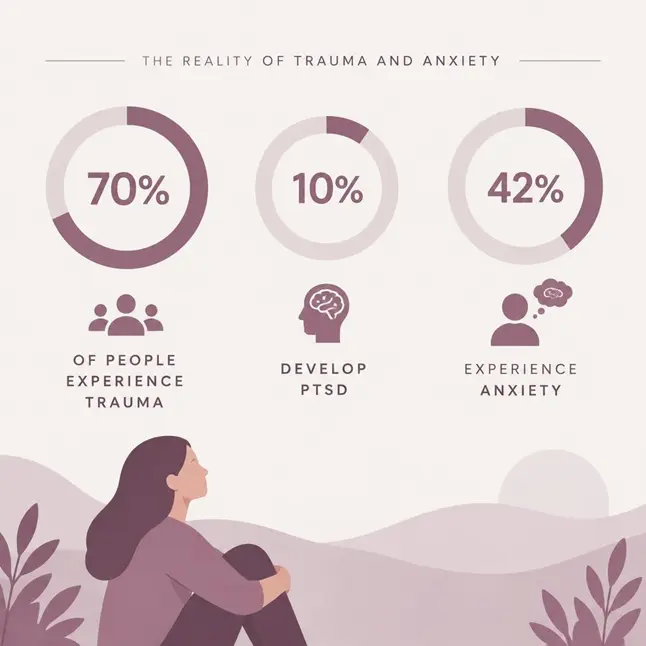
To effectively treat the intersection of trauma and anxiety, we must first distinguish between the two primary frameworks that guide modern mental health practice. Trauma-informed care is a philosophical approach, while trauma-focused therapy is a clinical intervention.
Trauma-informed care shifts the diagnostic lens from “What is wrong with you?” to “What has happened to you?” Based on the SAMHSA framework, this approach integrates awareness of trauma into every aspect of an organization. It prioritizes safety, trustworthiness, peer support, collaboration, and empowerment. By acknowledging that trauma is a universal experience, clinicians can create an environment where patients feel secure enough to begin the work of healing.
In contrast, trauma-focused therapy refers to specific clinical protocols—such as Cognitive Processing Therapy (CPT) or Prolonged Exposure (PE)—designed to address the symptoms of trauma directly. While trauma-informed care sets the stage, trauma-focused therapy provides the tools to process and resolve the traumatic narrative.
Core Principles and Systems-Level Implementation
Implementing a trauma-informed approach requires a systems-level commitment to the “Four Rs”: Realizing the widespread impact of trauma, Recognizing the signs and symptoms in clients and staff, Responding by integrating knowledge into policies and procedures, and Resisting re-traumatization.
When an organization embraces these principles, it moves beyond individual therapy sessions. It involves training administrative staff to recognize triggers, ensuring that physical spaces feel safe, and fostering a culture of transparency. By addressing these factors, we create a foundation where patients are not just treated for anxiety, but are supported in a way that prevents the clinical environment itself from becoming a source of distress.
Evidence-Based Modalities in Trauma and Anxiety Therapy
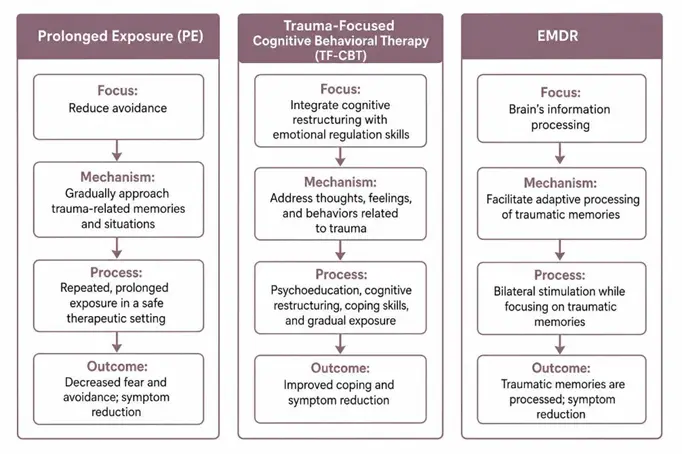
When selecting a treatment path, it is helpful to understand the primary modalities available. While traditional talk therapy has its place, research consistently highlights the efficacy of structured, evidence-based interventions for trauma-related anxiety.
Prolonged Exposure (PE) focuses on gradually approaching trauma-related memories and situations to reduce avoidance. Trauma-Focused Cognitive Behavioral Therapy (TF-CBT) integrates cognitive restructuring with emotional regulation skills. Meanwhile, EMDR offers a unique path by focusing on the brain’s information processing. For those seeking structured, therapy for anxiety, these modalities provide clear roadmaps for symptom reduction and long-term stability.
The Role of Memory Processing and EMDR
One of the most significant breakthroughs in treating trauma is the understanding of how traumatic memories are stored. When a person experiences a life-threatening or highly distressing event, the brain may fail to process the memory correctly. Instead of becoming a “past” event, the memory remains “frozen” in the nervous system, complete with the original sights, sounds, and physical sensations.
The Adaptive Information Processing Model

The Adaptive Information Processing (AIP) model explains that our brains are naturally equipped to process and integrate experiences into our existing cognitive networks. However, trauma can cause a “glitch” in this system. The AIP model posits that when a memory is not properly integrated, it remains in a dysfunctional, state-dependent form. EMDR therapy works by stimulating the brain’s natural healing capacity to reprocess these “stuck” memories, allowing them to be stored as neutral historical events rather than active, intrusive threats.
Reprocessing Traumatic Memories in Practice
EMDR therapy follows a structured eight-phase protocol, ranging from history-taking to the final reevaluation. During the desensitization phase, the therapist uses bilateral stimulation—such as eye movements, taps, or auditory tones—to engage both hemispheres of the brain. This process helps the client lower the emotional charge of the memory without needing to recount every painful detail verbally. Because EMDR targets the neurobiological storage of the memory, many patients find it to be a highly efficient intervention, often requiring less “homework” than traditional exposure-based therapies.
Deconstructing Safety Aids in Trauma and Anxiety Therapy
In the context of anxiety and trauma, “safety aids” (or safety behaviors) are actions taken to prevent a feared outcome. While they may provide temporary relief, they are fundamentally maladaptive in the long term.
Maladaptive Coping and Maintenance of Anxiety

Safety aids include behaviors like checking locks repeatedly, avoiding social situations, suppressing thoughts, or using substances to “numb” the nervous system. These behaviors act as a “crutch” that prevents the individual from learning that they can tolerate anxiety. By relying on these aids, the patient never receives the corrective information that the feared event is unlikely to happen or that they are capable of coping with it. This reinforces the cycle of anxiety, making the world seem more dangerous than it actually is.
Transdiagnostic Safety Aid Reduction and Fading Strategies
The Safety Aid Reduction Treatment (START) protocol is a transdiagnostic approach that targets these behaviors across various diagnoses, including PTSD, panic disorder, and generalized anxiety. Instead of treating each disorder in isolation, the clinician helps the patient identify their specific safety aids and systematically “fade” them. Through antiphobic exercises—where the patient intentionally engages with the feared situation without their safety aid—they learn to build genuine self-efficacy. Studies have shown that this approach can lead to significant clinical improvement, often reaching upwards of 88% in success rates compared to control groups.
Collaborative Care and Emerging Modalities
Healing from trauma is rarely a solo endeavor. A multidisciplinary approach ensures that all facets of a person’s well-being are addressed, from the neurobiological to the social.
Interprofessional Team Coordination in Trauma and Anxiety Therapy
Effective care often involves a collaborative team, including psychiatrists for medication management, therapists for cognitive and behavioral work, and primary care providers for physical health monitoring. When these professionals communicate effectively, the patient receives personalised psychological care that is consistent and comprehensive. Trauma-informed screening should be a standard part of this coordination, ensuring that every member of the team understands the patient’s history and potential triggers.
Digital Delivery and Pharmacological Augmentation
The digital age has expanded access to care through video teleconferencing and internet-based cognitive behavioral therapy (iCBT). Research suggests that these remote modalities are often non-inferior to in-person sessions, helping to bridge the gap for those in underserved or remote areas. Additionally, emerging research into pharmacological augmentation—such as the use of D-cycloserine to enhance fear extinction during exposure therapy—represents a promising frontier. While these tools are not a replacement for the therapeutic relationship, they offer valuable adjuncts to speed up the recovery process.
Frequently Asked Questions About Trauma and Anxiety
What is the difference between trauma-informed and trauma-focused therapy?
Trauma-informed therapy is a foundational mindset that prioritizes safety and empowerment throughout the entire care process. Trauma-focused therapy, however, is a specific set of clinical interventions, such as EMDR or PE, designed to target and resolve the specific symptoms of a traumatic event.
How does EMDR facilitate rapid recovery from traumatic distress?
EMDR works by utilizing bilateral stimulation to help the brain move stuck, traumatic memories into long-term storage. By addressing the neurological storage of the memory rather than just the narrative, it allows for faster emotional processing and symptom relief.
Why are safety behaviors harmful for long-term anxiety recovery?
Safety behaviors prevent the brain from learning that it can handle anxiety. By relying on avoidance or checking, the individual reinforces the belief that the feared situation is dangerous, which keeps the anxiety cycle active. Fading these behaviors is essential for building lasting resilience.
Conclusion
Navigating the journey through trauma and anxiety requires a multi-faceted approach that respects the complexity of the human brain. By utilizing evidence-based modalities like EMDR, dismantling maladaptive safety aids, and embracing a collaborative, interprofessional model of care, we can move beyond mere symptom management. The goal is to foster a state of neurobiological and emotional recovery where the past no longer dictates the future. With the right support and the right tools, true, lasting resilience is not only possible—it is the expected outcome.
Also Read
- 35+ Creative Metaphors for Technology (With Meanings & Examples)
- UNC Meaning Slang: What It Really Means in Texting & Online Chats
- AFK Meaning in Text – What It Really Means & How People Use It (Updated 2026)