
Walk into any conversation about protecting a car’s paint and you’ll quickly run into a handful of competing options: wax, ceramic sealants, ceramic coatings, and paint protection film. Each has its advocates, and each gets marketed with claims that can blur together if you’re not familiar with how they actually differ. Understanding what each option actually does — and where it falls short — makes it much easier to figure out which combination makes sense for your vehicle.
Wax: The Old Standby
Wax has been the default paint protection option for decades, and it still has a place in car care today. Traditional carnauba wax provides a warm, deep shine and a thin protective layer that offers modest resistance to water and light contaminants. It’s inexpensive, easy to apply at home, and gives quick, visible results.
The tradeoff is durability. Wax typically breaks down within four to eight weeks, especially in a climate like Georgia’s, where heat and heavy rain accelerate its degradation. It offers essentially no protection against physical impacts like rock chips, and its chemical resistance is limited — bird droppings or tree sap left too long can still etch through a wax layer and damage the clear coat underneath. Wax is best thought of as a supplemental, temporary treatment rather than a long-term protection strategy.
Paint Sealants: A Modest Upgrade
Synthetic paint sealants split the difference between wax and ceramic coating. They typically last three to six months, longer than wax, and offer somewhat better chemical resistance. Sealants are a reasonable middle-ground option for owners who want more durability than wax without committing to the cost and prep work of a full ceramic coating.
Like wax, however, sealants don’t provide meaningful protection against physical damage. They protect the paint’s surface chemistry but do nothing to absorb the impact of a rock kicked up on the highway.
Ceramic Coating: Durable, But Not Impact-Resistant
Ceramic coatings represent a significant step up in durability, chemically bonding to the clear coat and lasting anywhere from one to five years depending on the product and application quality. They offer excellent UV resistance, strong chemical resistance, and a hydrophobic surface that makes maintenance considerably easier.
What ceramic coating doesn’t do is protect against physical impacts. It adds hardness to the surface, but hardness and impact absorption are different properties — a harder surface can actually be more prone to chipping under a sharp impact than a slightly flexible one, since it lacks any give. This is the single most common misunderstanding people have about ceramic coating: it’s often mistaken for a rock-chip solution, when it’s really designed to address UV and chemical degradation.
Paint Protection Film: The Physical Barrier
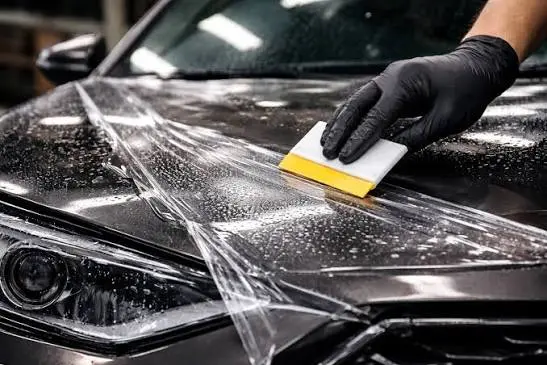
This is where paint protection film fills a gap that none of the other options address. As a physical, semi-flexible layer applied directly over vulnerable areas, PPF absorbs the energy of rock chips and minor abrasions rather than simply resisting chemical breakdown. It’s the only option on this list designed specifically to prevent the kind of highway-driving damage that leads to chips, especially on the front bumper, hood, and mirrors.
Modern PPF also includes self-healing topcoats that respond to heat by smoothing out light scratches and swirl marks, a feature none of the other paint care options offer. The tradeoff is cost and installation complexity — PPF requires skilled, precise application and represents a larger upfront investment than wax, sealant, or even ceramic coating in many cases.
Why the Best Answer Is Often “Combine Them”
Rather than treating these as competing options, it makes more sense to think of them as complementary layers addressing different threats. A common and effective approach among detailing professionals is to apply paint protection film to high-impact zones — hood, front bumper, mirrors, and rocker panels — and then apply a ceramic coating over both the film and the rest of the vehicle’s painted surfaces.
This combination covers both major categories of paint damage: physical impacts, handled by the film, and chemical and UV degradation, handled by the coating. It also means the entire vehicle benefits from the ceramic coating’s hydrophobic, easy-clean properties, while the most exposed areas get the added benefit of impact absorption from the film underneath.
Making the Right Choice for Your Situation
For owners who wash and wax their car regularly and don’t drive much highway mileage, wax or a sealant might genuinely be sufficient. But for anyone who puts significant miles on interstates, owns a newer or premium vehicle, or simply wants to minimize the time spent on maintenance, the combination of PPF and ceramic coating tends to offer the most complete and cost-effective protection over the life of the vehicle.
Cost is naturally part of this decision, and it’s worth understanding the materials and labor that go into pricing before comparing quotes. This breakdown of how full body versus partial front film coverage works is a useful reference point for figuring out how much coverage actually makes sense for your driving habits and budget, rather than defaulting to either extreme.
Factoring In Long-Term Cost, Not Just Sticker Price
When comparing these options purely on upfront price, wax and sealants will always look cheapest. But that comparison ignores the recurring cost of reapplication and the risk of paint damage that goes unaddressed in the meantime. Over a five-year ownership period, the repeated cost of wax application, combined with the potential expense of correcting chip damage or oxidation, can rival or exceed the one-time cost of PPF and ceramic coating combined. Thinking in terms of total cost of ownership, rather than the price of a single visit, often changes which option looks like the better value.
The Bottom Line
None of these products are competitors in the truest sense — they’re tools designed for different jobs. Wax offers a quick, affordable shine with minimal protection. Sealants offer a modest step up in durability. Ceramic coating offers strong, long-term chemical and UV resistance. And paint protection film offers something none of the others can: a physical barrier against the impacts that cause the most visible, frustrating damage to a car’s finish. Understanding these distinctions is the key to building a paint care approach that actually matches how you drive and how long you plan to keep your vehicle looking its best.
Also Read-4 Practical Ways To Stretch Any Tech Budget