Last updated on January 27th, 2026 at 10:43 am
In today’s fast-paced digital world, abbreviations and acronyms dominate online chats, social media, and texting. One term that has caught the attention of many is PSA.
If you’ve ever seen someone type “PSA” in a message, post, or comment and wondered what it means, you’re not alone.
People search for it frequently because acronyms like PSA can have multiple meanings depending on the context.
Understanding what it stands for in texting and online conversations helps you communicate clearly and avoid awkward misunderstandings.
In this guide, we’ll break down PSA’s meaning in text, explore its origins, show how it’s used across platforms, and even highlight common mistakes to avoid.
What Does PSA Mean in Text & Chat?
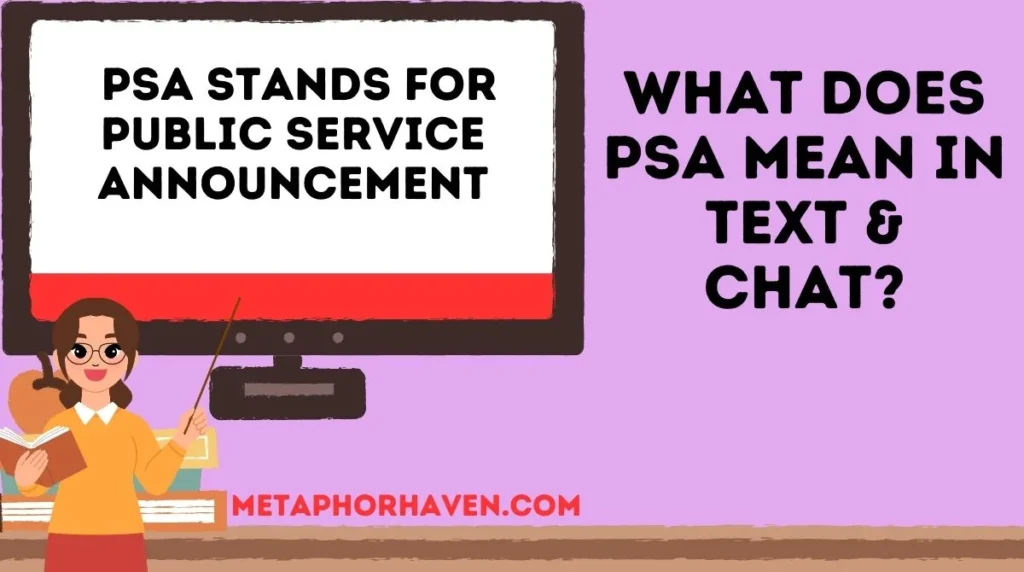
In texting, PSA stands for Public Service Announcement. It’s commonly used to share important information, warnings, or reminders with friends, followers, or groups online. Think of it as giving your chat audience a heads-up about something useful, urgent, or interesting.
For example:
- “PSA: Don’t forget the meeting at 3 PM! ⏰”
- “PSA: That new scam email is going around. Don’t click links!”
In casual chats, people often use PSA humorously or sarcastically too, such as sharing funny observations or memes while labeling them as “PSA.”
Full Form, Stands For & Short Meaning of PSA
PSA is an acronym with a straightforward full form:
- Full Form: Public Service Announcement
- Short Meaning in Text: A heads-up or important info shared with others
While traditionally used in media and government campaigns to spread awareness, online users have adapted PSA for everyday life, social media posts, and even personal messages.
Origin, History & First Known Use of PSA
The term Public Service Announcement (PSA) originated in the United States around the 1940s–1950s. It was initially used in radio and television to broadcast important messages about public health, safety, or social issues.
With the rise of texting, social media, and online communities, PSA evolved into a casual digital shorthand. Today, it’s widely used on platforms like Instagram, Twitter, TikTok, and WhatsApp to quickly grab attention for both serious and lighthearted messages.
How People Use PSA in Daily Conversations
People use PSA to inform, warn, or remind others without lengthy explanations. It’s especially popular when someone wants to quickly convey a message that could benefit multiple people.
Examples in daily chat:
- “PSA: Don’t forget to water your plants today 🌱”
- “PSA: The new iPhone drops next week 📱”
- “PSA: My dog ate my homework… again 🐶😂”
It adds a sense of importance or urgency, even when the topic is casual or funny.
PSA Meaning Across WhatsApp, Instagram, TikTok & Snapchat
The use of PSA varies slightly across platforms:
- WhatsApp: Mostly casual, often in group chats for reminders or warnings.
- Instagram: Frequently used in captions or stories to highlight news or tips.
- TikTok: Often appears in video captions for trending tips, challenges, or announcements.
- Snapchat: Used in quick snaps or stories to alert friends to events, trends, or funny observations.
In all platforms, the core idea remains the same: grabbing attention and sharing important info.
Different Meanings of PSA in Other Fields
While PSA in texting usually means “Public Service Announcement,” it has other meanings depending on the field:
- Medical: Prostate-Specific Antigen (used in health tests)
- Sports/Collectibles: Professional Sports Authenticator (grading cards)
- Finance: Pension Scheme Association
Always consider context to avoid confusion. For example, a chat about health might imply the medical PSA, while a sports forum could refer to card grading.
Common Confusions, Mistakes & Wrong Interpretations
Some common mistakes include:
- Misinterpreting PSA as “Private Something Announcement” (incorrect).
- Assuming it always refers to health-related messages.
- Using it in formal emails where it may seem too casual.
Correct usage always fits the context of alerting or sharing info with an audience.
Similar Terms, Alternatives & Related Slang
Alternatives and related slang include:
- FYI (For Your Information) – Less formal, simply sharing info
- Heads-Up – Casual notification
- Alert – Stronger urgency
- Reminder – Friendly prompt
These can be used interchangeably with PSA depending on tone and platform.
Examples of PSA in Real Chat Situations
- “PSA: Remember to bring snacks for the trip 🍫”
- “PSA: Don’t fall for phishing emails!”
- “PSA: Game night at my place tomorrow 🎲”
- “PSA: Sale ends tonight, don’t miss out 🛍️”
Short, clear, and attention-grabbing is the key.
How to Reply When Someone Says PSA
Responses depend on the context:
- “Thanks for the heads-up!”
- “Noted ✅”
- “Haha, good to know 😂”
- “Wow, didn’t realize! Thanks!”
You can keep it casual or acknowledge the urgency depending on the message.
Is PSA Still Popular? Trends & Online Usage
Yes, PSA remains widely popular online. Social media platforms, group chats, and even workplace messaging apps frequently use PSA to alert or inform audiences. Trends show that PSA is often combined with humor, memes, or emojis to make messages more engaging and relatable.
FAQs About PSA Meaning in Text
1. What does PSA stand for in texting?
- Public Service Announcement; a message meant to inform or warn.
2. Can PSA be used in casual conversation?
- Yes, it’s often used humorously or casually online.
3. Is PSA the same across all social media platforms?
- The meaning is consistent, but usage style varies by platform.
4. What is the origin of PSA?
- Originally a media term for public awareness campaigns in the 1940s–50s.
5. Can PSA have other meanings?
- Yes, in medicine, sports, or finance, but context clarifies usage.
Internal Linking Suggestions:
- Link to pages explaining other text abbreviations like FYI, TBT, or BRB.
- Connect to slang and internet shorthand guides.
Conclusion
In texting and online chats, PSA is a handy acronym that helps you quickly share important info, warnings, or reminders. Whether used seriously or humorously, it’s become an integral part of modern digital communication.
By understanding its meaning, origin, and usage across platforms, you can communicate more clearly and avoid misinterpretation.
Next time you type PSA, your audience will know it’s a quick, effective way to grab attention—and maybe even make them smile along the way.

I am Rani, a passionate writer who loves exploring metaphors and creative expressions in English.
Through words, I aim to make language more vivid, meaningful, and inspiring.