Last updated on February 12th, 2026 at 09:08 am
If you’ve ever scrolled through texts, social media, or chat apps, you’ve probably seen the abbreviation TGIF.
But what exactly does it mean, and why do so many people use it online? In short, TGIF is a popular shorthand used to express excitement about the end of the workweek and the arrival of the weekend.
It’s often typed in casual conversations, text messages, and social media posts, and it has become part of everyday digital language.
People search for its meaning because slang evolves quickly, and not everyone remembers or knows what each acronym stands for. In this guide, we’ll break down everything about TGIF—its meaning, history, usage, and how it shows up across popular platforms.
What Does TGIF Mean in Text & Chat?
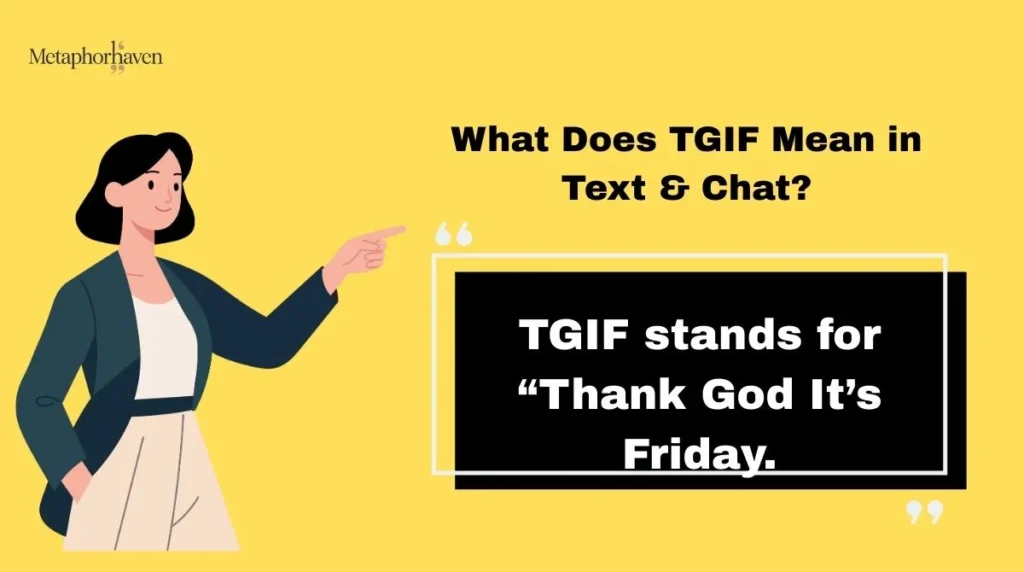
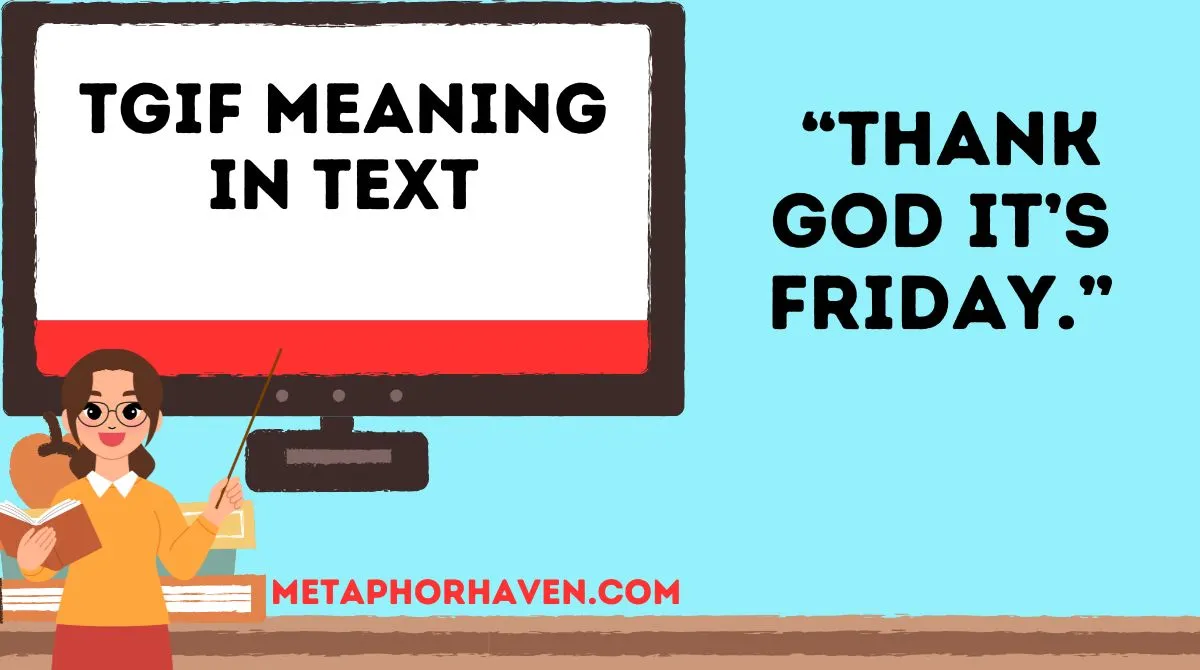
TGIF stands for “Thank God It’s Friday.” It’s a cheerful expression people use to celebrate the end of a work or school week. In texts and chats, TGIF conveys relief, happiness, or anticipation for the weekend. Whether someone is chatting with friends, posting on Instagram, or replying to a coworker, this abbreviation is universally understood in casual contexts.
Quick examples in text:
- “TGIF! Time to relax 😎”
- “Finally Friday, TGIF 🎉”
- “TGIF! What’s the weekend plan?”
Full Form, Stands For & Short Meaning of TGIF
- Full Form: Thank God It’s Friday
- Short Meaning: Expressing excitement for Friday or the weekend
- Use in sentences: Shows happiness that work or school is over for the week
- Tone: Casual, informal, friendly
TGIF is more than just words; it’s a small celebration in everyday life. People often use it with emojis like 🎉, 😎, or 🍹 to add extra excitement.
Origin, History & First Known Use of TGIF
The phrase “Thank God It’s Friday” has been around since at least the 1960s, originating in workplace culture to celebrate the end of the week. The acronym TGIF became popular in the 1980s thanks to American media, especially TGIF-themed TV shows and magazine columns that used the phrase to engage audiences. Over time, TGIF migrated to digital communication, becoming a staple in texting and online chats. Today, TGIF is a globally recognized abbreviation, transcending its American roots.
How People Use TGIF in Daily Conversations
TGIF is mostly used in casual, informal conversations. Here’s how people incorporate it:
- Text messages: Quick reaction to Friday or weekend plans
- Emails: Occasionally in light-hearted office emails or newsletters
- Social media: Posts about weekend plans, Friday moods, or funny memes
- Voice chats: Mentioned when chatting about relief or plans
Sample chat usage:
- A: “Rough week… can’t wait for the weekend.”
- B: “TGIF! Let’s grab dinner 🍕”
TGIF Meaning Across WhatsApp, Instagram, TikTok & Snapchat
On different platforms, TGIF carries the same core meaning but with slight style variations:
- WhatsApp: Mostly casual text chats among friends or groups
- Instagram: Often in captions or stories with emojis like 🌞, 🍸, 🎶
- TikTok: Used in hashtags (#TGIF, #WeekendVibes) or video captions
- Snapchat: Shared as a reaction sticker or in stories expressing weekend excitement
Different Meanings of TGIF in Other Fields
While TGIF almost always means “Thank God It’s Friday” in texting and social media, it can occasionally be used in other contexts:
- Events: “TGIF happy hour” for Friday evening parties
- Marketing: Companies use it for promotions, discounts, or campaigns targeting Friday shoppers
- Pop culture: Occasionally appears in song lyrics, TV shows, and movies
Common Confusions, Mistakes & Wrong Interpretations
Some people confuse TGIF with other similar abbreviations, or take it literally as religious gratitude. Common mistakes include:
- Thinking TGIF is formal or professional (it’s not)
- Misinterpreting TGIF as “Thank God I Failed” in rare sarcastic jokes
- Using TGIF in serious contexts, which may seem out of place
Similar Terms, Alternatives & Related Slang
TGIF has a few playful or alternative expressions:
- TGIW: Thank God It’s Wednesday (midweek celebration)
- TGIM: Thank God It’s Monday (used ironically)
- FriYay: Casual slang for Friday excitement
- Weekend vibes: Not an acronym but conveys similar meaning
Examples of TGIF in Real Chat Situations
- “TGIF! Finally done with exams 😅”
- “TGIF! Beach day this weekend? 🏖️”
- “TGIF everyone! Drinks after work? 🍹”
- “TGIF memes are the best on Fridays 😂”
How to Reply When Someone Says TGIF
You can respond casually or humorously:
- “Right? Can’t wait for the weekend!”
- “TGIF indeed! Plans?”
- “Cheers to Friday 🎉”
- “Finally! Weekend mode activated 😎”
Is TGIF Still Popular? Trends & Online Usage
TGIF remains widely used even in 2025. Social media posts, trending hashtags, and casual chats still see the abbreviation daily. While newer slang emerges, TGIF holds nostalgic and practical value. Its simplicity makes it evergreen, especially for workweek relief and weekend anticipation.
FAQs
Q1: What does TGIF mean in texting?
A: It means “Thank God It’s Friday,” used to celebrate the weekend.
Q2: Can TGIF be used professionally?
A: Only in light, casual emails; avoid formal work contexts.
Q3: Is TGIF used worldwide?
A: Yes, it’s recognized globally, especially among English speakers.
Q4: What’s a funny alternative to TGIF?
A: “FriYay” or “TGIW” for midweek fun.
Q5: Why is TGIF so popular?
A: It’s short, cheerful, and perfectly conveys excitement for Friday.
Internal Linking Suggestions:
- Link to pages about other text abbreviations like LOL, BRB, or SMH.
- Create content around weekend slang, memes, and online texting culture.
Conclusion
TGIF isn’t just an abbreviation—it’s a mini celebration that unites friends, colleagues, and social media users worldwide. It reflects relief, excitement, and the universal love for Fridays.
Whether you’re texting, posting on Instagram, or joining a TikTok trend, TGIF adds energy and fun to conversations. By understanding its history, usage, and variations, you’ll always be ready to drop a TGIF at the perfect moment.
So next Friday, don’t hesitate—celebrate, text, and share the joy! 🎉😎

I am Rani, a passionate writer who loves exploring metaphors and creative expressions in English.
Through words, I aim to make language more vivid, meaningful, and inspiring.