Think fine arts education only happens inside a classroom with paint-stained desks?
Think again.
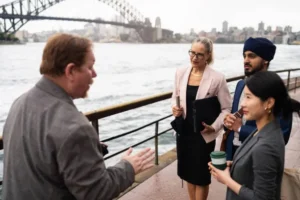
A great deal of learning takes place outside the classroom. Outside the lecture hall, in galleries, studios, museums, community centers and on the internet. College is only one part of a much larger experience.
Here’s the thing:
To develop yourself as an artist, it is important to experience the real world. Seeing how exhibitions are constructed, observing how curators craft stories and understanding how the business of art works. While classrooms can provide you with the foundations, everything else is learned on the job.
This article explores where arts education really shines outside of school — and why.
In this guide:
- Why Fine Arts Education Has Moved Beyond Classrooms
- Museums & Galleries: The Real Classroom
- Studios, Workshops, and Mentorships
- Digital Platforms Changing the Game
- Community Programs and Public Art
Why Fine Arts Education Has Moved Beyond Classrooms
Fine arts has always been about more than technique…
Storytelling, perspective and people. Things you can’t learn behind the walls of a classroom.
The National Endowment for the Arts reports that at-risk students with high arts involvement earn higher grades, graduate and attend college at higher rates. The arts provide opportunities that regular academics don’t.
But here’s the kicker…
Much of that growth occurs outside of the classroom. By visiting galleries. Attending workshops. Doing internships. Getting real world experience in art curation.
In an art curation program, you’ll discover how exhibits tell stories. You’ll discover how spaces create significance. You’ll discover how visual pieces communicate with spectators. Curious about a more in-depth understanding of how curating impacts the fine arts experience? Dig into how this behind-the-scenes aspect of the industry meshes an artist’s purpose, a gallery’s display, and the observer’s interpretation simultaneously.
That hands-on side of fine arts education… is where the magic really happens.
Museums & Galleries: The Real Classroom
Walk into a museum, and you walk into a living, breathing classroom.
Every exhibit has something new to teach you. About history. About culture. About the decisions artists and curators made. You get to learn by doing instead of reading.
Recent data shows that 33% of US adults visited a museum in 2024, which is higher than pre-pandemic levels. Visitors are returning to galleries and museums in large numbers — and that’s excellent news for fine arts students who want to continue learning beyond the classroom.
Here’s what museums and galleries teach you that a classroom often can’t:
- How works are placed and grouped to tell a story
- How lighting and space shift a viewer’s emotion
- How art curation choices shape the entire experience
- How public reaction changes based on context
Pretty powerful, right?
Gallery visits and internships at museums are becoming more common as courses in fine arts programs. Working behind the scenes with curators and installing real exhibitions is not something you can learn from a book.
Studios, Workshops, and Mentorships
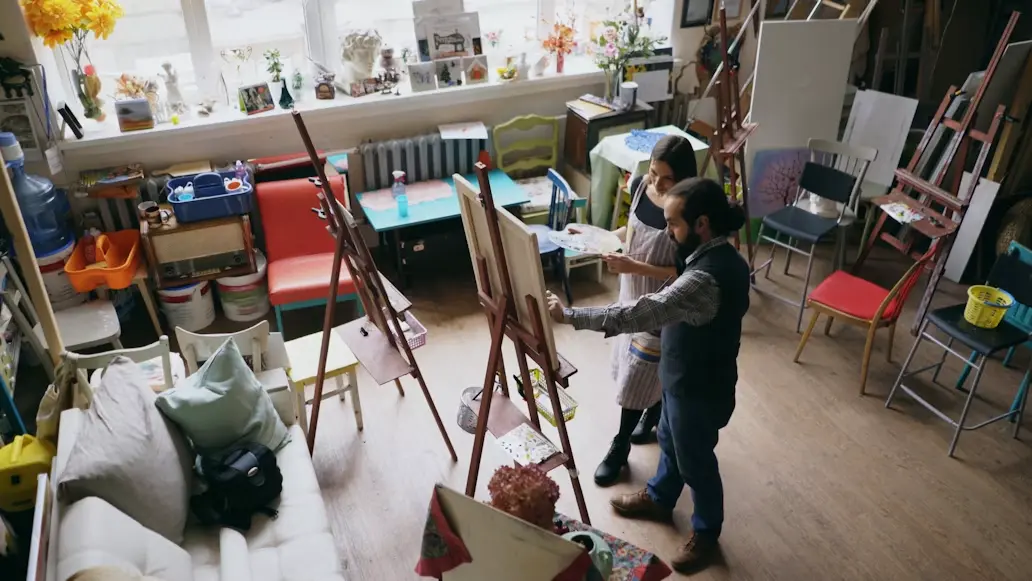
Studios are where artists get their hands dirty…
Here you’ll learn the nuts-and-bolts skills like painting, sculpting, photography, printmaking that are the foundation of a career in the fine arts. However, learning in the studio is about more than…
It’s about community.
In a shared studio situation or workshop you are forced to work around other artists. You watch them work. How they deal with writer’s block. How they critique other people’s work. Exposure like that fine tunes your abilities that no school can teach.
The most common types of studio-based learning include:
- Drop-in community art studios
- Artist-in-residence programs
- Short-form workshops with established artists
- Long-term mentorship programs
Mentorships especially are gold. They can push you, challenge what you think about certain subjects and help you find your own style. Also they can give you real honest feedback that no book will ever be able to.
If you are a student search your area for artists who are offering workshops. Most artists are willing to teach an aspiring artist that is willing to learn.
Digital Platforms Changing the Game
The internet has completely changed fine arts education…
The world’s most renowned painters are now offering masterclasses you can take from your kitchen. Online critique groups, Twitter art curation feeds, and tutorials for every technique imaginable are just a click away.
It’s never been easier to learn from the best.
Some of the best digital learning options include:
- Virtual museum tours and digital exhibitions
- Online courses from working artists and curators
- YouTube channels dedicated to art technique
- Social media accounts run by established artists
But don’t fall into the trap…
Just sitting there watching videos does not make you an artist. You still have to put in your time. You have to do the work, get the feedback from the real world. Technology is only beneficial if you couple it with hands-on experience and face-to-face instruction.
Community Programs and Public Art
Here’s something that often gets overlooked…
Community art classes offer some of the best education outside of school. Your local arts council, library, and non-profit are sure to host programs that pair aspiring artists with paying customers. Plus, most of them are free or very low-cost.
These programs give you a chance to:
- Show your work in real exhibitions
- Get involved in public art and murals
- Volunteer at local galleries
- Help with art curation projects in the community
That final point is massive. Volunteering to help curate a tiny local exhibition will teach you more about curating art than weeks of theoretical study. You’ll deal with actual artists, actual spaces and actual audiences. It’s amazing.
Communities also lead to opportunities. You get to meet other artists. You get to meet curators. You get to meet collectors. And those relationships can blossom into larger opportunities in the future.
Bringing It All Together
Fine arts education doesn’t end at the classroom door…
Great artists stay humble and continue to learn. Visit museums, attend local workshops, or take an online masterclass. Push yourself and try new things. Whatever it is, you are only gaining more tools for your belt.
To quickly recap, the most powerful learning happens through:
- Museum and gallery visits
- Studio practice and mentorships
- Digital platforms and online classes
- Community programs and art curation projects
The classroom is just where the journey begins. The magic happens everywhere else. So go. Attend more shows. Participate in more workshops. Assist with more curations. Your fine arts education is larger than any one classroom.
Also Read-5 Ways AI-Powered Legal Document Drafting Services Reduce Manual Work