
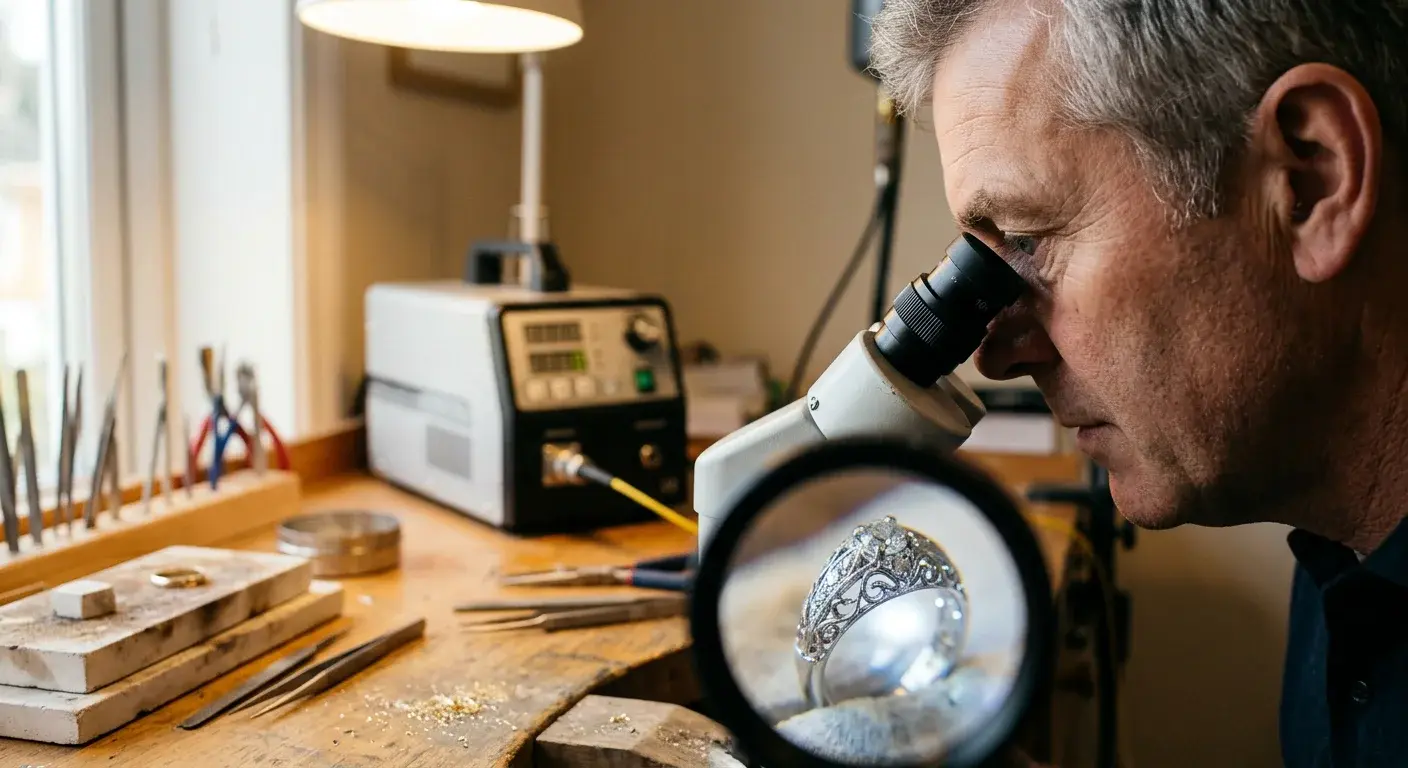
Jewelry repair is a careful craft. A broken chain, a loose ring prong, or a cracked bracelet joint may look small, but repairing it well requires accuracy, patience, and the right tools. For a customer, the final result is simple: the jewelry should look beautiful again. For a repair shop, the process is much more detailed.
Traditional soldering still has an important place in jewelry work. Many jewelers use it every day for common repairs. However, some pieces are too delicate, too valuable, or too detailed for broad heat. This is where laser welding has become useful for modern jewelry repair shops.
Laser welding helps jewelers focus heat on a very small area. It can make repairs cleaner, reduce unnecessary heat exposure, and improve control when working on rings, chains, bracelets, watch parts, and other fine metal pieces.
Why Precision Matters in Jewelry Repair
Jewelry is not like large metalwork. A ring prong, a necklace link, or a bracelet clasp may be only a few millimeters wide. A small mistake can change the shape of the piece or leave a visible mark.
Customers also care deeply about appearance. They do not only want the jewelry to be strong again. They want it to look natural, clean, and close to its original condition. This is especially important for engagement rings, heirloom jewelry, custom pieces, and luxury items.
Precision matters for three main reasons. First, many jewelry parts are very small. Second, the surface finish is highly visible. Third, many pieces contain stones, details, or decorations that should not be exposed to unnecessary heat.
For repair shops, better precision can mean fewer visible marks, less polishing after repair, and more confidence when handling valuable items.
What Laser Welding Means in Jewelry Repair
Laser welding uses a focused beam of energy to join or repair metal. Instead of heating a large area, the laser focuses on a small point. This allows the jeweler to work more carefully around delicate parts.
In jewelry repair, laser welding is often used for gold, silver, platinum, stainless steel, and other metals. It can be used to repair cracks, reconnect small parts, strengthen weak points, or add metal to damaged areas.
A simple way to understand it is this: traditional soldering is like using a wide brush, while laser welding is more like using a fine pen. Both tools are useful, but the fine pen gives more control when the details are small.
More Control in Small Repair Areas
One of the biggest advantages of laser welding is control. Jewelry repair often happens in tight spaces. A broken chain link, a cracked ring shank, or a loose prong does not leave much room for error.
Laser welding allows the repair area to be targeted more directly. This helps the jeweler place energy exactly where it is needed. For shops that repair rings, chains, bracelets, and custom pieces every day, choosing the right laser welder for jewelry repair can support better welding control and more consistent repair results.
This kind of control is especially helpful when the repair area is close to decorative details. Instead of heating a larger section of the jewelry, the jeweler can focus on the exact point that needs work.
Smaller Heat-Affected Area
Heat is one of the biggest challenges in jewelry repair. Too much heat can cause discoloration, deformation, or damage to nearby areas. Thin pieces are especially sensitive because they can change shape more easily.
Laser welding helps reduce this problem by concentrating heat in a smaller area. This does not mean heat disappears completely, but it can help limit the surrounding heat effect compared with broader repair methods.
This is useful for fine chains, thin rings, delicate settings, and detailed metal structures. When less surrounding metal is affected, the repair can often stay cleaner and closer to the original shape.
Cleaner Welds and Less Finishing Work
A clean repair is important because jewelry is meant to be seen up close. After welding, a repair shop may still need to polish, smooth, or reshape the surface. But cleaner welds can reduce the amount of finishing work required.
Laser welding can create smaller and more focused weld points. This may help reduce rough marks around the repair area. For a repair shop, that can save time. For the customer, it can create a better final appearance.
This is one reason many shops use laser welding for visible areas of jewelry, such as ring surfaces, bracelet joints, pendant loops, and decorative metal parts.
Better Support for Complex Jewelry Designs
Modern jewelry is not always simple. Some pieces have multiple layers, fine details, mixed metals, stones, or custom design elements. Older or antique jewelry can also be difficult to repair because the structure may already be weak.
Laser welding gives jewelers another option when a piece requires detailed work. It can be used for prong rebuilding, crack repair, chain repair, filling small gaps, and strengthening weak joints.
This does not mean laser welding replaces every traditional method. Instead, it gives jewelry repair shops more flexibility. For general repairs, traditional soldering may still be suitable. For delicate or high-value repairs, laser welding can offer more control.
Common Jewelry Repairs That Use Laser Welding
Laser welding can be useful in many jewelry repair tasks.
For rings, it can help with crack repair, resizing support, prong repair, and small metal filling. Ring prongs are especially important because they hold stones in place. A weak or broken prong needs careful repair without disturbing the rest of the setting.
For chains and bracelets, laser welding can help reconnect broken links, repair clasps, and strengthen weak joints. Thin chains can be difficult to repair with too much heat, so a more focused method can be helpful.
For watches, eyeglass frames, and small metal accessories, laser welding can also support fine repair work. These items often have small parts and narrow repair areas, which require steady control.
For custom jewelry, laser welding can help with small design changes, prototype adjustments, or detailed metal joining.
Laser Welding vs. Traditional Soldering
Traditional soldering is still widely used in jewelry repair. It is familiar, practical, and effective for many common jobs. However, it usually involves heating a broader area.
Laser welding is different because it focuses energy on a smaller point. This makes it helpful for jobs that require accuracy, clean appearance, and reduced heat exposure.
The best method depends on the repair. A simple repair may not need laser welding. But for delicate rings, fine chains, high-value pieces, or visible repair points, laser welding can be a better choice.
A professional jewelry repair shop does not need to treat these methods as competitors. They can work together. Traditional soldering handles many standard repairs, while laser welding supports precision work.
What Jewelry Repair Shops Should Look For
When choosing a jewelry laser welder, repair shops should think about daily use, not only machine specifications.
Adjustable settings are important because different metals and thicknesses require different welding conditions. A small and adjustable spot size can help when working on fine parts. A clear viewing system, such as a microscope or camera display, can also improve accuracy.
Stability matters as well. A repair shop needs consistent results across different jobs. Easy operation is another important factor, especially for small workshops or jewelry stores that want to train staff efficiently.
Machine size should also match the workspace. Many jewelry shops need compact equipment that fits into a repair area without taking up too much room.
Best Practices for More Precise Results
Good equipment is important, but technique also matters. Before welding, the repair area should be cleaned properly. Dirt, oil, or surface residue can affect the welding result.
Repair shops should choose settings based on the metal type, thickness, and repair location. For valuable pieces, it is often smart to test on a similar material before working on the actual item.
When working near stones or delicate structures, extra care is necessary. Some materials are sensitive to heat or shock. Jewelers should protect the surrounding area and use proper magnification to check the repair point clearly.
A stable hand, good lighting, and careful finishing after welding can also improve the final result.
Why This Matters for Customer Trust
Jewelry repair is personal. Customers may bring in wedding rings, family pieces, gifts, or items with emotional value. They want the repair to be strong, but they also want the jewelry to keep its meaning and beauty.
When a repair shop can deliver cleaner, more precise results, customers notice. They may be more likely to return for future repairs or recommend the shop to others.
Precision is not only a technical advantage. It is also part of the customer experience.
Conclusion
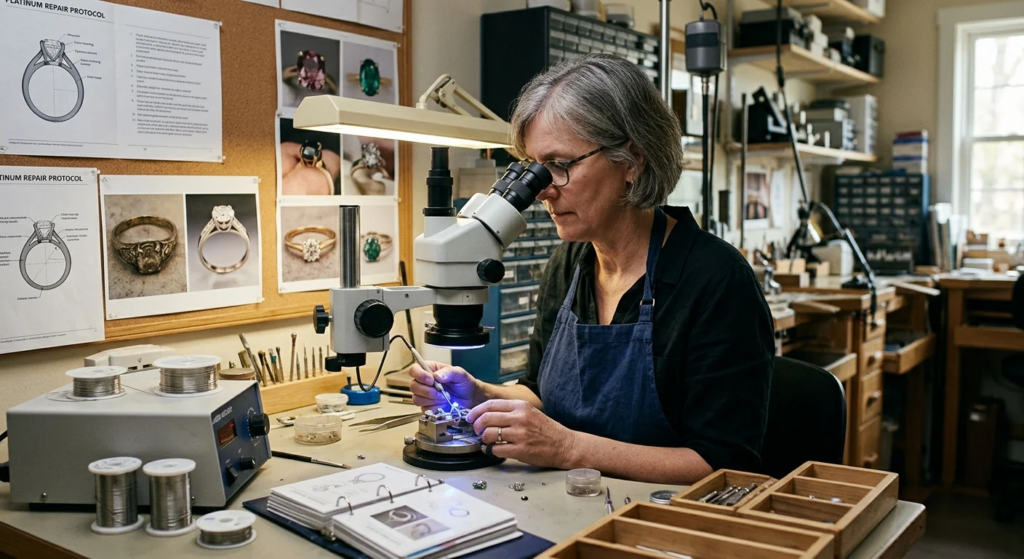
Laser welding helps jewelry repair shops improve precision by focusing heat on small areas, reducing unnecessary heat exposure, and creating cleaner repair points. It is especially useful for delicate rings, fine chains, bracelets, prongs, watch parts, and custom jewelry.
Traditional soldering will continue to be useful in jewelry repair. But laser welding gives modern repair shops another valuable tool for detailed and high-quality work.
For shops that handle delicate or high-value jewelry, better welding precision can mean cleaner repairs, less finishing work, and stronger customer confidence.
FAQ
What is laser welding used for in jewelry repair?
Laser welding is used to repair small metal parts, such as broken chains, ring prongs, bracelet joints, cracked rings, pendant loops, and watch or eyeglass components.
Is laser welding better than traditional soldering?
It depends on the repair. Traditional soldering is still useful for many standard jobs. Laser welding is often better for small, delicate, or high-value pieces that need more focused heat and better control.
Can laser welding reduce visible repair marks?
In many cases, yes. Because laser welding works on a smaller area, it can help create cleaner weld points and reduce the amount of polishing or surface correction needed after repair.
What should a jewelry shop consider before buying a laser welder?
A shop should consider adjustable power, spot size, viewing system, output stability, ease of operation, machine size, and the types of jewelry repairs it handles most often.
Also Read
- 4 Practical Ways To Stretch Any Tech Budget
- Exploring Life Fitness: The Ultimate Guide to Health and Wellness Equipment
- How Smart Workplace Technology Is Reshaping Comfort and Efficiency in Modern Facilities