
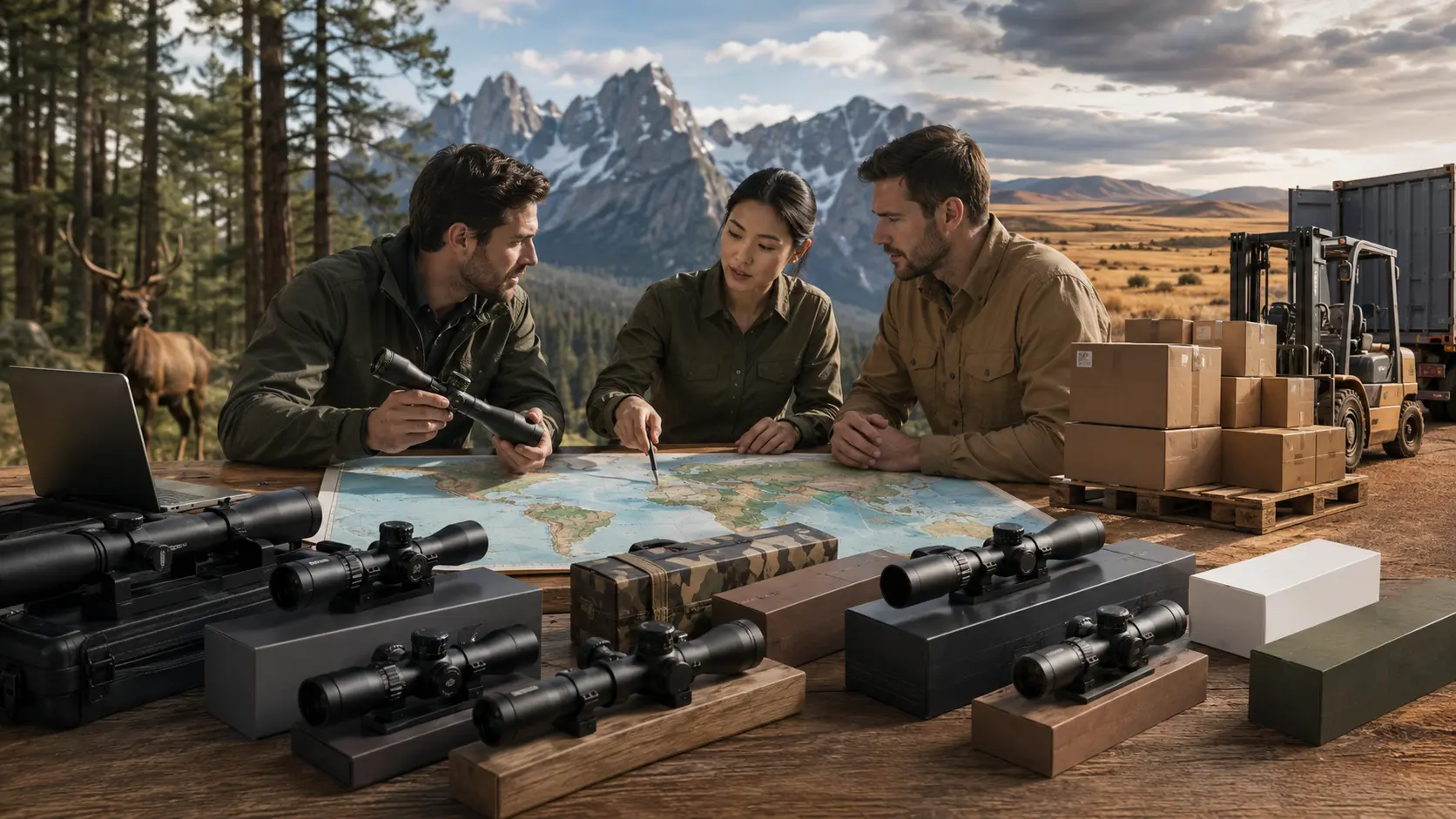
Launching a private-label rifle scope can help an outdoor brand expand its product range and gain greater control over pricing, presentation, and customer experience. However, the success of the project depends heavily on the manufacturing partner behind the product. A low quotation may initially appear attractive, but inconsistent quality, unclear specifications, missed deadlines, or weak after-sales support can create far greater costs later.
Choosing an experienced scope OEM manufacturer gives brands and importers access to established optical production knowledge without requiring them to build their own factory. The right manufacturer can support product selection, customization, sampling, testing, branding, packaging, and repeat production. The buyer must still evaluate the supplier carefully and create clear expectations before placing a large order.
Begin With a Detailed Product Brief
A supplier cannot recommend the right product unless the buyer clearly explains what is required. A request such as “we need a good hunting scope” leaves too much room for interpretation.
The product brief should describe the target customer, expected retail price, common shooting distance, terrain, climate, firearm type, and planned sales region. It should also explain whether the scope will be positioned as an entry-level, mid-range, or premium product.
Important specifications may include magnification, objective-lens size, reticle style, illumination, tube diameter, turret type, focus controls, finish, accessories, and packaging. Buyers should separate essential requirements from optional preferences so the manufacturer understands which details cannot be changed.
A clear brief makes quotations easier to compare and reduces the risk of receiving samples that do not suit the intended market.
Evaluate Relevant Manufacturing Experience
Not every optical supplier has the same technical background. A factory that produces simple viewing products may not have strong experience with rifle-scope adjustment systems, recoil requirements, sealing, or reticle installation.
Buyers should ask which types of scopes the manufacturer regularly produces and which markets it serves. Previous experience with hunting optics, compact scopes, variable-power models, and customized projects may indicate that the supplier understands common development challenges.
Experience does not remove the need for testing, but it can improve communication and reduce avoidable design mistakes. A knowledgeable manufacturer should be able to explain why a certain tube, adjustment system, lens configuration, or reticle is suitable for the intended product.
Compare More Than the Unit Price
The lowest quoted price is not always the lowest overall cost. A very inexpensive scope can become costly if it causes returns, damages the brand’s reputation, or requires frequent replacement.
Buyers should compare the complete commercial offer, including:
- Unit price at different order quantities
- Sample, tooling, logo, and packaging charges
- Production time and shipping arrangements
- Inspection, warranty, and replacement terms
The quotation should clearly state which accessories and packaging elements are included. Differences in lens covers, batteries, cleaning cloths, manuals, mounting accessories, or protective packaging can affect the final cost.
Importers should also estimate freight, duties, inspection expenses, local storage, and warranty reserves. Understanding the total landed cost supports more accurate pricing and prevents unexpected pressure on profit margins.
Confirm Customization Capabilities Early
Some suppliers describe a product as customizable when they only offer logo printing and a different box. For many brands, this may be enough. Others may need changes to the reticle, finish, turret markings, magnification range, accessories, or optical configuration.
The buyer should confirm exactly which elements can be changed and whether each change requires additional tooling, development time, or minimum quantities. Custom reticles, structural modifications, and new mechanical parts may require more investment than basic branding.
It is usually better to begin with a proven platform and make meaningful changes rather than redesigning every component. This can reduce development risk while still allowing the final product to have a recognizable identity.
All custom details should be recorded in drawings, specification sheets, artwork files, and approved samples.
Understand the Minimum Order Requirements
Minimum order quantity can affect cash flow, storage, and product-launch risk. A factory may offer a low price only at a volume that is too high for a new or untested market.
Buyers should ask whether the minimum quantity applies to the complete order, each model, each finish, or each customized component. For example, different reticles or packaging designs may be treated as separate production runs.
A smaller trial order may have a higher unit price but allow the brand to collect customer feedback before committing to greater inventory. Once demand is proven, the buyer may be able to place larger orders and negotiate better commercial terms.
The goal should be to select an order size that supports the launch without creating unnecessary financial pressure.
Treat Samples as a Production Test
Samples should be evaluated as possible production products, not merely as attractive demonstrations. A buyer should confirm whether the sample uses the same components, processes, coatings, and materials that will be used during mass production.
The scope should be examined for image sharpness, color, contrast, edge clarity, focus, eye relief, magnification movement, reticle alignment, turret response, illumination, finish, and markings. It should also be mounted and tested appropriately where possible.
Packaging and accessories deserve equal attention. A strong scope can still create a poor customer experience if the manual is unclear, the lens covers do not fit, or the box does not provide sufficient protection.
Feedback should be specific and documented. Each requested change should be reviewed again before final approval.
Ask How Quality Is Controlled
General statements such as “every product is inspected” do not explain what is actually checked. Buyers should ask for a clear description of the quality-control process.
Inspection may cover incoming components, lens cleanliness, coating consistency, dimensions, assembly, reticle positioning, turret movement, sealing, exterior appearance, logo placement, and final packaging. Some tests may be completed on every unit, while others may be performed through batch sampling.
When reviewing a scope OEM manufacturer, buyers should ask how optical performance, adjustment reliability, recoil resistance, waterproofing, fog resistance, and cosmetic standards are evaluated. The agreed tests should match the scope’s intended use and market position.
A written inspection checklist helps both parties understand what qualifies as an acceptable finished product.
Establish a Clear Approval Standard
The final approved sample should become the main physical reference for production. However, a sample alone may not record internal materials, tolerances, coating requirements, or testing procedures.
The buyer and manufacturer should maintain a complete specification file containing product measurements, optical details, markings, finish, accessories, packaging, and inspection requirements. Any approved changes should be added to the file.
This prevents confusion if staff members change or if the product is reordered several months later. It also gives inspectors a more objective standard when reviewing production units.
Approval should only take place after all important corrections have been completed. Accepting an unfinished sample with the expectation that issues will be fixed during production creates unnecessary risk.
Discuss Production Consistency
A good sample does not automatically guarantee a consistent mass-production order. The buyer should ask how the factory controls component suppliers, assembly processes, coatings, and testing across different batches.
Changes in glass, internal parts, surface treatments, or adjustment components may affect the customer experience even when the exterior appears identical. The manufacturer should not replace important materials without approval.
Brands planning repeat orders should also discuss how specifications will be maintained over time. A reliable supplier needs an organized method for storing product files, artwork, sample records, and production standards.
Consistency allows the brand to market the same model with confidence and reduces differences between early and later orders.
Review Packaging Before Production
Packaging protects the product and communicates its value. It should be considered part of development rather than a task completed at the last moment.
The inner structure should keep the scope secure during transportation. Accessories should have defined positions, and the exterior artwork should include accurate model information. Barcodes, labels, warnings, and importer details may also be required depending on the market.
The manual should use clear English and explain the product without making unsupported claims. It may cover installation considerations, focusing, magnification, turret operation, illumination, care, storage, and warranty contact details.
Buyers should request a complete packaged sample before approving mass production. This allows them to check both appearance and shipping protection.
Clarify Lead Times and Communication
Production schedules affect launches, retailer commitments, marketing campaigns, and seasonal sales. Buyers should understand the estimated timeline for samples, revisions, packaging, production, inspection, and shipment.
Lead times should be realistic rather than based only on the fastest possible situation. Customized parts, peak production periods, material availability, and packaging approval can all influence the schedule.
Communication should also be evaluated during the sample stage. Slow or unclear replies before an order may become more difficult after production begins.
Useful supplier communication includes:
- Written confirmation of specifications and changes
- Regular updates at major production stages
- Early notice of delays or technical problems
- Clear responsibility for corrective action
A strong relationship does not require constant messaging, but important information should be shared before it becomes a serious problem.
Confirm Compliance Responsibilities
Different countries and sales channels may have specific requirements for materials, markings, packaging, batteries, documentation, or product claims. The importer should identify the rules that apply in its target market.
Manufacturers may provide test reports or certificates, but buyers should confirm that the documents apply to the exact product being ordered. A certificate for another model or material may not satisfy local requirements.
Compliance responsibilities should be discussed before production because later changes to labels, manuals, coatings, or packaging can cause delays and extra expense.
Importers may also need independent professional advice for their specific market. The manufacturer can provide production documentation, but the seller remains responsible for ensuring that the product can legally be imported and offered to customers.
Plan Warranty and Replacement Support
A private-label product carries the buyer’s brand, so customers will normally contact that brand when a problem occurs. Warranty support should therefore be planned before the first shipment.
The buyer and supplier should agree on how manufacturing defects will be reported, evaluated, credited, repaired, or replaced. The agreement may include spare units, replacement components, future-order credits, or another practical solution.
The brand should also define its customer-facing warranty terms. These terms need to be clear, realistic, and supported by the commercial arrangement with the manufacturer.
Tracking return reasons can provide useful information. Repeated complaints may reveal a product issue, unclear instructions, packaging weakness, or incorrect customer expectations.
Consider the Supplier’s Long-Term Value
A manufacturer should not be judged only by one order. A good partner can help a brand improve existing products, develop new models, respond to customer feedback, and maintain consistent supply.
Long-term value may come from technical advice, stable quality, organized communication, flexible customization, reliable documentation, and honest problem-solving. These benefits can be more important than a small difference in unit price.
The buyer should also evaluate whether the supplier’s production capabilities can support future growth. A manufacturer suitable for a small first order should ideally be able to handle additional models and larger volumes without losing consistency.
A cooperative relationship gives both sides a reason to improve the product rather than treating every order as a separate transaction.
Final Thoughts
Choosing a rifle scope manufacturing partner requires more than reviewing a catalog and comparing quotations. Outdoor brands and importers need to examine technical experience, customization, sample quality, testing, minimum quantities, total cost, packaging, compliance, communication, and warranty support.
The safest approach is to begin with a clear product brief, test samples carefully, document every important requirement, and approve a complete production standard. Buyers should also understand how consistency will be maintained after the first order.
A dependable manufacturing relationship can help a brand reduce sourcing risk and build a hunting scope line that customers trust. Careful supplier evaluation may take more effort at the beginning, but it can prevent costly problems and support more stable long-term growth.
Businesses seeking hunting-scope development, customization, and manufacturing support can review available solutions through billingsoptics.com.
Also Read
- 4 Practical Ways To Stretch Any Tech Budget
- The Art of Adaptive Reuse: Breathing New Life into Historic Structures