The Foundation of Modern Digital Marketing and SEO Strategies
In October 2026, the bedrock of successful digital marketing is a deep understanding of search. It’s no longer enough to sprinkle keywords throughout your content. Instead, search engines now employ sophisticated AI to evaluate user intent, contextual relevance, and the overall user experience. This evolution demands that our marketing strategy and SEO efforts are meticulously crafted to meet these advanced criteria. We must build organic visibility not just for traffic, but for genuine business growth, recognizing that every digital decision should start with how users search and what they truly seek.
The core principle here is E-E-A-T (Experience, Expertise, Authoritativeness, and Trustworthiness). Search engines in 2026 prioritize content that genuinely solves problems, demonstrates verifiable expertise, and delivers a smooth, trustworthy experience. This means our content must be human-first, offering clear, accurate answers in simple language. When we align our digital marketing and SEO strategies with these foundational principles, we create a robust framework for sustained online success.
Core Components of Digital Marketing and SEO Strategies
A truly effective digital marketing and SEO strategy in 2026 is a set of business decisions, not merely a checklist of tasks. It begins with a clear understanding of our target audience through meticulous audience research. Who are our priority buyers? Where do they conduct their research, from initial queries to final validation? This insight informs our territory mapping, allowing us to identify the topics and questions that define our niche and where content gaps might exist in the search landscape.
Next comes brand positioning: what unique value can we credibly own in the market? This isn’t just about keywords, but about establishing a distinct identity that resonates with both users and AI. Our strategy then dictates how we build presence across all relevant surfaces. This involves optimizing our owned media (our website, its technical health, and content) and strategically earning earned media through backlinks, community mentions, and citations from AI assistants. By focusing on these components, we build a sustainable competitive advantage that goes beyond fleeting algorithm updates.
Evolving Beyond Keyword Matching to Search Intent
The days of simple keyword matching are long gone. Search engines in 2026 have advanced significantly, moving towards understanding the nuanced intent behind a user’s query. This shift is powered by technologies like conversational search, semantic search, and natural language processing (NLP). These systems don’t just look for exact phrases; they interpret the meaning, context, and underlying need of the user.
Our SEO strategies must adapt by focusing on intent classification – understanding whether a user is looking for information, navigation, a commercial investigation, or a transactional outcome. Content should then be designed for complete answer satisfaction, addressing the user’s problem comprehensively. This means creating helpful, human-first content that anticipates follow-up questions and provides a holistic solution, ensuring that AI-powered search can confidently trust, summarize, and surface our content as a reliable answer.
The Three Pillars of SEO in an AI-Driven Landscape
In 2026, the three pillars of SEO—On-Page SEO, Technical SEO, and Off-Page SEO—work in concert to ensure a website is useful for users, understandable for search engines, and trustworthy in the wider digital ecosystem. These pillars are more interconnected than ever, each playing a vital role in building topical relevance and overall authority, especially in an AI-dominated search environment.
Technical SEO and Page Experience Standards
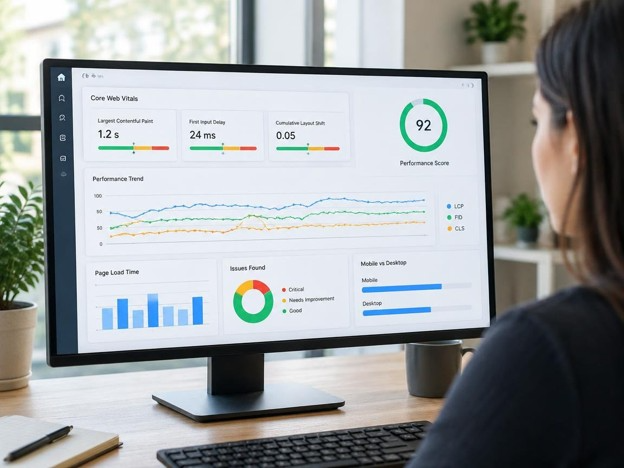
Technical SEO forms the invisible but crucial infrastructure of a high-performing website. In 2026, it’s not just about crawlability and indexation; it’s fundamentally about delivering an exceptional user experience. Google explicitly uses Core Web Vitals as ranking signals, which measure real-world user experience. These include:
- Largest Contentful Paint (LCP): How quickly the main content of a page loads (target: ≤ 2.5 seconds).
- Interaction to Next Paint (INP): How quickly a page responds to user interactions (target: ≤ 200 milliseconds). This has become a critical metric for responsiveness.
- Cumulative Layout Shift (CLS): How stable the page content is during loading (target: ≤ 0.1).
Beyond Core Web Vitals, ensuring proper structured data implementation (e.g., Organization, LocalBusiness, Article schema) is vital. This helps search engines and AI understand the context of our content, improving visibility in rich snippets and AI overviews. We must also manage crawl budget efficiently, ensuring search engine bots prioritize our most important pages, and maintain optimal indexation so our content is discoverable. For businesses aiming for truly conversion-focused websites, a continuous focus on these technical elements is paramount, as they directly impact user engagement and, ultimately, business outcomes.
Content Architecture and Topical Authority
Modern SEO demands a strategic approach to content, moving beyond individual articles to building deep topical authority. This is achieved through content clusters, where a comprehensive “pillar page” covers a broad topic, supported by numerous in-depth “satellite articles” that explore specific sub-topics. This structure signals to search engines our expertise and breadth of knowledge within a particular domain.
A key development in 2026 is Generative Engine Optimization (GEO). With AI overviews and large language models (LLMs) summarizing search results, our content needs to be structured for AI readability. This means adopting an answer-first structure, where the most concise and direct answer to a query is presented at the beginning of a section or article. We must also focus on entity optimization, clearly naming specific entities (people, places, things, concepts) and citing sources inline, making it easier for AI to extract and trust our information. Pages that are well-structured, authoritative, and answer-first are significantly more likely to be cited in AI overviews.
Off-Page Authority, Digital PR, and Brand Mentions
While technical SEO and on-page content lay the groundwork, off-page authority builds trust and credibility in the wider digital ecosystem. This primarily involves earning high-quality editorial backlinks from reputable and relevant websites. In 2026, the focus is squarely on quality over quantity; links earned through original research, expert commentary, and genuine partnerships carry far more weight than low-quality, manufactured links.
Digital PR plays a crucial role here, as it naturally generates media mentions and links by positioning our brand as an industry thought leader. Brand mentions, even without a direct link, contribute to our overall authority and entity validation, signaling to search engines that our brand is a recognized and trusted source. Tracking citation frequency by AI assistants and across various online platforms provides a leading indicator of our growing authority. These trust signals are essential, as search engines evaluate whether content truly solves a user’s problem, not just whether it contains keywords, pushing SEO toward meaningful, human-first content.
Integrating Organic Search with Multi-Channel Marketing
In 2026, SEO is not a standalone activity; it’s the strategic core that informs and amplifies all other digital marketing efforts. An omnichannel marketing approach, where SEO insights are shared and integrated across channels, leads to superior customer acquisition and a more cohesive brand experience. By breaking down silos and enabling data sharing, we can build a comprehensive full-funnel strategy that leverages the strengths of each channel.
Aligning Paid Ads with Digital Marketing and SEO Strategies
The synergy between SEO and paid advertising (PPC) is more critical than ever. By aligning our digital marketing services, we can achieve greater efficiency and impact. Search engine marketing (SEM), which encompasses both SEO and PPC, benefits immensely from shared data. Keyword data from organic search can inform PPC campaigns, identifying high-converting terms and optimizing ad copy. Conversely, PPC data can validate new keyword opportunities for SEO and help us understand user intent more quickly.
This integration allows for smarter PPC budget optimization, ensuring we’re not bidding on keywords where we already rank organically, or using paid ads to supplement visibility where organic rankings are still developing. Furthermore, SEO-optimized landing pages can significantly improve the Quality Score of paid ads, reducing costs and increasing conversion rates. We can also use remarketing strategies, targeting users who interacted with our organic content but didn’t convert, with tailored paid messages.
Here’s a comparison of organic SEO and paid search:
Feature Organic SEO Paid Search (PPC) Cost No direct cost per click; investment in content, tech, links Cost per click (CPC) or impression (CPM) Speed of Results 3-6 months for noticeable results Immediate visibility upon campaign launch Traffic Quality Often higher intent, long-term, compounding Can be high intent, but stops when budget runs out Long-Term ROI Sustainable, compounding returns, builds authority Short-term, immediate, requires continuous budget Brand Building Strong brand authority and trust over time Immediate visibility, but less intrinsic trust Control Less direct control over rankings Full control over ad placement and messaging Powering Content, Social Media, and Email Through Search Data
SEO provides invaluable insights that can supercharge our content, social media, and email marketing efforts. By understanding what users are searching for, we can tailor our content repurposing strategies, transforming high-performing blog posts into social media snippets, video scripts, or email newsletter segments. This ensures our messaging is always relevant and addresses genuine audience needs.
SEO also aids in audience discovery, revealing not just what people search for, but the language they use and the problems they’re trying to solve. This data can inform our social media content strategy, helping us craft engaging posts that resonate with our target demographics. For email marketing, newsletter syndication of SEO-optimized content can drive engagement and reinforce our authority. Furthermore, SEO insights can guide social listening efforts, helping us identify trending topics and conversations to participate in. By using SEO as the intelligence layer, we ensure our multi-channel efforts are cohesive and impactful.

Sector-Specific SEO Playbooks and Execution
While the fundamental principles of SEO remain constant, successful implementation requires a tailored approach. Vertical SEO acknowledges that different industries have unique user behaviors, search intents, and competitive landscapes. Therefore, developing tailored strategies and precise go-to-market execution is crucial for maximizing organic performance across various business types.
Here’s a comparison of SEO priorities for different business types:
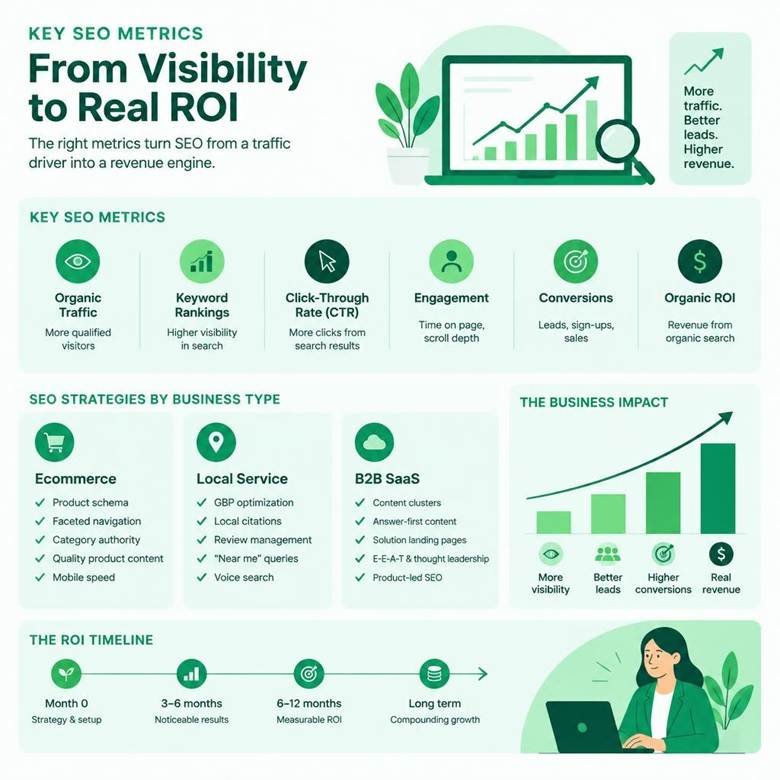
Business Type Key SEO Priorities in 2026 Ecommerce Product schema, faceted navigation optimization, category page authority, high-quality product descriptions, user-generated content, mobile speed. Local Service Google Business Profile optimization, local citations, review management, “near me” query optimization, service-area pages, voice search. B2B SaaS Topical authority through content clusters, answer-first content for AI, solution-focused landing pages, E-E-A-T for thought leadership, product-led SEO. Local and Service-Based Business Strategies
For local and service-based businesses, Local SEO is paramount. In 2026, it’s driven by intent-based discovery, where users search with immediate needs. Optimizing your Google Business Profile (GBP) is the single most important step, ensuring accurate and consistent NAP (Name, Address, Phone) information, engaging photos, and regular posts. Building consistent local citations across online directories and managing online review management are crucial for building trust and improving local pack rankings.
Proximity signals play a significant role, so ensuring your physical location is accurately mapped and that your website mentions local landmarks or service areas is important. Furthermore, optimizing for voice search queries is increasingly vital, as many local searches are conducted verbally (e.g., “best plumber near me” or “coffee shop open now”). Content should provide concise, direct answers to these conversational queries.
Ecommerce and High-Growth Tech SEO
Ecommerce brands and high-growth tech companies face distinct SEO challenges and opportunities. For ecommerce, optimizing faceted navigation is critical to ensure product filters don’t create duplicate content issues or hinder crawlability. Implementing comprehensive product schema (e.g., Product, Offer, Review) helps search engines understand product details and display rich results, improving click-through rates.
Tech companies, especially SaaS, benefit from product-led SEO, where content is designed to drive self-serve sign-ups or product trials. This involves creating valuable resources that address user pain points directly related to the product’s features. Focus on building topical authority around specific problems your software solves, and use an answer-first content strategy to be cited in AI overviews. The goal is to attract high-intent users, reduce customer acquisition cost (CAC), and achieve compounding traffic growth over time.
Measuring Performance and Organic ROI
Measuring SEO success in 2026 goes far beyond simply tracking rankings. We need a sophisticated approach to data tracking that focuses on business outcomes. This involves monitoring leading indicators that predict future success (e.g., share-of-voice in AI answers, brand mentions, increased organic impressions for target topics) alongside outcome metrics directly tied to revenue (e.g., qualified leads, sales, sign-ups).
Conversion attribution is essential to understand the true impact of SEO across the customer journey. Tools like Google Analytics 4 (GA4) and Google Search Console, when integrated with a dashboard platform like Looker Studio, allow us to blend data and visualize the full impact of organic search on business revenue. We must track organic traffic quality, engagement metrics (time on page, scroll depth), and the conversion rates of users coming from organic search. A working SEO strategy in 2026 is a set of business decisions, not a to-do list, and its success is measured by its contribution to the bottom line.
Frequently Asked Questions About Digital Marketing and SEO
How long do digital marketing and SEO strategies take to generate measurable ROI?
SEO is a long-term investment, not a quick fix. Typically, businesses can expect to see noticeable results within 3–6 months of consistent execution, but significant measurable ROI often takes 6–12 months, or even longer for highly competitive niches. The exact implementation timeline and ranking trajectory depend on factors like website quality, competitive difficulty, the industry, and the resources invested. However, the returns are compounding, meaning the effort put in today continues to yield benefits months and years down the line, reducing dependency on paid ads and building long-term authority.
How do AI-powered search overviews and zero-click queries affect organic traffic?
AI-powered search overviews and the rise of zero-click queries have fundamentally altered how users interact with search results. While these features can reduce direct click-through rates (CTR) to websites, they also present new opportunities for visibility. Our goal with Generative Engine Optimization (GEO) is to ensure our content is concise, authoritative, and structured for AI citations. Being cited in an AI overview, even without a direct click, can significantly boost brand impression value, establish expertise, and influence user decisions further down the funnel. It shifts the focus from simply getting clicks to becoming a trusted source that AI systems rely on.
What is the most critical technical SEO factor to prioritize in 2026?
In 2026, the Interaction to Next Paint (INP) has emerged as arguably the most critical technical SEO factor to prioritize. While all Core Web Vitals (LCP, CLS, INP) are important for user experience and rankings, INP specifically measures a page’s responsiveness to user input. A poor INP score indicates a sluggish, frustrating experience, which search engines actively penalize. Prioritizing INP, alongside overall mobile-first indexing and ensuring robust schema markup implementation, will be crucial for maintaining strong technical foundations and delivering the fast, accurate, and seamless experiences users expect.
Conclusion
In October 2026, digital marketing is dynamic, complex, and driven by an ever-evolving search landscape. We’ve seen that digital marketing and SEO strategies are no longer peripheral tactics but the strategic core, guiding every aspect of online presence. By understanding the shift from keyword matching to intent, context, and user experience, and by embracing the three pillars of SEO—Technical, On-Page, and Off-Page—we can build robust, future-proof digital assets.
The integration of SEO with other channels like paid advertising, content marketing, social media, and email creates a powerful omnichannel synergy, amplifying reach and improving efficiency. Whether you’re a small local business, an ecommerce giant, or a B2B SaaS provider, tailoring your SEO approach to your specific needs is key. Success hinges on setting measurable objectives, continuously tracking performance, and adapting your strategy to the latest advancements in AI-powered search. Invest in a holistic, long-term SEO strategy today, and watch your business thrive in the digital future.
Read more: https://metaphorhaven.com/financial-clarity-reduces-emotional-pressure/