Missing teeth can affect how a person chews, speaks, smiles, and feels in social settings. They may also change how the remaining teeth meet when biting. People researching dental implant options Tampa FL should know that the right approach depends on much more than simply filling a space.
For example, replacing one visible front tooth calls for different planning than restoring an entire upper or lower arch. The best plan balances appearance, chewing function, oral health, budget, treatment time, and the level of maintenance a person can realistically manage.
Start With The Pattern Of Tooth Loss
Tooth loss can be managed with fixed or removable restorations supported by natural teeth, oral tissues, or implants. A review of prosthetic rehabilitation choices for people with tooth loss shows why treatment should be tailored to the extent of tooth loss and the patient’s individual needs.
- One missing tooth: Common choices include an implant-supported crown, a traditional bridge, or a temporary removable appliance.
- Several teeth in a row: A tooth-supported bridge, an implant-supported bridge, or a partial denture may be considered.
- Many missing teeth: A removable partial denture, larger fixed restoration, or implant-supported denture may provide better coverage.
- All teeth missing in one arch: Complete dentures, removable implant-retained overdentures, and fixed implant-supported full-arch restorations are possible options.
Compare The Main Tooth-Replacement Choices
Traditional Dental Bridges
A traditional bridge fills a gap by attaching a replacement tooth to crowns placed on nearby teeth. It often avoids implant surgery and may be completed faster than an implant-based plan. However, the supporting teeth generally need to be reshaped, and careful brushing and flossing beneath the bridge are essential. Because it does not replace a missing root, a bridge does not directly stimulate the bone in the gap.
Removable Dentures And Partial Dentures
Partial dentures replace some missing teeth, while complete dentures replace a full arch. They can often be made without surgery and may be a practical choice when implants are not suitable or are not preferred. Fit can change as gum tissue and jawbone change over time, so adjustments, relines, repairs, and eventual replacement may be needed. Some wearers also experience movement, sore spots, food limitations, or temporary speech changes.
Single-Tooth Implants And Implant-Supported Bridges
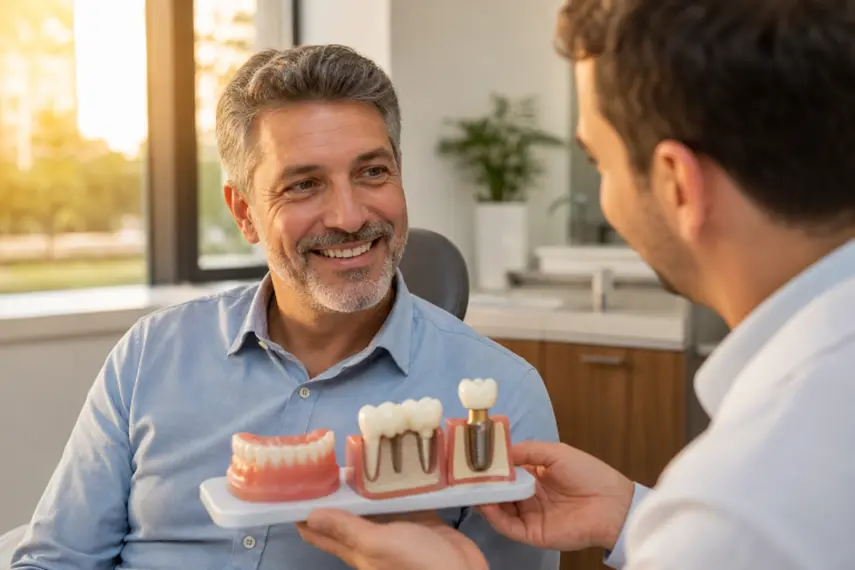
A single implant can support a crown without relying on adjacent teeth. When several neighboring teeth are missing, implants may instead support a bridge. Treatment commonly involves an examination, imaging, implant placement, healing, and delivery of the final restoration. Healthy gum tissue and sufficient bone are important, and some patients need preparatory treatment before placement. Implant restorations can be stable, but they still require careful daily cleaning and regular professional follow-up.
Implant-Supported Dentures And Fixed Full-Arch Restorations
Implant-supported dentures attach to implants for added retention and can still be removed for cleaning. Fixed full-arch restorations stay attached and are supported by several implants. Either approach may help when many or all teeth are missing, but fixed treatment is not automatically the better choice. Bone quality, bite forces, hygiene ability, health history, and maintenance needs all deserve close attention.
How Jawbone And Gum Health Affect The Decision
After a tooth is lost, the surrounding bone may gradually shrink. Active gum disease can also threaten remaining teeth and create complications around implants. Some patients need periodontal treatment, extractions, bone preservation, or bone grafting before a final restoration is placed. Research on bone changes around implant-supported dentures also shows that outcomes can vary with treatment design and patient factors, underscoring the importance of individualized planning.
Questions To Ask During A Dental Consultation
- Which options fit the number and location of my missing teeth?
- How much healthy bone and gum tissue is available?
- Would nearby teeth need to be altered?
- Will the final restoration be fixed or removable?
- What treatment stages and healing periods should I expect?
- How will smoking, diabetes, medications, or other health conditions affect healing?
- What daily cleaning and professional maintenance will be required?
- What repairs, relines, or replacement costs might arise later?
Cost, Time, And Maintenance: The Practical Side
Comparing only the starting price can overlook important aspects of the decision. Dentures and conventional bridges may involve fewer treatment stages in some cases, while implant treatment can require surgery and healing time. Total cost can include imaging, extractions, grafting, laboratory work, temporary restorations, and the final appliance or crown. Every option can wear out, chip, loosen, or require repair. Consider the full care cycle, including home care, regular cleanings, future adjustments, and possible replacement.
Common Myths About Replacing Missing Teeth
- Myth: One treatment works for everyone. Fact: Tooth location, health history, gums, bone, and goals all matter.
- Myth: Dentures always look unnatural. Fact: Modern dentures can be designed around facial features, smile preferences, and remaining teeth.
- Myth: Implants need no maintenance. Fact: Implants and restorations still need daily cleaning and monitoring.
- Myth: Bone loss always rules out implants. Fact: Further evaluation or preparatory treatment may create additional options for some patients.
When To Seek A Second Opinion
A second opinion may be helpful when only one treatment choice is presented without a clear explanation, when healthy teeth would require major alteration, or when complex surgery is recommended. Ask for a written plan that explains the expected benefits, risks, alternatives, treatment stages, and likely maintenance needs. A useful second opinion should provide clarity rather than pressure.
Frequently Asked Questions
What Is The Best Option For One Missing Tooth?
An implant-supported crown and a traditional bridge are common choices. The better fit depends on the condition of nearby teeth, bone, and gum health, budget, appearance goals, and willingness to undergo surgery.
Can Missing Teeth Be Replaced Without Implants?
Yes. Traditional bridges, partial dentures, and complete dentures can replace missing teeth without implants. Their tradeoffs involve stability, impact on nearby teeth, fit changes, maintenance, and whether the appliance is removable.
How Long Does Tooth Replacement Take?
Timing varies widely. A straightforward bridge or denture may take less time than a case involving extractions, gum treatment, grafting, or implant healing. Ask for a stage-by-stage estimate based on the specific plan.
Conclusion: Choose The Option That Fits The Whole Picture
Replacing missing teeth is both a health decision and a lifestyle decision. The right choice should support comfort, function, appearance, long-term maintenance, and realistic financial goals. A careful consultation can help turn several possible treatments into a plan that fits the whole picture.
Also Read-Best SEO Agencies in Australia for SaaS and Tech Brands