Key Takeaways
- Start with an inspection that reviews the shell, finishes, plumbing, equipment, deck, drainage, and safety features.
- Build a budget that separates required repairs from optional improvements and includes a contingency for concealed conditions.
- Address structural, plumbing, drainage, and electrical work before applying final finishes.
- Choose surfaces and equipment that fit the pool’s climate, use level, maintenance needs, and existing construction.
- Use a written scope and itemized contract to reduce misunderstandings about materials, permits, cleanup, and change orders.
Pool renovation is most successful when it begins with a full view of the pool, its surrounding deck, and the systems that keep water moving safely. Rather than treating peeling finishes or damaged tile as isolated problems, owners should consider how structural condition, plumbing, equipment, drainage, access, and safety features work together. For an example of the types of work that can be included in a broader project, review https://www.poolrenovation.com/products-services/complete-pool-renovation/.
A careful plan helps homeowners, property managers, and facility operators make informed choices before demolition begins. It also creates a clearer path for comparing proposals, selecting materials, planning for local approvals, and avoiding decorative upgrades that may need to be removed later for underlying repairs.
Table of Contents
- Why Planning Matters
- Start With an Inspection
- Choose the Right Scope
- Build a Realistic Budget
- Plan for Safety
- Select Suitable Materials
- Follow a Smart Work Sequence
- Compare Contractors
- Prepare for Ongoing Care
Why Pool Renovation Planning Matters
Visible wear can indicate more than just an aging appearance. Cracks, stains, loose tile, failing joints, standing water near the deck, or declining equipment performance may each deserve attention, but they should be evaluated in context. A new surface will not solve a plumbing leak, and new coping may not correct drainage that directs water toward the pool structure.
Planning the project as one connected system also makes sequencing easier. Structural repairs, plumbing changes, electrical updates, and equipment work generally need to be completed before new finishes, tile, coping, or deck coatings are installed. This order reduces the risk of damaging newly completed work.
Start With a Complete Pool Inspection
An inspection establishes the baseline for every later decision. Before choosing colors, water features, or equipment upgrades, identify what is urgent, what is nearing the end of its useful service life, and what is strictly cosmetic.
Areas to Review
- Pool walls and floor for cracks, hollow areas, staining, or surface loss
- Water-level changes and other signs that may indicate leakage
- Skimmers, drains, return fittings, plumbing lines, and valves
- Pumps, filters, heaters, controls, lights, and electrical connections
- Tile, coping, deck joints, steps, handrails, and drainage paths
- Fences, gates, covers, alarms, ladders, and depth markings
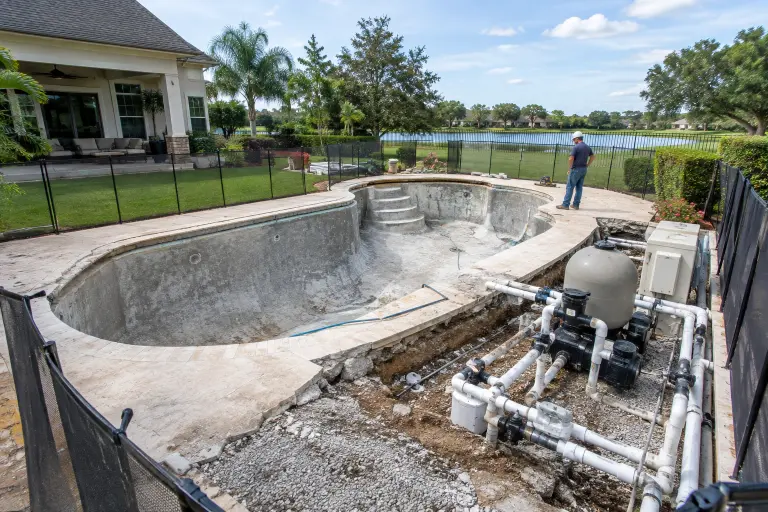
Some conditions cannot be confirmed until the pool is drained or damaged materials are removed. A useful inspection report separates known repairs from items that may require further evaluation once the work is underway.
Choose the Right Project Scope
Not every pool needs a full rebuild. Defining the scope prevents an owner from paying for a larger project than necessary and avoids a series of disconnected repairs that do not address the pool’s overall condition.
- Targeted repair: Appropriate for isolated issues, such as a limited tile repair, a single equipment replacement, or a confirmed plumbing repair.
- System upgrade: May include new circulation equipment, controls, lighting, plumbing modifications, or improved access features.
- Comprehensive renovation: Often combines surface work with several connected repairs involving the shell, plumbing, equipment, deck, safety, and accessibility.
If a pool has recurring repairs, multiple worn systems, or safety concerns, comparing a broader renovation plan with the cost of repeated short-term work can provide a more useful decision framework.
Build a Realistic Renovation Budget
A dependable budget is itemized rather than summarized on a single broad line. It should identify both the work included in the price and the conditions that could legitimately change the cost.
Budget Categories to Include
- Inspection, design, engineering, permits, and required inspections
- Draining, water disposal, demolition, protection of nearby areas, and cleanup
- Structural repairs, plumbing work, electrical work, and drainage improvements
- Interior finish, tile, coping, deck repairs, and access components
- Pumps, filters, heaters, lighting, controls, and startup services
- Safety features and a contingency for concealed damage or site conditions
Ask whether the proposal includes filling, water balancing, debris removal, equipment relocation, and final testing. These details can affect the actual project cost even when the main renovation price appears straightforward.
Include Safety From the Start
Safety decisions should be part of the design process, not an afterthought once finishes are selected. Renovation can be an appropriate time to review barriers, self-closing gates, alarms, lighting, drain covers, steps, rails, and entry points. The layers of protection promoted for pool safety reinforce the value of combining physical safeguards with supervision and emergency readiness.
Local requirements can affect barrier dimensions, gate operation, electrical work, drain protection, and accessibility. Confirm which permits and inspections apply before ordering materials or scheduling demolition.
Select Materials for Climate and Use
Materials should suit the pool’s environment and intended use. Consider sun exposure, freeze-thaw conditions, water chemistry, foot traffic, texture near wet areas, cleaning requirements, and the availability of replacement materials. Request samples where possible, then ask how each option should be maintained and repaired.
Water management also deserves attention during material selection. The EPA notes that pools lose water through evaporation, cleaning, leaks, and splashing, so pool water-efficiency practices can inform choices about covers, leak repairs, and routine maintenance.
Follow a Smart Work Sequence
- Confirm the inspection findings, scope, materials, permits, and written agreement.
- Drain the pool and protect adjacent structures, landscaping, and access routes.
- Remove failed finishes, fixtures, equipment, or damaged materials as needed.
- Complete structural, plumbing, drainage, and electrical repairs.
- Install and test new equipment and accessible connections.
- Finish the interior surface, tile, coping, deck work, and safety features.
- Fill the pool, balance the water, test systems, and complete final walkthrough items.
Compare Contractors the Right Way
Compare written bids line by line rather than relying on the lowest total. Ask who handles permits, which products and finishes are included, what happens if hidden damage is discovered, how weather delays are managed, and what labor and material warranties apply. A detailed scope makes it easier to see whether two proposals truly cover the same work.
Prepare for Maintenance After Renovation
The renovation is not complete when the pool is refilled. Follow startup instructions for the new surface and equipment, maintain the recommended water chemistry, inspect drains and circulation components regularly, and keep warranty documents and service records together. Reviewing safety features before each swimming season helps ensure that the updated pool remains practical, attractive, and safer for everyone who uses it.
Also Read
- https://metaphorhaven.com/discover-the-benefits-of-ultherapy-in-sydney-a-non-surgical-facelift-solution/
https://metaphorhaven.com/essential-steps-for-protecting-your-furniture-during-a-major-home-renovation/
https://metaphorhaven.com/financial-clarity-reduces-emotional-pressure/