
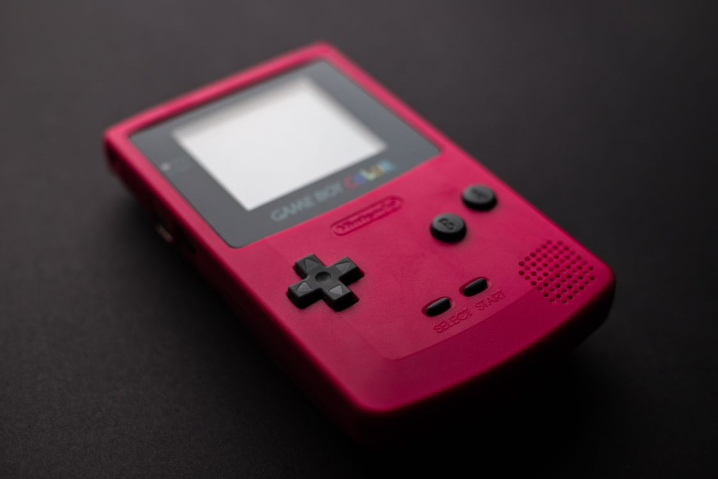
There is a film camera sitting on a shelf somewhere in a lot of households, unused for a decade at least. Ask someone to pick it up, and the hand will find the shutter button before the eye has adjusted to the viewfinder. Resistance, travel, the moment before the snap: the hand already knows the sequence. Studios engaging mobile game services partners have begun treating that muscle memory as a design input, weaving haptics and sound into creative briefs from the start rather than saving them for the polish pass. How long that understanding took to reach the center of mobile game development is a question worth sitting with.
The commercial pressure behind that shift is not subtle. According to Newzoo, mobile gaming exceeded $90 billion in revenue for 2024, with each session competing for attention against every other app on the screen. Development teams building out mobile gaming production services have learned the hard way that a player who leaves before the fifth session usually leaves because something felt unearned. Games scoring high on audio and haptic responsiveness hold users through the critical 30-day window at rates that diverge sharply from genre peers.
The motor memory problem
Think about a rotary dial. A grid of buttons does the same job faster and needs no mechanical maintenance. Yet the dial had something the buttons did not: resistance. Each pulled digit committed the finger to a small, discrete arc, and the spring-back confirmed completion (no light flashed and no confirmation sound played — the object itself performed the feedback loop).
Players who grew up with analog objects carry that sensibility somewhere below conscious reasoning. When those expectations go unmet, they feel a vague dissatisfaction that registers not as a design critique but as boredom, or as the sense that the game lacks depth. The interaction has failed at the level of the body before the mind has formed a thought about it. Somewhere in that gap, the session ends.
Mobile game interaction design has caught up to this expectation more slowly than it should have. For years, efficiency was the dominant logic: fewer taps, bigger targets. Correct, as far as it goes. But a smooth interface is not the same as a satisfying one. A button can be perfectly placed and still feel dead under a finger if the tap produces no sound or haptic feedback, and the animation gives no indication that the interface registered the contact. Research on perceptual latency suggests that audio feedback arriving more than 100 milliseconds after input begins to feel disconnected from the action that caused it, and the window for haptics is even narrower.
Sound, texture, and the analog loan
The interesting design move of the past several years has not been to make games sound more digital. It has been to borrow from the sound catalog of mechanical objects. The snap of a typewriter key. A camera shutter winding tight on its spring before releasing. Somewhere: the hollow knock of a wooden piece against a hard surface. These sounds carry association, specifically the association with tools that did not deceive: objects whose function was audible.
Custom 2D art is the first visible expression of an analog aesthetic, but art alone does not close the loop. A beautifully illustrated card game with no haptic acknowledgment on a flip, no audio event distinguishing a match from a miss, will feel thin regardless of how much craft went into each frame.
The assets and the interactions have to confirm each other. N-iX Games, a studio working across mobile and PC platforms, treats this as an integration problem rather than a feature list. Art and engineering teams stay in close conversation throughout production, with sound woven through both rather than handed off at the end. The sequencing matters because adding haptics after the fact forces a renegotiation of animation timing and audio: the whole team has to design these systems together from the start.
Studios pursuing game design outsourcing often discover that the interaction chain beneath a single button press is longer than expected. The components run roughly like this:
- Visual response: does the element animate, and does the direction mirror the user’s input gesture?
- Timing: is the first frame of feedback within 16 milliseconds of the touch event?
- Audio layer: is the sound triggered on press-down or release, and does its pitch and texture say something about the material of the object?
- Haptic pattern: a single sharp tap reads differently in the hand than a short rumble or a double pulse
- After-state: does the element return to neutral, or hold a changed position that reflects what the player just did?
Each answer is a small decision. Taken together, they determine whether the interface feels inhabited or hollow.
Mobile developers place control responsiveness and audio feedback quality among the top concerns related to player retention, ranking both above visual fidelity and monetization flow. The specificity stands out: it was responsiveness of controls, not overall graphic quality, and audio feedback quality, not soundtrack production value. Feel over spectacle.
The analog period that produced most of this sensory vocabulary, roughly 1980 to 1995, was one in which physical objects had to communicate their state through their own materials. There was no audio chip in a pair of scissors, no haptic motor in a door handle. Resistance was the signal. Modern mobile game UI/UX design services are, in a slow and iterative way, learning to replicate that honesty. Interfaces that trust the body to receive information directly, without needing the eye to confirm it, have a texture that players recognize without being able to name.
Conclusion
The most satisfying mobile games rarely announce what makes them satisfying. A player will credit the mechanics or the story. What they will not credit is the 80-millisecond haptic tap on a successful card match, or the specific frequency of the sound that plays when a combo closes. Specialized mobile game services focused on interaction design manage what players feel without being able to explain. The analog world left a useful record: objects that spoke through touch and confirmed their own function through resistance, asking nothing of the eye, the hand could not already answer.
Read more: Does California Have a Helmet Law? What Every Rider Needs to Know – metaphorhaven.com
Smart Buying Habits for Watches, Gifts, and Accessories – metaphorhaven.com
Transform Your Home with Expert House Extensions – metaphorhaven.com